*virtualexhibitions_ranking_title*

*apsaugos_kodas*
*alt_phpcaptcha_generated_image*
Loading
*virtualexhibitions_rank_submit_message*

{{msg}}

AUSTRALIAN LITHUANIANS. PART 6

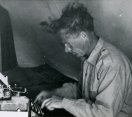
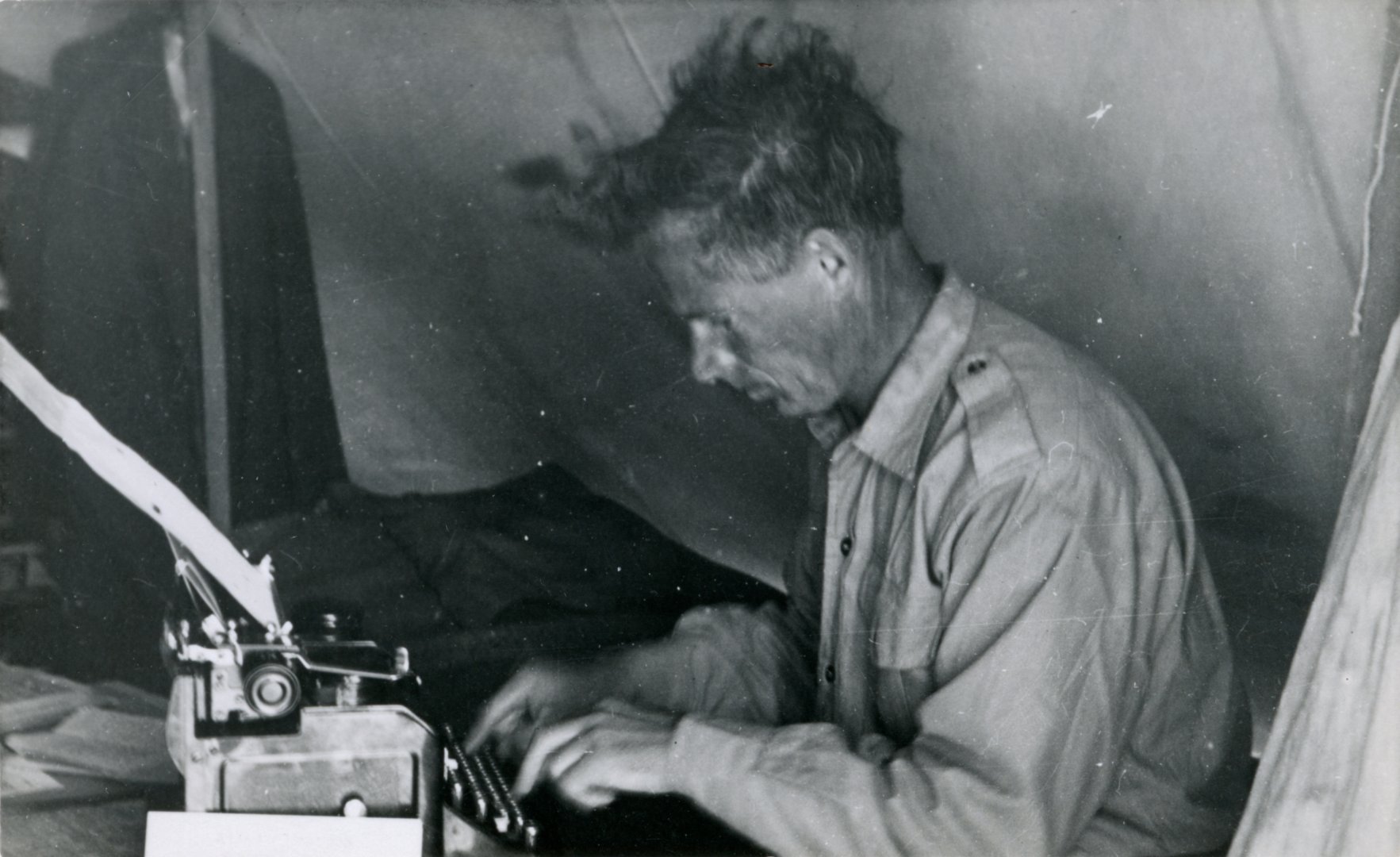
Editor of the first Lithuanian newspaper in Australia, “Australijos lietuvis”, Jurgis Glusauskas-Arminas, preparing printing plates in a tent

Leigh Creek (South Australia), [September 1948]

After the Second World War, as Lithuanians began to emigrate to Australia in large numbers, there arose a need for their own press. Refugees from the displaced persons (DP) camps in Germany were educated, patriotic people who sought to preserve their identity and maintain ties with Lithuania. Conditions for publishing the press, however, proved unfavorable: the Lithuanian community was scattered across Australia (Melbourne, Sydney, Adelaide, and other cities), and the Australian government provided no benefits for foreign-language publications. To issue periodicals, a special government permit was required, and one quarter of the newspaper’s text had to be printed in English.

Nevertheless, the first Lithuanian newspaper appeared on September 12, 1948. It was the biweekly “Australijos lietuvis” – a ten-page, notebook-format publication, printed by a rotary duplicator, without a cover.

The publisher and editor of Australijos lietuvis was Jurgis Glusauskas-Arminas, who, along with a group of Lithuanians, had been assigned to work in the brown coal mines of Leigh Creek (South Australia), in a semi-desert about 400 miles north of Adelaide. The Lithuanian refugees had to live in tents. This “tent town” consisted of 200 tents that housed about 400 workers. It was in one of these tents that the first issue of Australijos lietuvis was born, typed on a typewriter and duplicated with a modest rotary press, both brought over together with the fourth transport of Lithuanian immigrants.

Australian Lithuanian Archives

AUSTRALIAN LITHUANIANS. PART 6

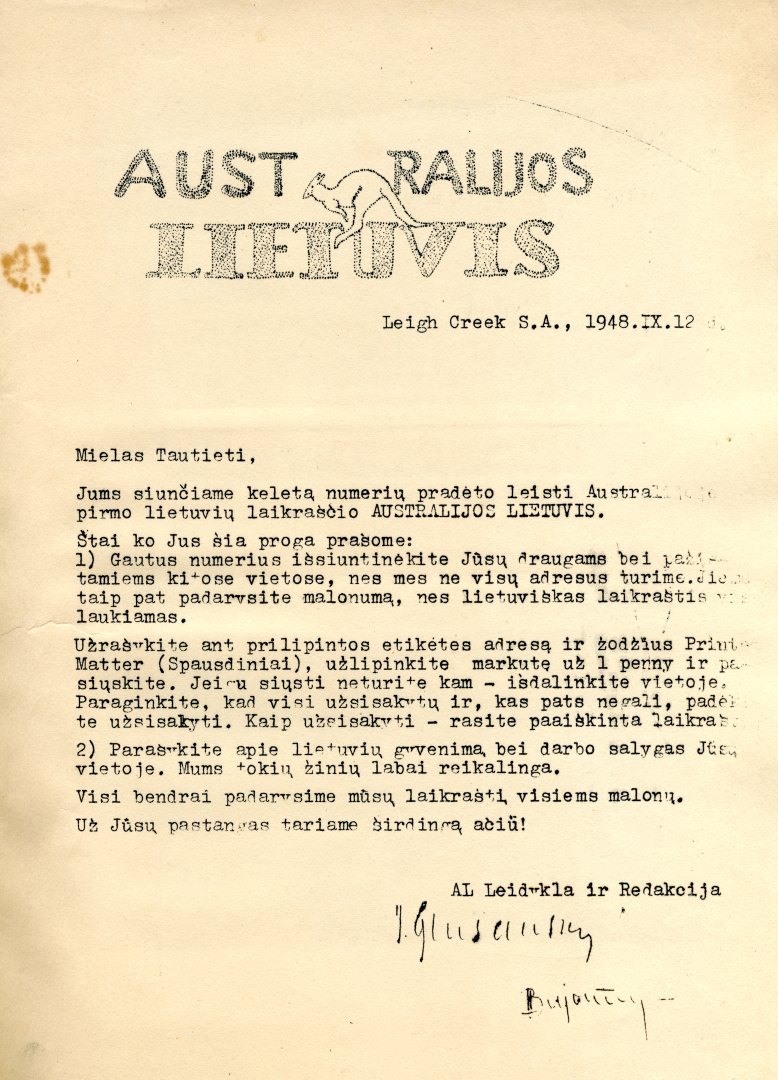
Appeal by the publishing house and editorial office of the newspaper “Australijos lietuvis” to fellow Lithuanians to help distribute the publication and an invitation to contribute as writers

Leigh Creek (South Australia), September 12, 1948

The first issue of Australijos lietuvis was modest in content, with about 200 copies printed. Lithuanians working in various parts of Australia each received several copies with the request to distribute them to their compatriots. The response was remarkable: encouraged by the positive feedback, Lithuanians – though separated from one another by thousands of kilometers – felt a renewed sense of connection and began donating to the publishing house.

In its very first issue, Australijos lietuvis declared its mission: “to stand guard over the native word, to acquaint its readers with Australia, to provide news from Lithuanian life around the world and in Lithuania, to review political events worldwide, and to publish works of literature.”

Australian Lithuanian Archives

AUSTRALIAN LITHUANIANS. PART 6

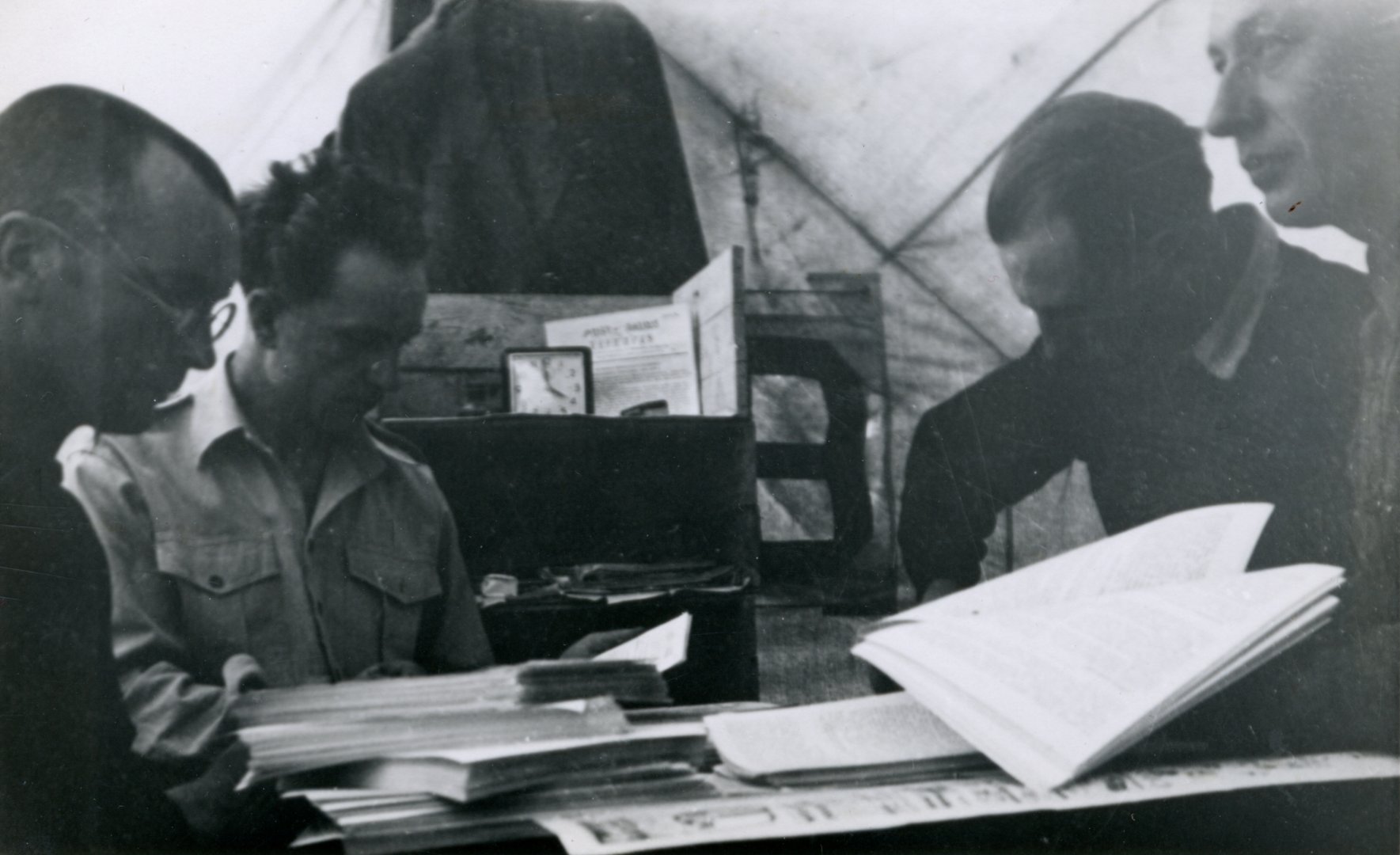
Staff of the newspaper “Australijos lietuvis” at work in a tent

Jonas Vizbaras, Jonas Langevicius, Andrius Bajorunas, Juozas Norkunas.

Leigh Creek (South Australia), 1949

Australian Lithuanian Archives, Album „Lietuviai Australijoje“

AUSTRALIAN LITHUANIANS. PART 6

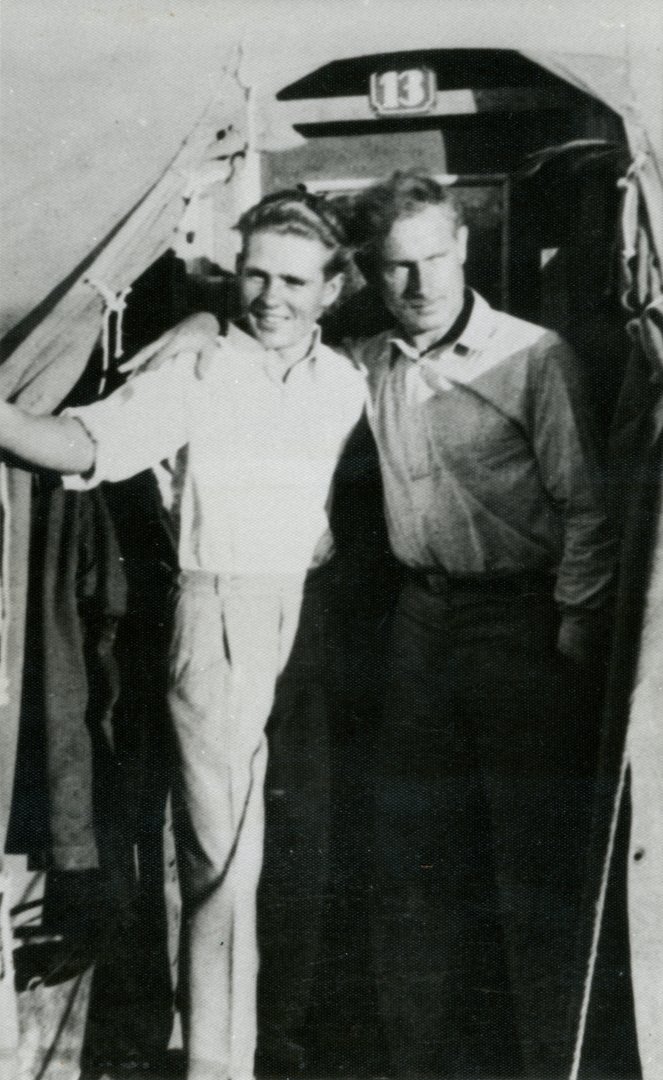
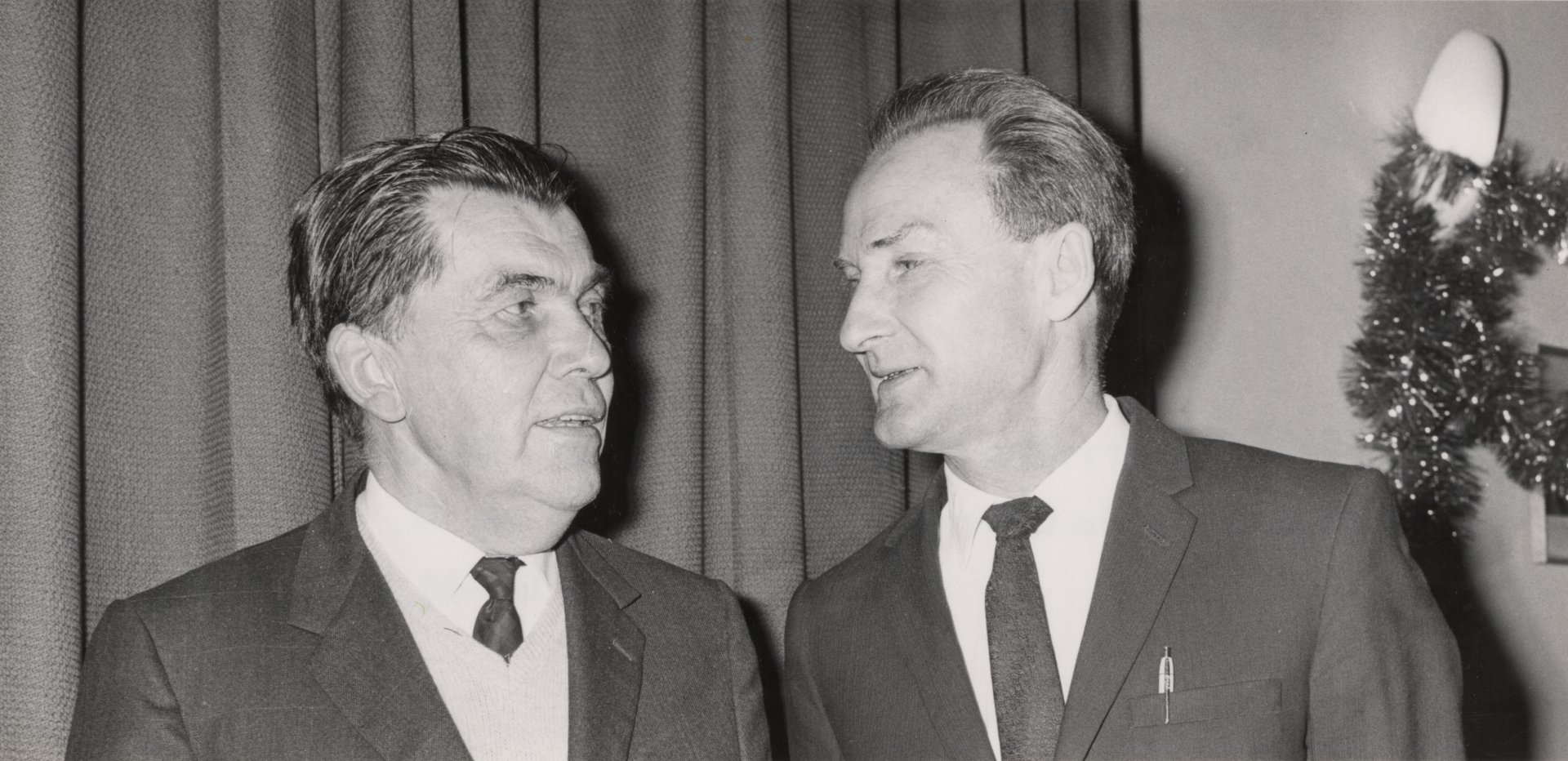
Editor of the newspaper Australijos lietuvis, Jurgis Glusauskas-Arminas (right), with active contributor to the editorial office, Vytautas Vaclovas Doniela, in front of a tent

Leigh Creek (South Australia), 1949

Vytautas Vaclovas Doniela was born in 1930 in Skuodas. In 1944, he fled to Germany with his family, and in 1948 emigrated to Australia, where he worked in the Leigh Creek coal mine. In 1956, he graduated from the University of Sydney, and in 1959 defended his doctoral dissertation in philosophy at the University of Freiburg. From 1959 to 1987, he taught philosophy at the University of Newcastle (New South Wales), becoming an associate professor in 1977.

V. V. Doniela was one of the founders of the Australian Lithuanian Students’ Union, an active member of the Australian Lithuanian community, chairman of the Executive Board of the Australian Lithuanian Community (ALC) in 1997–1998, and vice-chairman of the Community’s Press Association. He contributed to the publications “Australijos lietuvis”, “Musu pastoge”, and “Metmenys”.

Australian Lithuanian Archives

AUSTRALIAN LITHUANIANS. PART 6

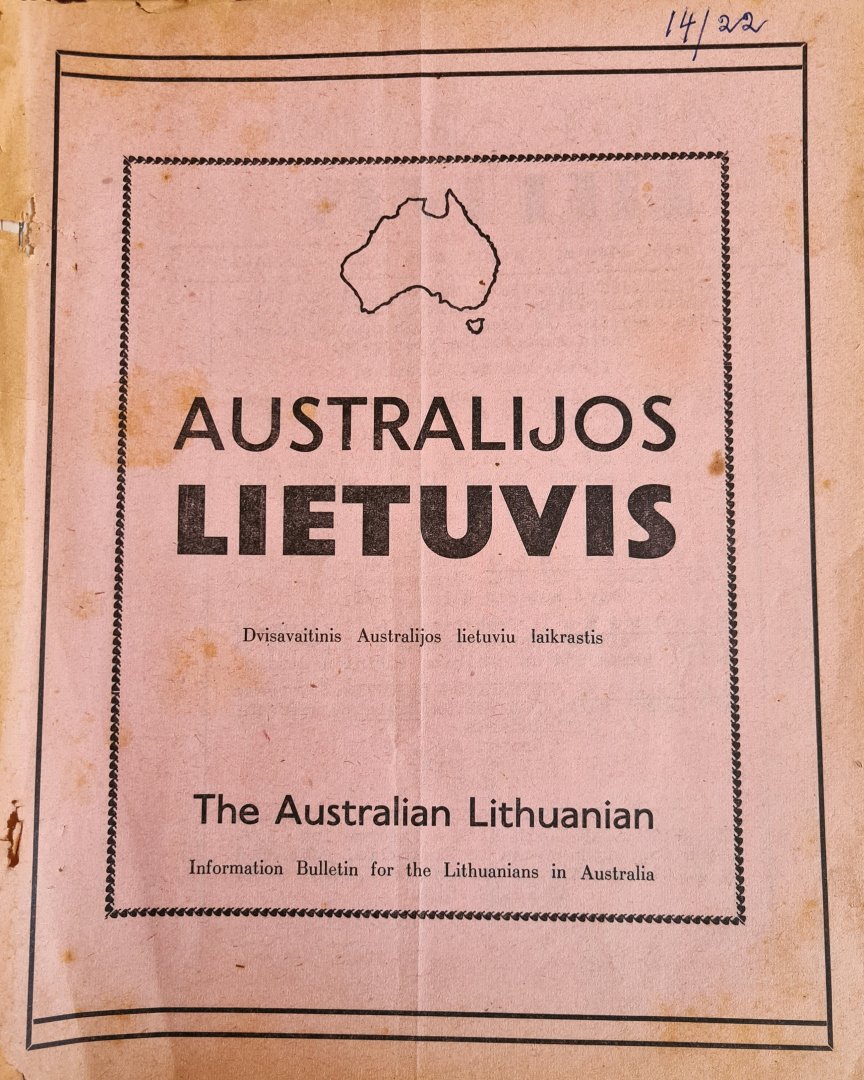
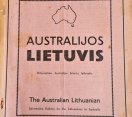
The newspaper “Australijos lietuvis”

Adelaide, July 4, 1949

Publishing a newspaper in the desert and in a tent was difficult, so soon efforts began to relocate it to Adelaide, the capital of South Australia. Great help came from violinist Pranas Matiukas, who had settled in Adelaide and provided space in his home. On May 23, 1949, Australijos lietuvis was already being issued in Adelaide, although still printed on a rotary duplicator. From its modest ten pages, it had grown into a 24-page publication of larger format.

Australian Lithuanian Archives

AUSTRALIAN LITHUANIANS. PART 6

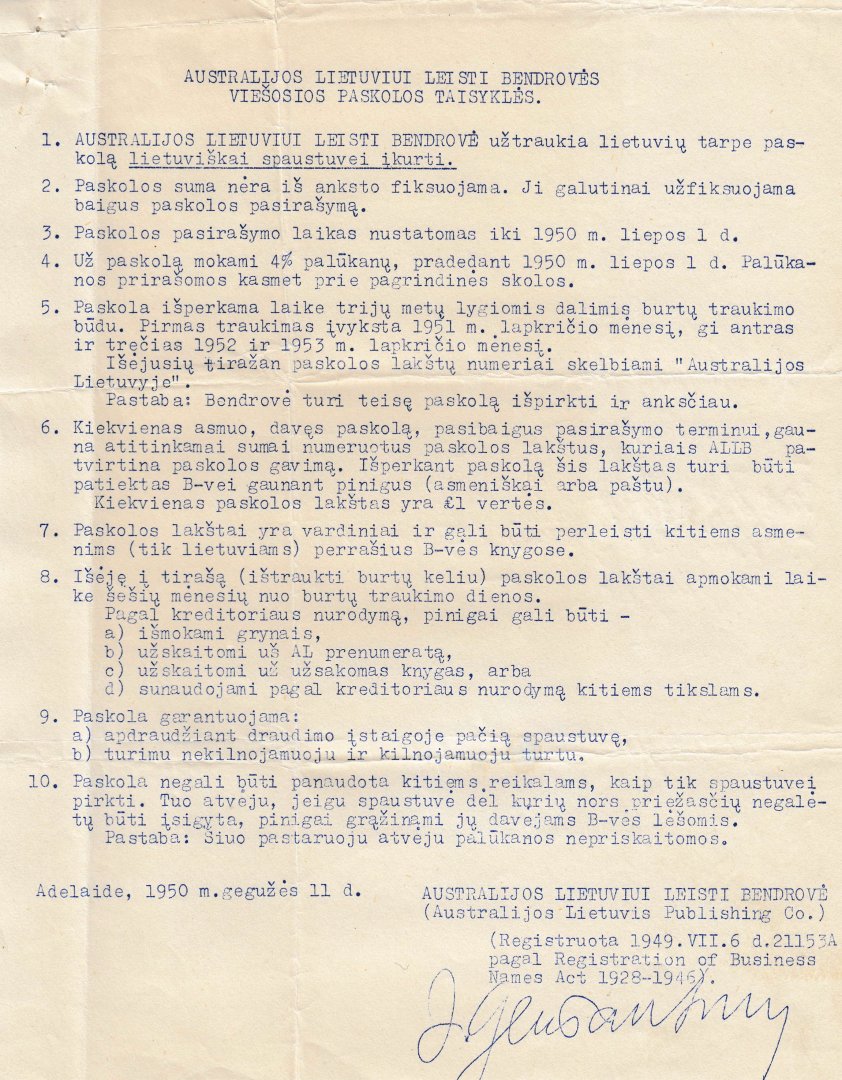
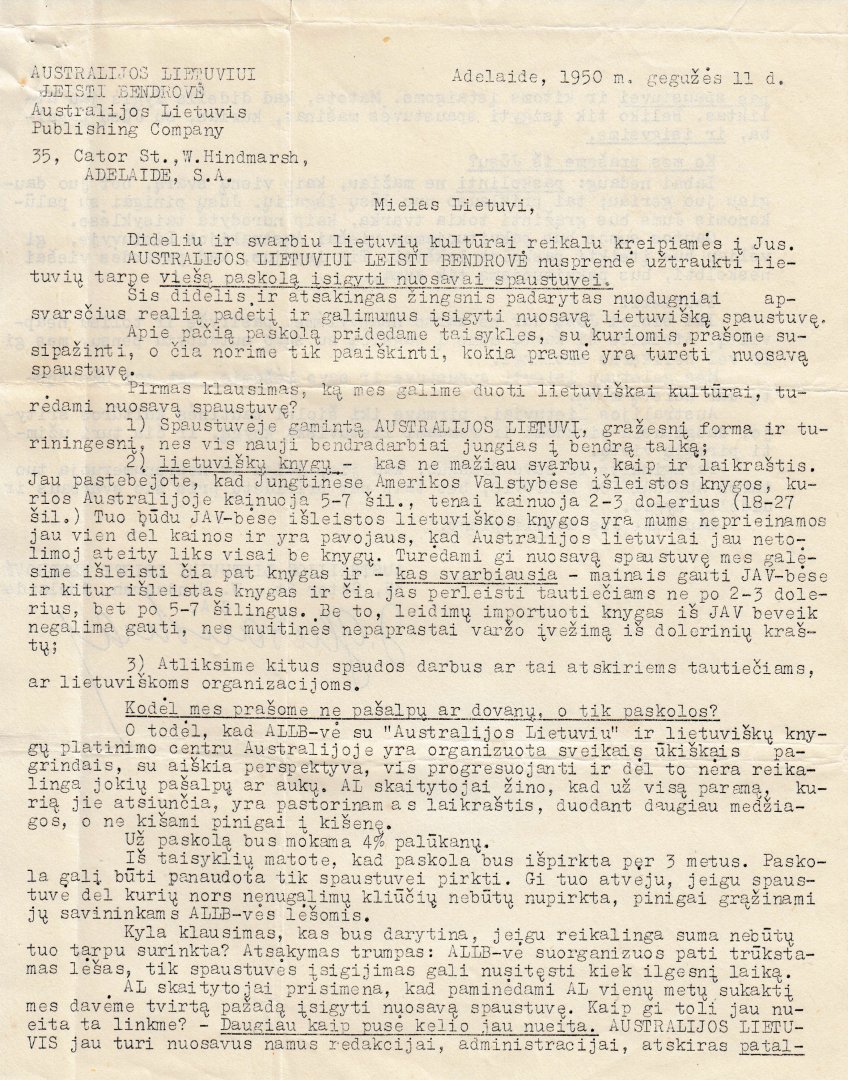
Public Loan Regulations of the Company for Publishing “Australijos lietuvis” (Australijos Lietuvis Publishing Co.)

Adelaide, May 11, 1950

Australian Lithuanian Archives

AUSTRALIAN LITHUANIANS. PART 6

Appeal by the Australijos lietuvis Publishing Co. to Australian Lithuanians, requesting loans to purchase a printing press for publishing the newspaper “Australijos lietuvis” and Lithuanian books

Adelaide, May 11, 1950

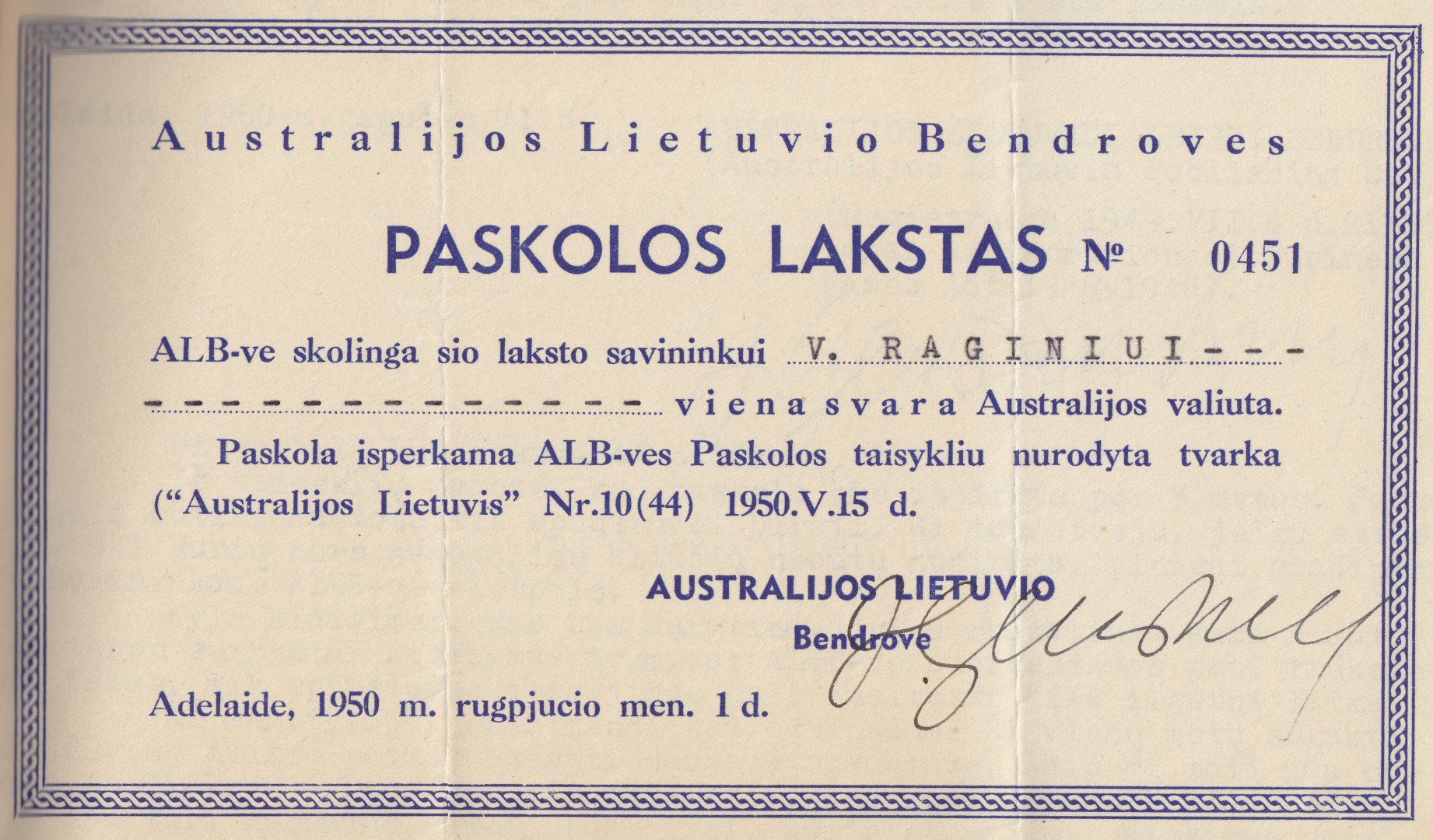
The desire to have “Australijos lietuvis” printed in a professional printing house was difficult to realize. Australian printers demanded double payment for typesetting in a language other than English. The newspaper’s funds did not allow this, so it was decided to acquire its own press. An appeal was made to readers – Australian Lithuanians – for loans, with 4 percent interest. Readers lent £800, and the publishers also found other sources of financing.

By January 1, 1951, “Australijos lietuvis” was already being printed on its own press.

Australian Lithuanian Archives

AUSTRALIAN LITHUANIANS. PART 6

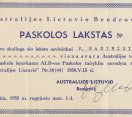
Loan Certificate of the Australijos lietuvis Publishing Company to Vaclovas Raginis

Adelaide, August 1, 1950

Australian Lithuanian Archives

AUSTRALIAN LITHUANIANS. PART 6

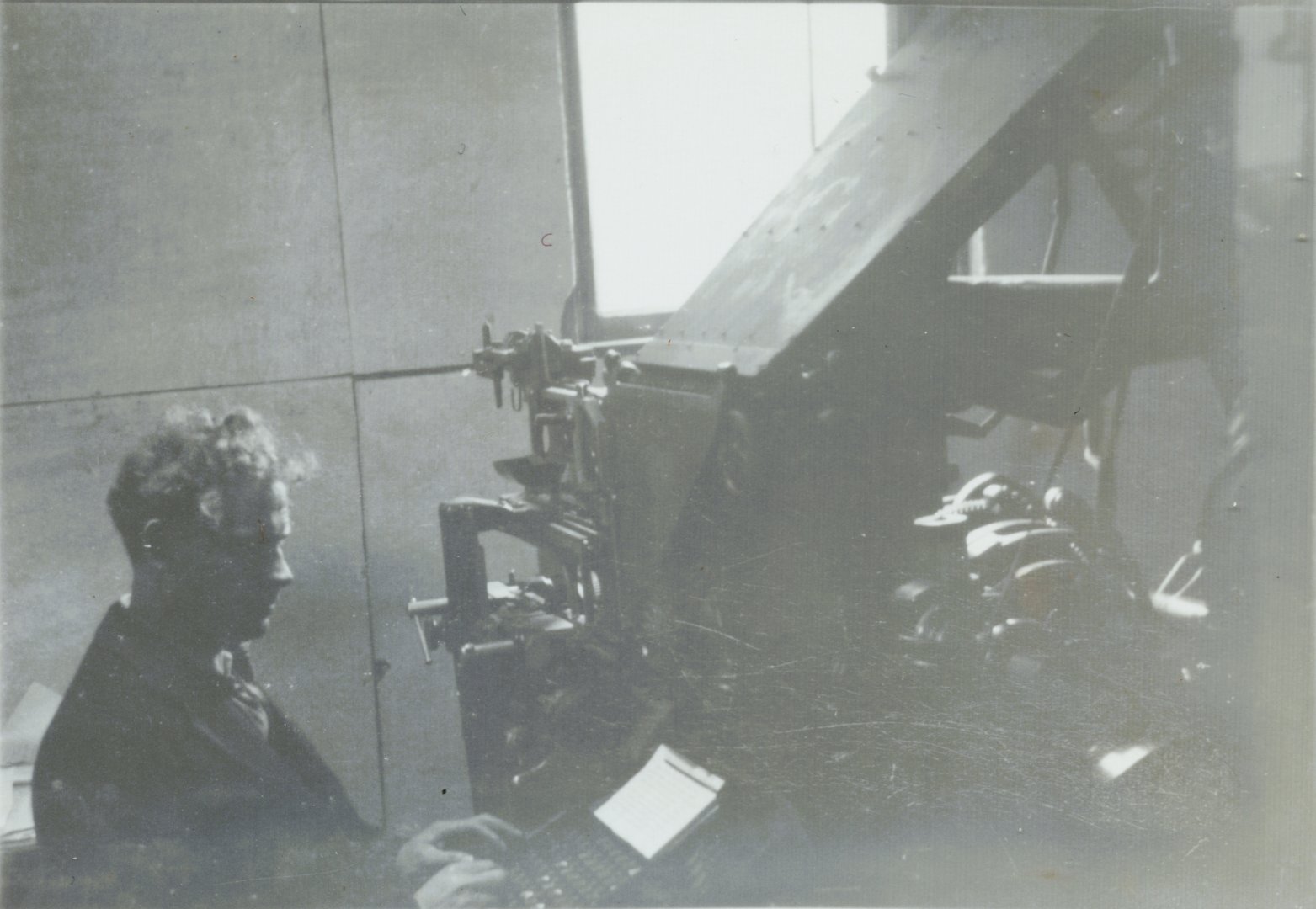
Editor of “Australijos lietuvis”, Jurgis Glusauskas-Arminas, typesetting the newspaper on a linotype machine

Adelaide, 1951

Australian Lithuanian Archives, Album „Lietuviai Australijoje“

AUSTRALIAN LITHUANIANS. PART 6

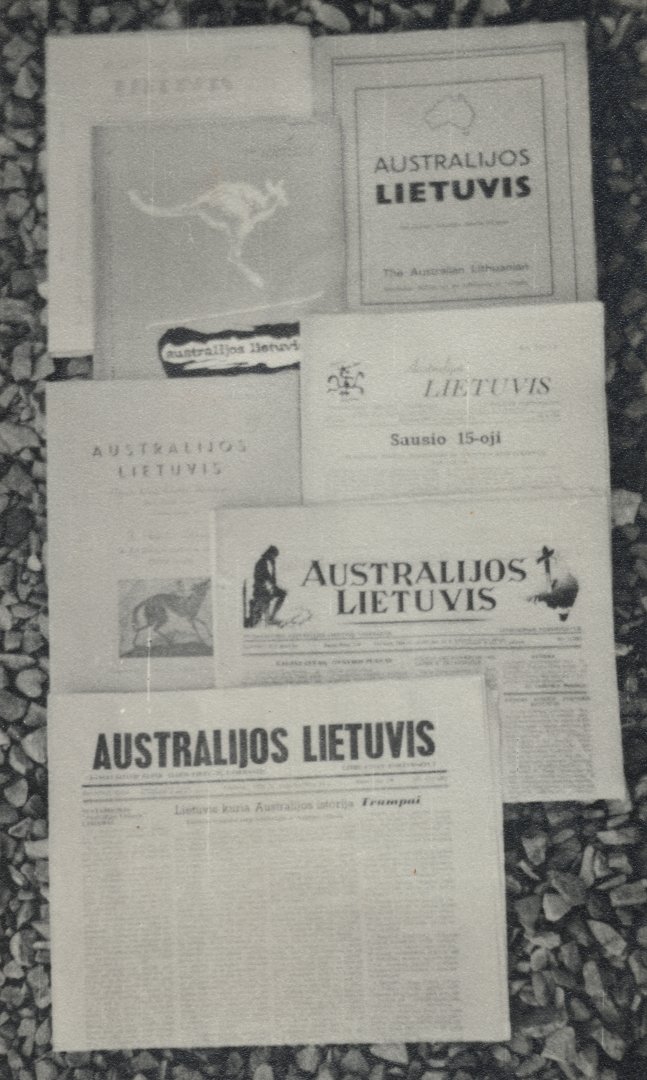
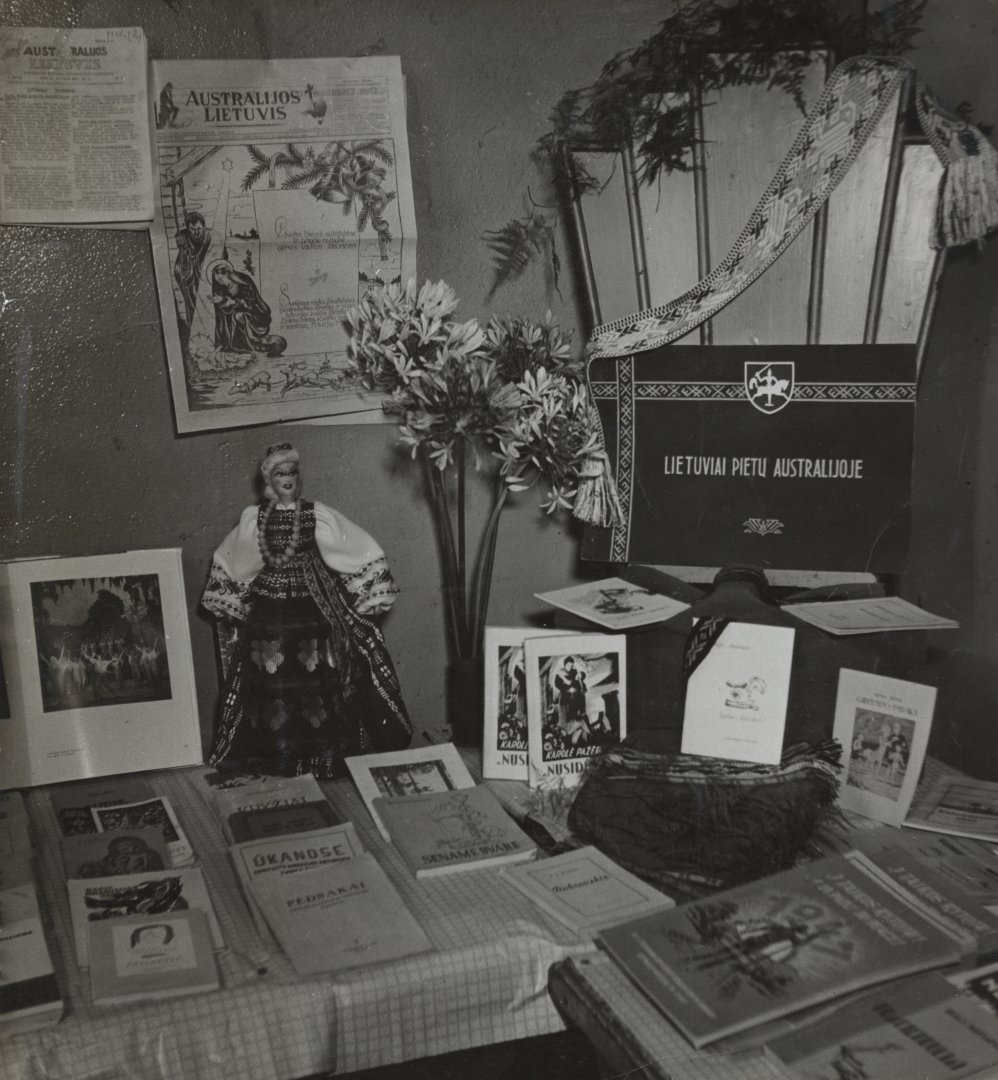
„Australijos lietuvis“ newspaper printing exhibition in Adelaide

Australian Lithuanian Archives, Album „Lietuviai Australijoje“

AUSTRALIAN LITHUANIANS. PART 6

Printing exhibition of the newspaper “Australijos lietuvis” and other publications in Adelaide

Australian Lithuanian Archives, Album „Lietuviai Australijoje“

AUSTRALIAN LITHUANIANS. PART 6

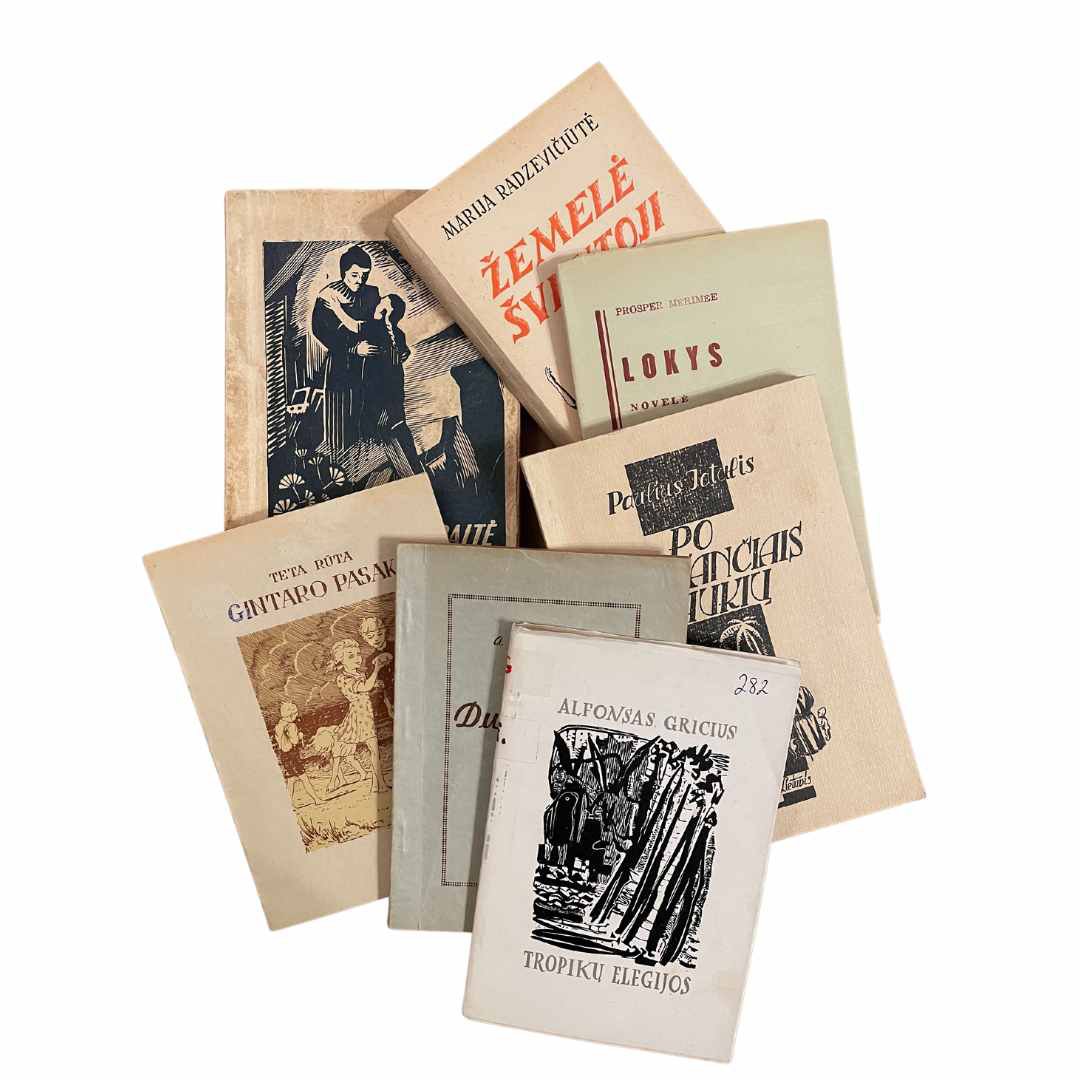
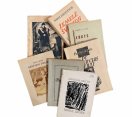
Lithuanian books published by the “Australijos lietuvis” printing press

Even in the Leigh Creek (South Australia) area, alongside the publication of the newspaper “Australijos lietuvis”, attention was given to the distribution of Lithuanian books. From 1951, Lithuanian books by authors such as P. Andriusis, K. Pazeraite, P. Jatulis, and V. Zemkalnis were published and distributed by the “Australijos lietuvis” press.

Exact statistics are not available, but “Australijos lietuvis” distributed several thousand Lithuanian books across Australia and published an entire series of Lithuanian titles, including Pulgis Andriusis’s “Sudiev, kvietkeli”.

Australian Lithuanian Archives

AUSTRALIAN LITHUANIANS. PART 6

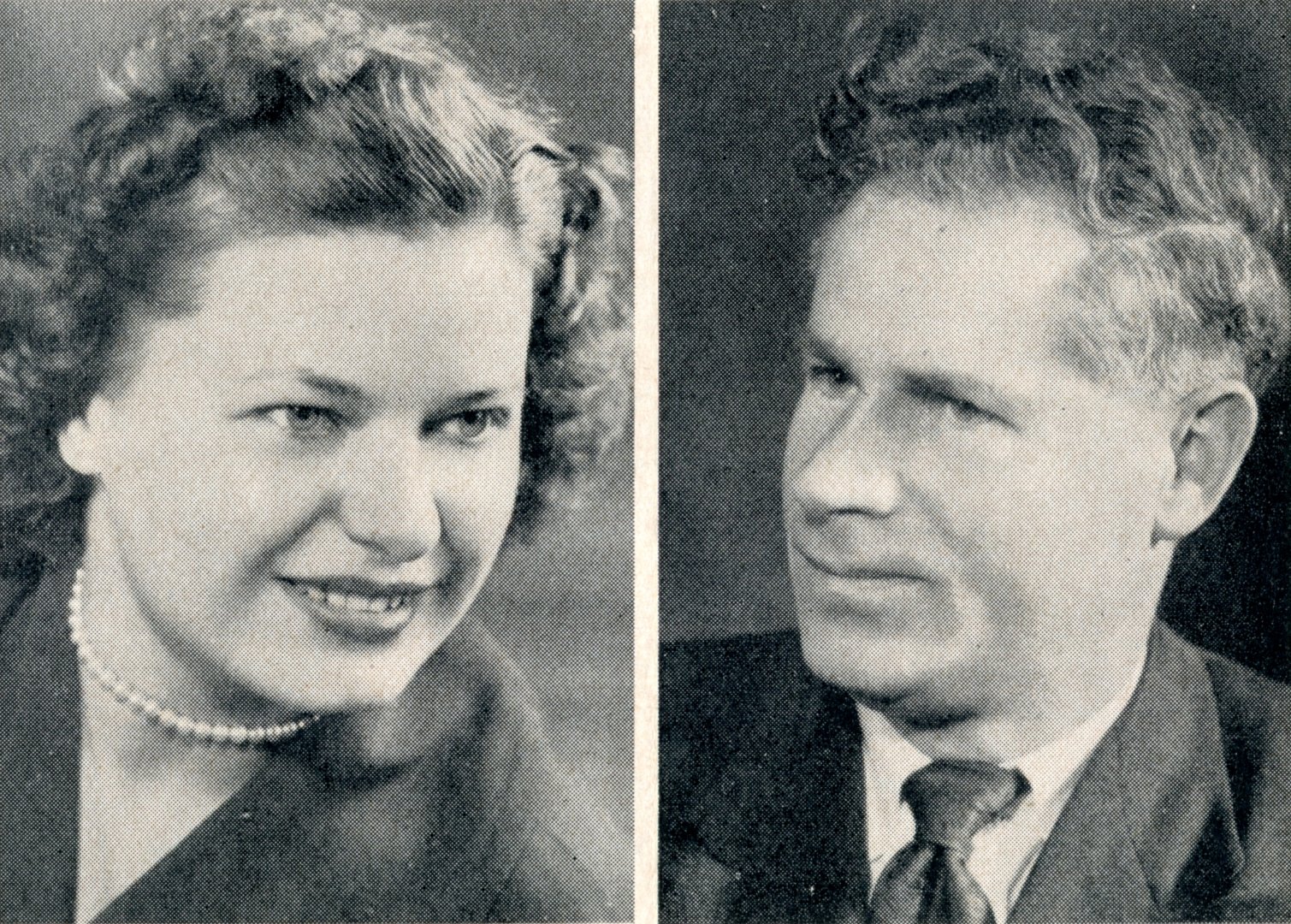
Odeta Albina Pridotkaite and Jurgis Glusauskas-Arminas

On the left – O. A. Pridotkaite, editor of the Women’s Section of “Australijos lietuvis” and linotype operator.

On the right – Jurgis Glusauskas-Arminas, founder, chief editor, and publisher of “Australijos lietuvis”.

Adelaide, 1953

The final issue of “Australijos lietuvis” was published on May 14, 1956. The cessation of the newspaper was deliberate. When the weekly “Musu pastoge”, published alongside the Executive Board of the Australian Lithuanian Community (ALC) in Sydney, began appearing, and the Australian Lithuanian Catholic Federation launched the newspaper “Teviskes aidai”, Australia had three publications serving some 9,000 Lithuanians. It became clear to the publisher that readership would decline and that all three newspapers would struggle to survive. Additionally, publications issued by community organizations had priority over newspapers published by private individuals.

“Australijos lietuvis” was the first Lithuanian newspaper in Australia to address Lithuanians scattered across a distant land in their native language, bringing them together to foster a sense of community.

Australian Lithuanian Archives

AUSTRALIAN LITHUANIANS. PART 6

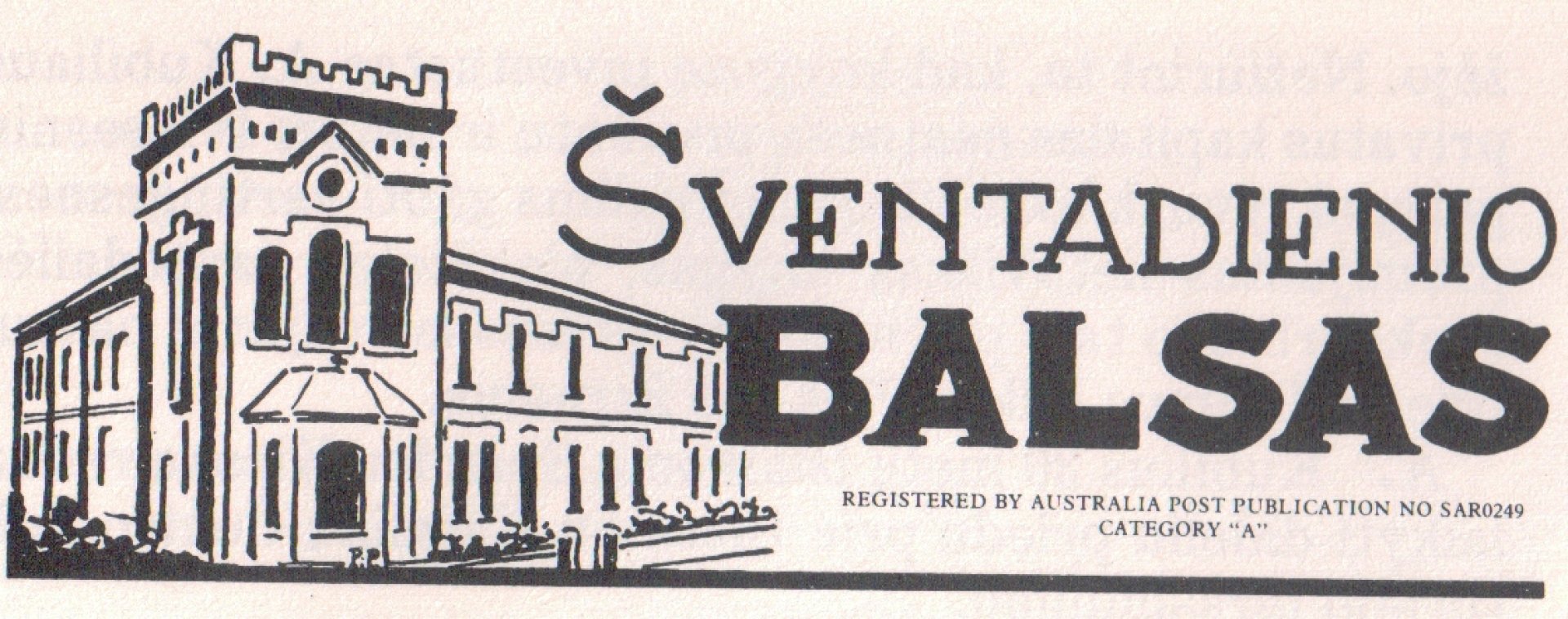
Logo of the publication “Sventadienio balsas”

The first Lithuanian priest in Adelaide, founder of Lithuanian Caritas and chairman of its council, Dr. Povilas Jatulis, began publishing the weekly periodical “Sventadienio balsas” on March 29, 1953. The publication informed Australian Lithuanians about church and community matters. It was sent free of charge to every Lithuanian family and to Lithuanians living alone.

Australian Lithuanian Archives

AUSTRALIAN LITHUANIANS. PART 6

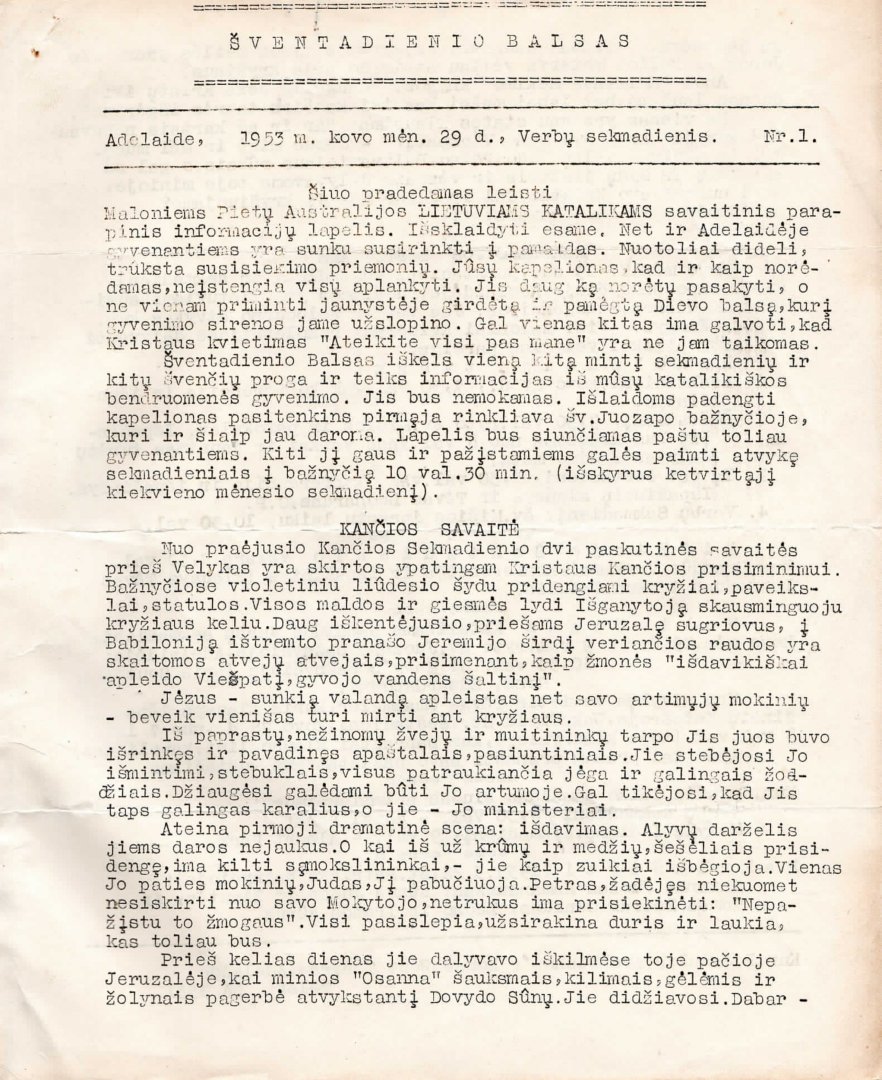
Publication “Sventadienio balsas”, No. 1

Adelaide, March 29, 1953

Each issue of “Sventadienio balsas” contained a short article – an editorial – featuring reflections on spiritual and Catholic themes.

Australian Lithuanian Archives

AUSTRALIAN LITHUANIANS. PART 6

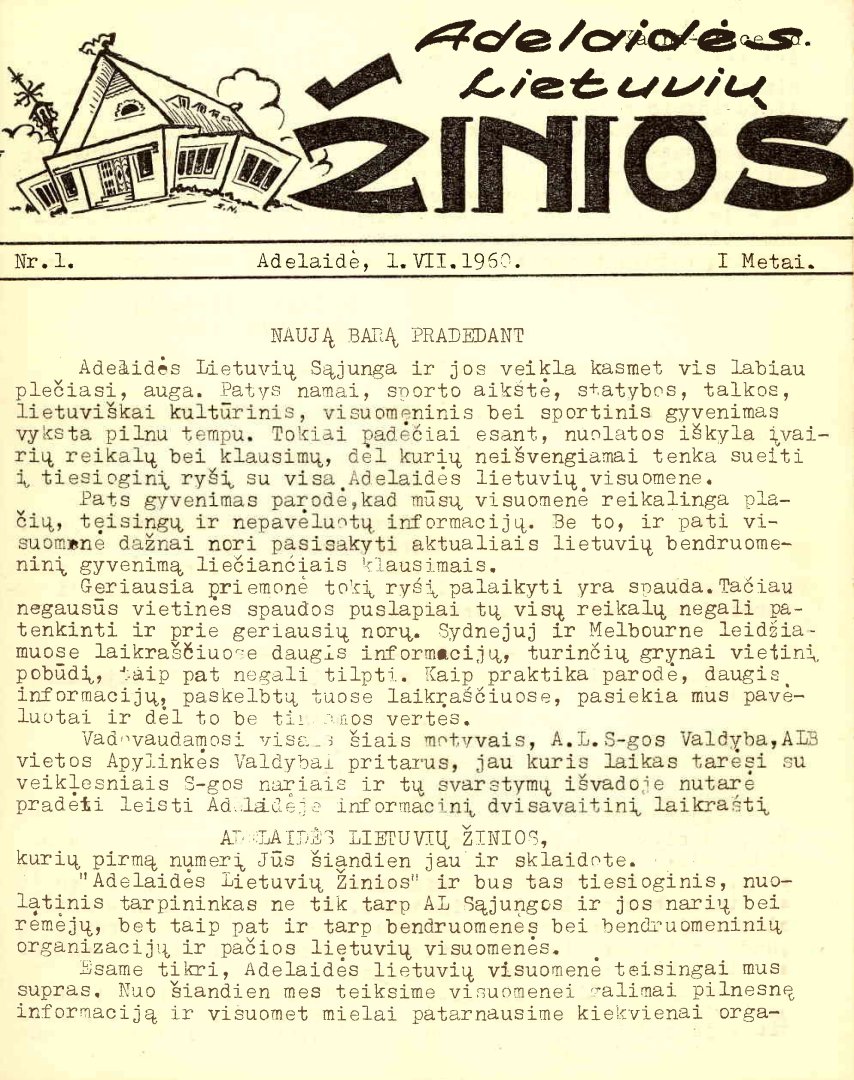
Newspaper “Adelaides lietuviu zinios”, No. 1

Adelaide, July 1, 1960

The board of the Adelaide Lithuanian Union, wishing to maintain closer ties with its members, began publishing the twice-monthly informational periodical “Adelaides lietuviu zinios” in 1960, printed on a rotary duplicator. The publication aimed to keep Adelaide Lithuanians continuously informed about local life, upcoming meetings, commemorations, and entertainment events. It also carried official announcements from the local board.

Australian Lithuanian Archives

AUSTRALIAN LITHUANIANS. PART 6

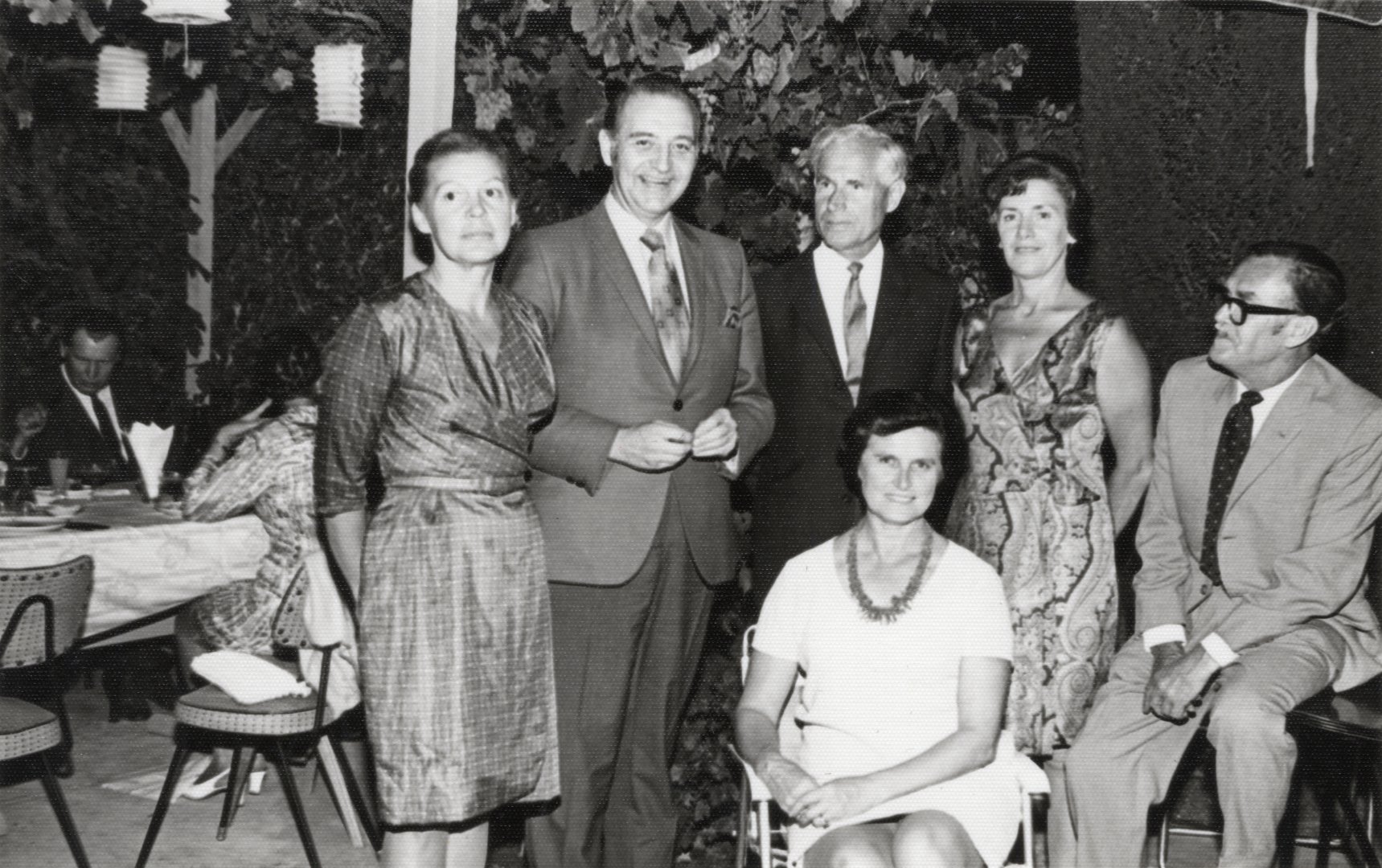
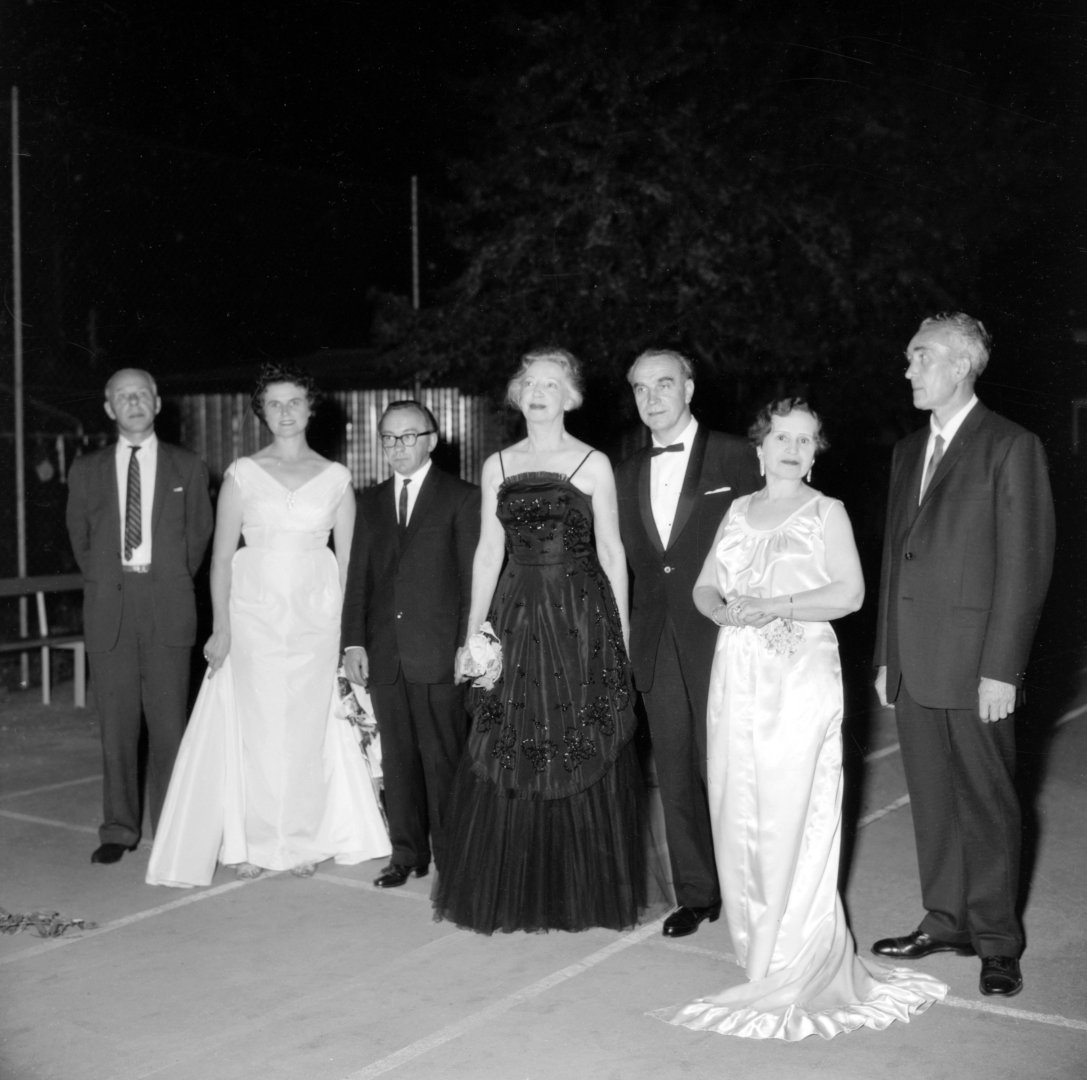
Festive evening of the Australian Lithuanian Community honoring the visit of opera soloist Stasys Baras to Adelaide

From the left, standing: Antanina Arminiene, Stasys Baras (from the USA), Jurgis Glusauskas-Arminas, Cecilija Radzeviciene, Vladas Radzevicius; seated – Genovaite Vasiliauskiene.

Adelaide, 1970

Australian Lithuanian Archives

AUSTRALIAN LITHUANIANS. PART 6

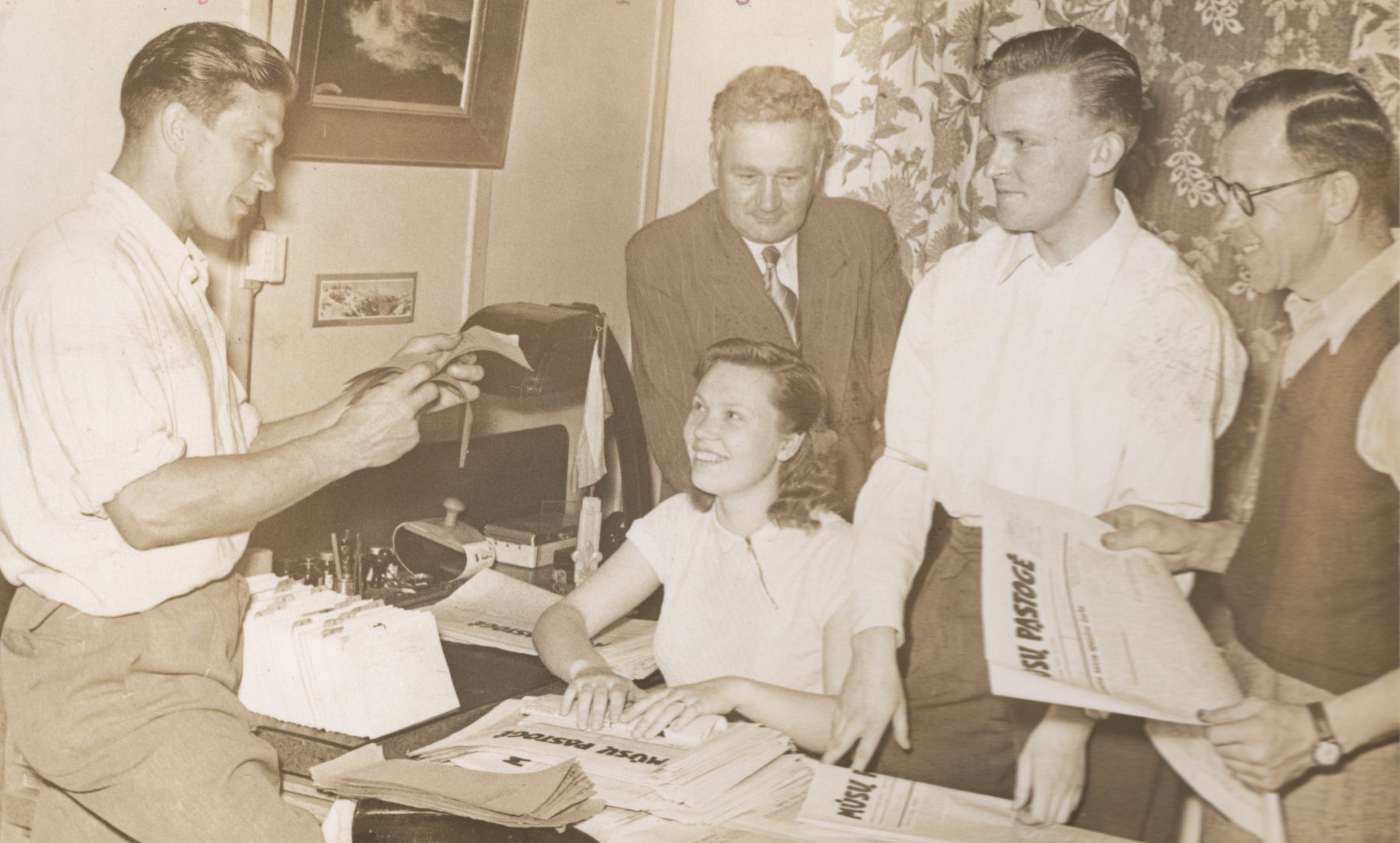
Distribution of the newspaper „Musu pastoge“

Sydney, 1951

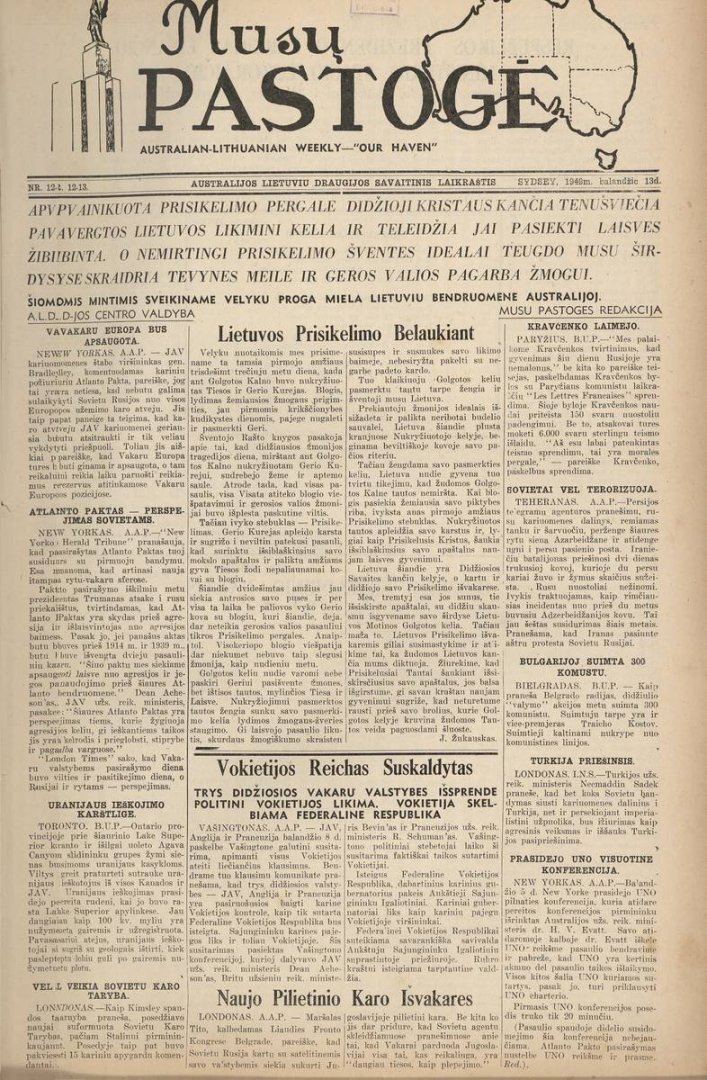
While the newspaper „Australijos lietuvis“ was being published in Adelaide, Lithuanians in Sydney felt the need to have their own informational publication. On January 26, 1949, the first issue of the Australian Lithuanian weekly „Musu pastoge“ was published in Sydney using a printing press. Its publisher was the Australian Lithuanian Society, led by chairman Antanas Bauze, and its editor was Juozas Zukauskas.

The early issues of the newspaper were small in format, consisting of four pages, a quarter of which was in English, as required by the Australian government at the time.

Australian Lithuanian Archives, Album „Lietuviai Australijoje“

AUSTRALIAN LITHUANIANS. PART 6

Newspaper “Musu pastoge”, No. 12

Sydney, April 13, 1949

“Musu pastoge” was published weekly, despite limited funds, a small number of subscribers and donations, and the high costs of printing at an Australian printing press. Editors often changed frequently.

Australian Lithuanian Archives

AUSTRALIAN LITHUANIANS. PART 6

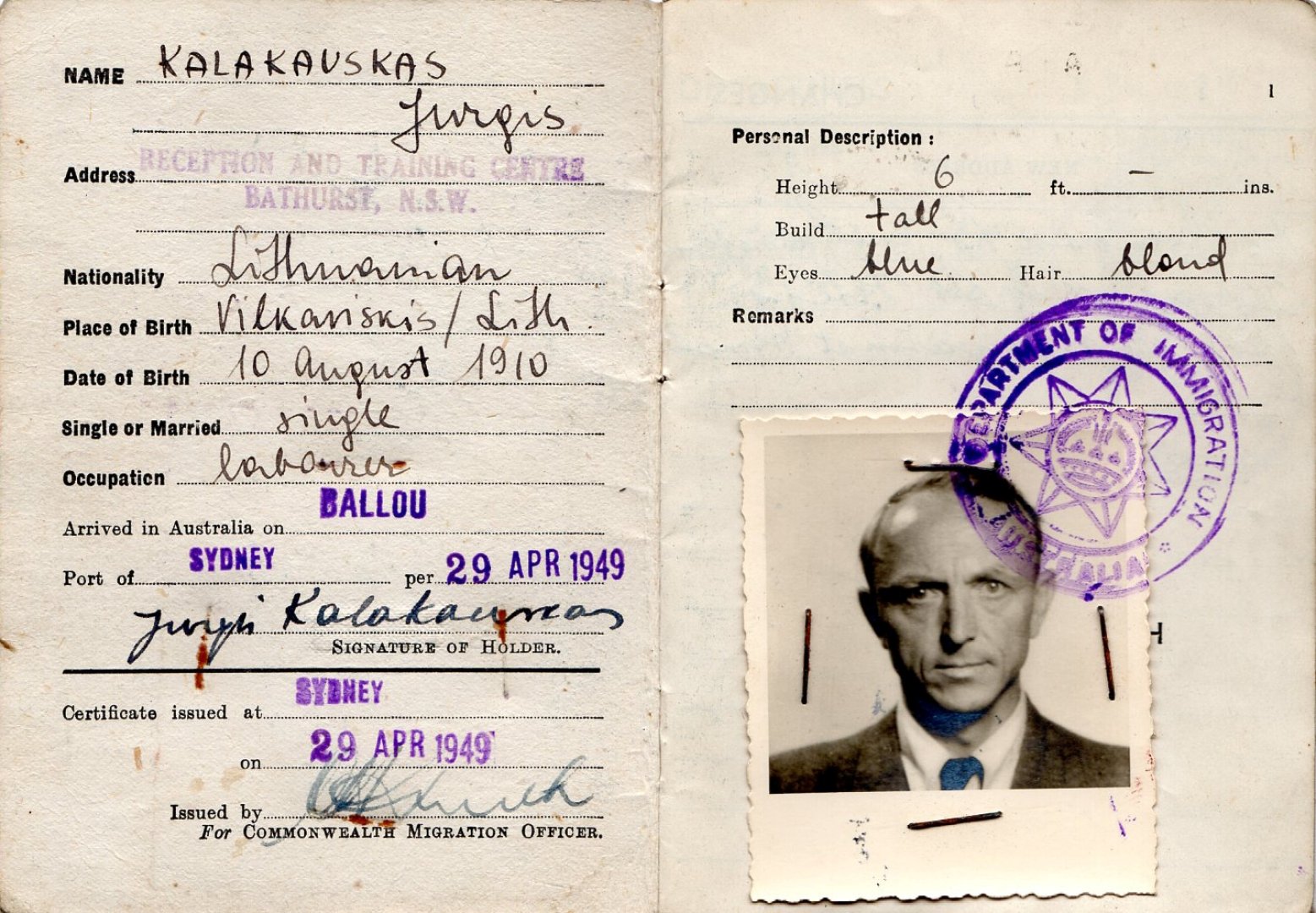
Certificate issued by the Australian Immigration Department to the future editor of the newspaper “Musu pastoge”, Jurgis Kalakauskas

1949

The first Executive Board of the Australian Lithuanian Community (ALC), chaired by J. Vaicaitis, reached an agreement with A. Bauze, and on August 12, 1952, the newspaper “Musu pastoge” was declared the official organ of the ALC. The publisher began signing as the chairman of the Executive Board, J. Vaicaitis, and the editor was J. Zukauskas. In November 1953, Jurgis Kalakauskas-Kalakonis became the editor of the newspaper, a position he held until July 1958.

Australian Lithuanian Archives

AUSTRALIAN LITHUANIANS. PART 6

Concert of Australian Lithuanians’ Days at the Lithuanian House

Participants of the event, standing from the left: 1 – writer, translator, journalist Pulgis Andriusis, 2 – community activist, singer, teacher Genovaite Vasiliauskiene, 3 – journalist, poet, translator Vincas Kazokas, 4 – pianist Dorothy Oldham, 5 – violinist Pranas Matiukas, 6 – singer, teacher Antanina Guciuviene, 7 – poet J. Rackus

Adelaide, December 30, 1962

Photograph by Alfonsas Budrys

The issue of finding a permanent editor for the newspaper „Musu pastoge“ was finally resolved when Vincas Kazokas was invited to take the position at the end of October 1961. Except for a brief interruption, he held this post until his death on October 30, 1984.

Vincas Kazokas (1919–1984) was an Australian Lithuanian writer and journalist. From 1938, he studied German studies at Vytautas Magnus University, and from 1940 to 1943 studied theology and philosophy at Vilnius University. In 1944, he fled to Germany. In 1946–47, he studied at the University of Tübingen and taught German at the Lithuanian gymnasium in Reutlingen. In 1949, he emigrated to Australia. He was a member of the Executive Council of the Australian Lithuanian Community (ALC) and an initiator of the Australian Lithuanian Days. He edited the weekly „Musu pastoge“ from 1961 to 1970 and 1975 to 1984, writing its editorials.

Lithuanian Central State Archives, 1-51349
AUSTRALIAN LITHUANIANS. PART 6

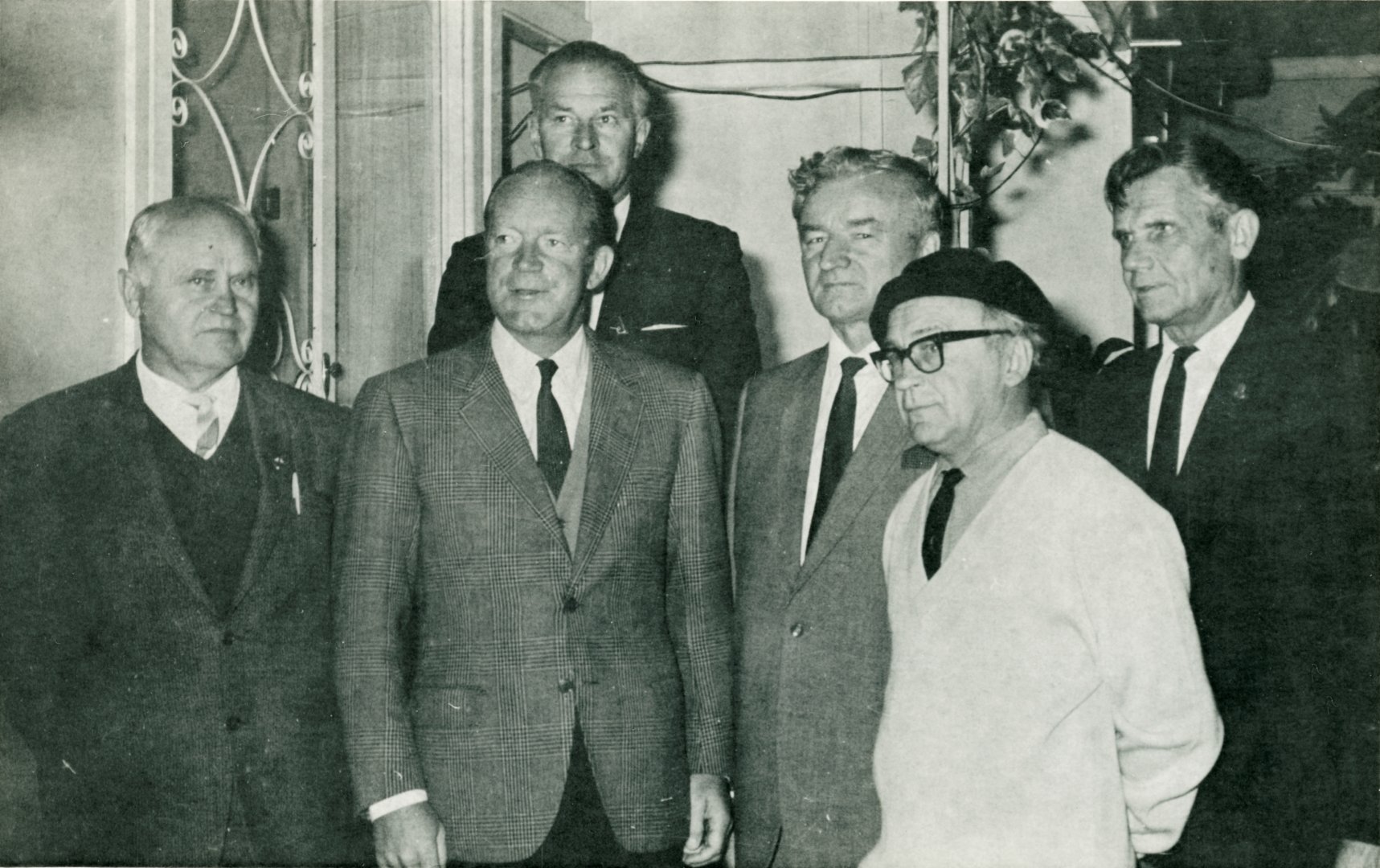
Chairman of the Supreme Committee for the Liberation of Lithuania (VLIK), Juozas Kestutis Valiunas (second from the left), visiting Australian Lithuanians

In the front row, standing from the left: 1 – Dr. A. Mauragis, 3 – Chairman of the Executive Board of the Australian Lithuanian Community (ALC), M. Zakaras, 4 – Administrator of the Australian Lithuanian weekly “Musu pastoge”, B. Stasionis

In the second row: ALD Sydney branch chairman V. Deikus

Sydney, 1970–1979
The path of the newspaper “Musu pastoge” was difficult. Publishers changed, editors even more frequently, and financial shortages caused constant struggles. Despite all difficulties, the weekly continued, with hopes that conditions would improve. Only when Bronius Stasionis took over administration of the newspaper (around 1958) did it begin to recover financially.

In 1977, the publication of “Musu pastoge” was radically reorganized, and the Lithuanian Community Press Association was established. As the publisher, it enjoyed all legal privileges and obligations.

Lithuanian Central State Archives, P-52054

AUSTRALIAN LITHUANIANS. PART 6

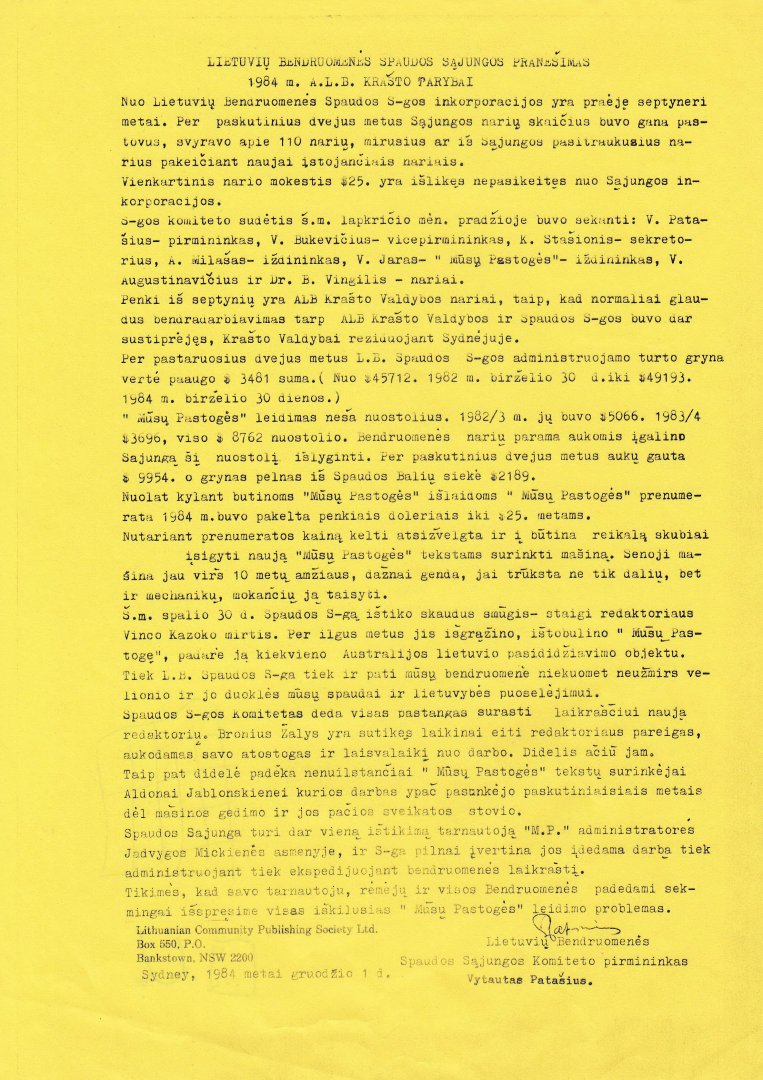
Announcement from the Lithuanian Community Press Association to the Executive Council of the Australian Lithuanian Community (ALC)

Sydney, December 1, 1984

Australian Lithuanian Archives

AUSTRALIAN LITHUANIANS. PART 6

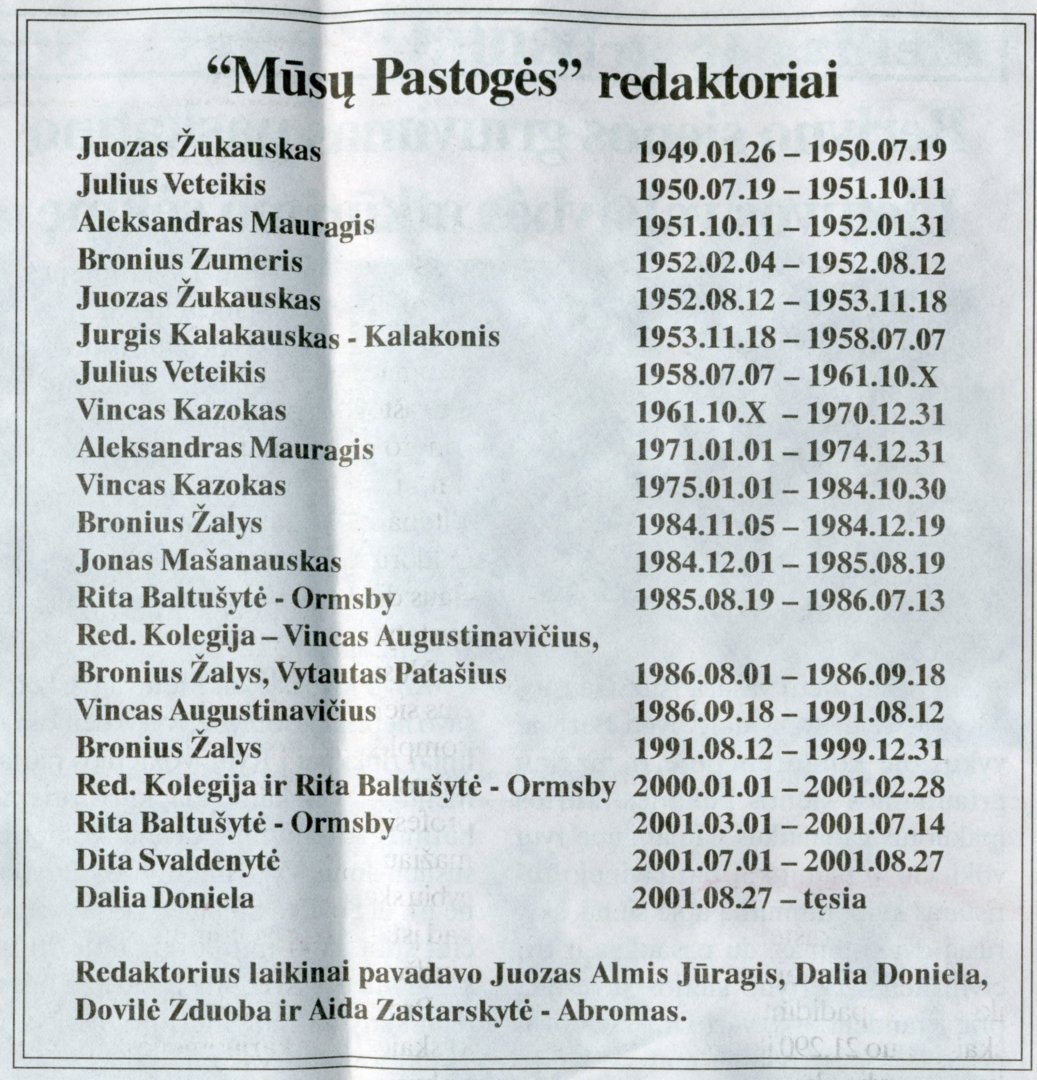
Excerpt from the newspaper “Musu pastoge” on its editors and their periods of editorship

Sydney, 2001

Australian Lithuanian Archives

AUSTRALIAN LITHUANIANS. PART 6

Logo of the newspaper “Teviskes aidai”

On February 11, 1956, the third Lithuanian newspaper in Australia, “Teviskes aidai”, was published in Melbourne. It was issued by the Australian Lithuanian Catholic Federation and edited by Fr. Dr. P. Bacinskas, later edited by B. Zumeris.

“Teviskes aidai” was a large-format, four-page weekly, but until the fourteenth issue it did not use Lithuanian type. In the early issues, the newspaper emphasized that its primary goal was to inform readers on matters of the Catholic faith. The weekly’s publication brought together a significant number of collaborators with Catholic-oriented ideas, who had previously contributed little to the Australian Lithuanian press.

Australian Lithuanian Archives

AUSTRALIAN LITHUANIANS. PART 6

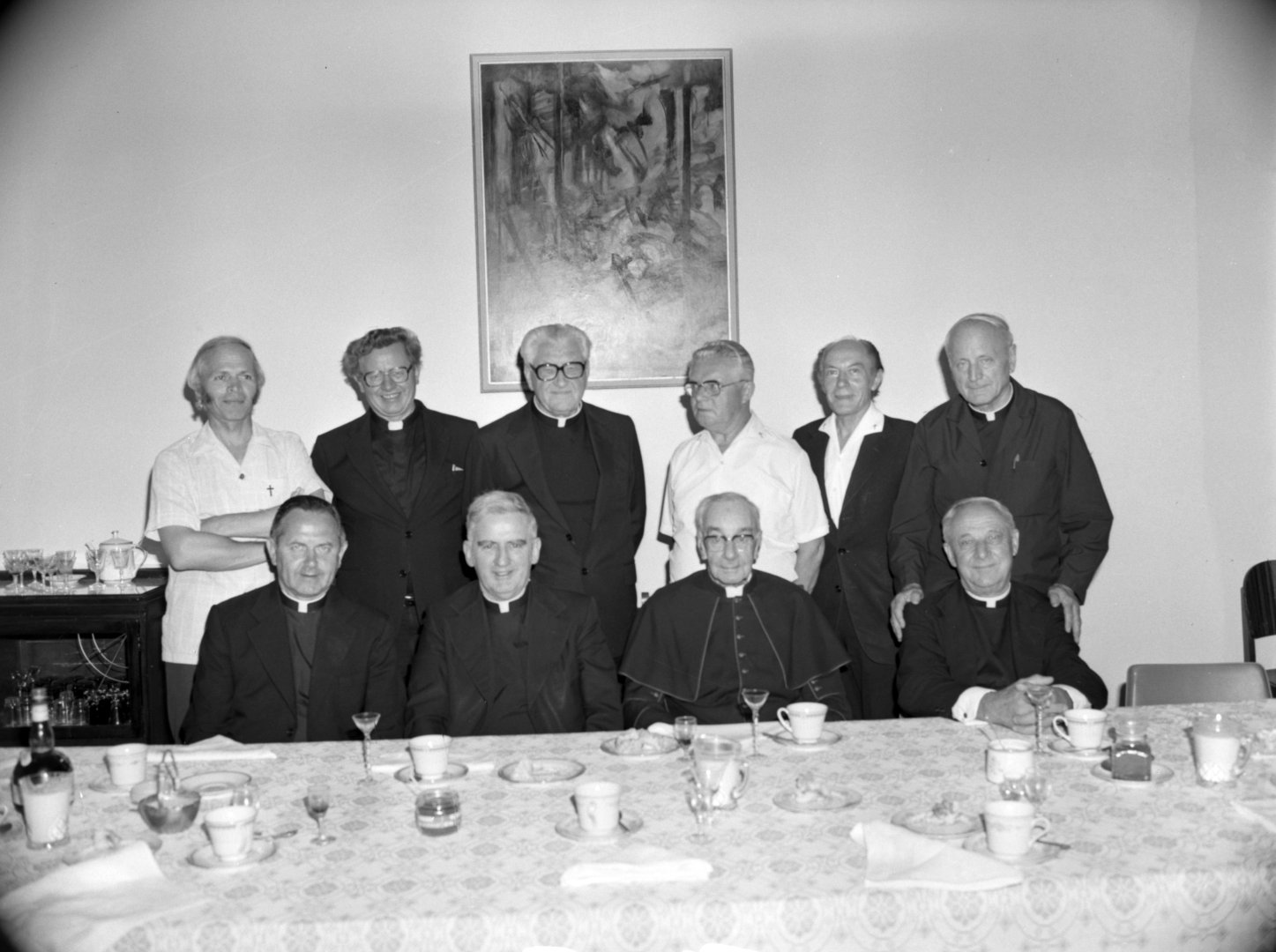
Clergy luncheon of the Australian Lithuanian Community at the Lithuanian Catholic Centre

In the front row, from the left: 1 – bishop Atkinson, 2 – archbishop J. Gleeson, 3 – bishop of Adelaide Matthew Beovich, 4 – bishop Vincentas Brizgys, in the second row, from the left: 1 – vicar of St. Peter’s Cathedral, Adelaide, 2 – Fr. Pranas Vaseris, 3 – Fr. Antanas Spurgis, 4 – Fr. Petras Butkus, 5 – Fr. Pranas Dauknys, 6 – Fr. Petras Bacinskas

Adelaide, [1981]

Photograph by Alfonsas Budrys

The photo captures three editors of the newspaper “Teviskes aidai” – Fr. Dr. Petras Bacinskas, Fr. Pranas Vaseris, and Fr. Pranas Dauknys.

From the beginning of 1964, Fr. P. Vaseris edited “Teviskes aidai” for nine years. In 1973, the editorship was taken over by Fr. P. Dauknys, who had relocated to Melbourne.

Lithuanian Central State Archives, 1-51699

AUSTRALIAN LITHUANIANS. PART 6

Publishers and editors of the political journal “News Digest International”, Jonas Petras Kedys and Julius Veteikis (left) Photograph by V. M. Vilkaitis

In June 1961, the then editor of the newspaper “Musu pastoge”, J. Veteikis, decided to publish an anti-communist periodical in English, “Voice of Freedom”. The publication was richly illustrated, newspaper-sized, and intended to commemorate the twentieth anniversary of the occupation of the Baltic states. Later, it was sent to the federal government, politicians, parliamentarians, military officers, and clergy across various Australian states. The publication achieved considerable success, and in October 1963, the attractive, illustrated journal “News Digest International” was launched.

The journal was planned to be issued quarterly and stated that it would cover the course of East-West political relations, inform readers about life behind the Iron Curtain, and expose Soviet intentions.

Australian Lithuanian Archives

AUSTRALIAN LITHUANIANS. PART 6

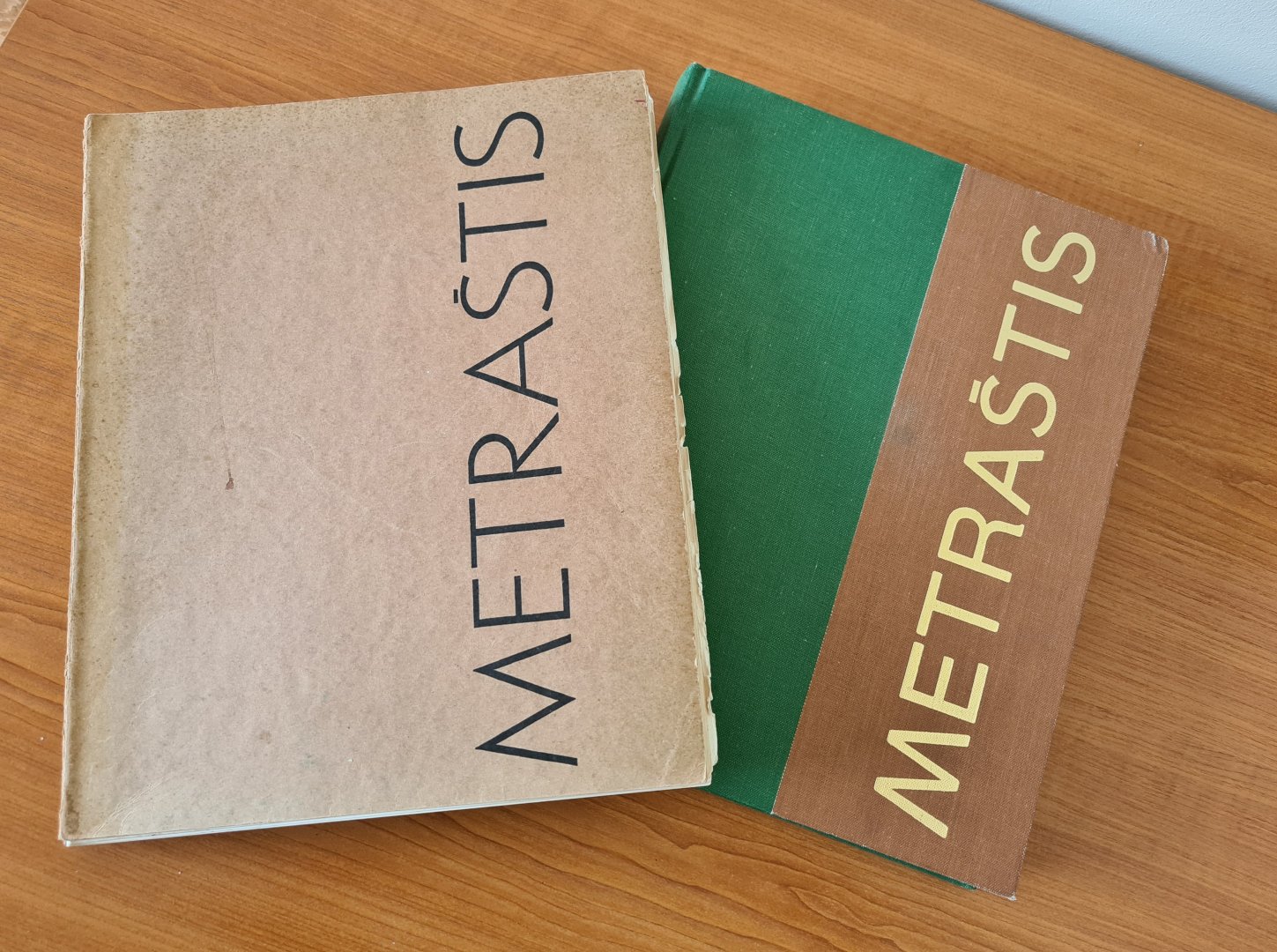
In addition to periodical press, two major publications were issued in Australia, documenting the life, activities, and achievements of Australian Lithuanians from 1947 to 1982. These are the “Australijos lietuviu metrastis” (Australian Lithuanians’ Chronicle)

The first part covers the years 1947–1961, the second 1961–1982. The first part was published in Sydney by the Editorial Board and the Executive Board of the Australian Lithuanian Community (ALC). The second part appeared in 1983 in Adelaide, published by the Australian Lithuanian Community and the Australian Lithuanian Fund.

The “Australijos lietuviu metrastis” was a joint effort of all Australian Lithuanians, both in terms of gathering materials and in publishing. It remains an important historical source for Lithuanians living abroad and in Lithuania.

Lt En