*virtualexhibitions_ranking_title*

*apsaugos_kodas*
*alt_phpcaptcha_generated_image*
Loading
*virtualexhibitions_rank_submit_message*

{{msg}}

AUSTRALIAN LITHUANIANS. PART 4

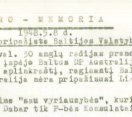
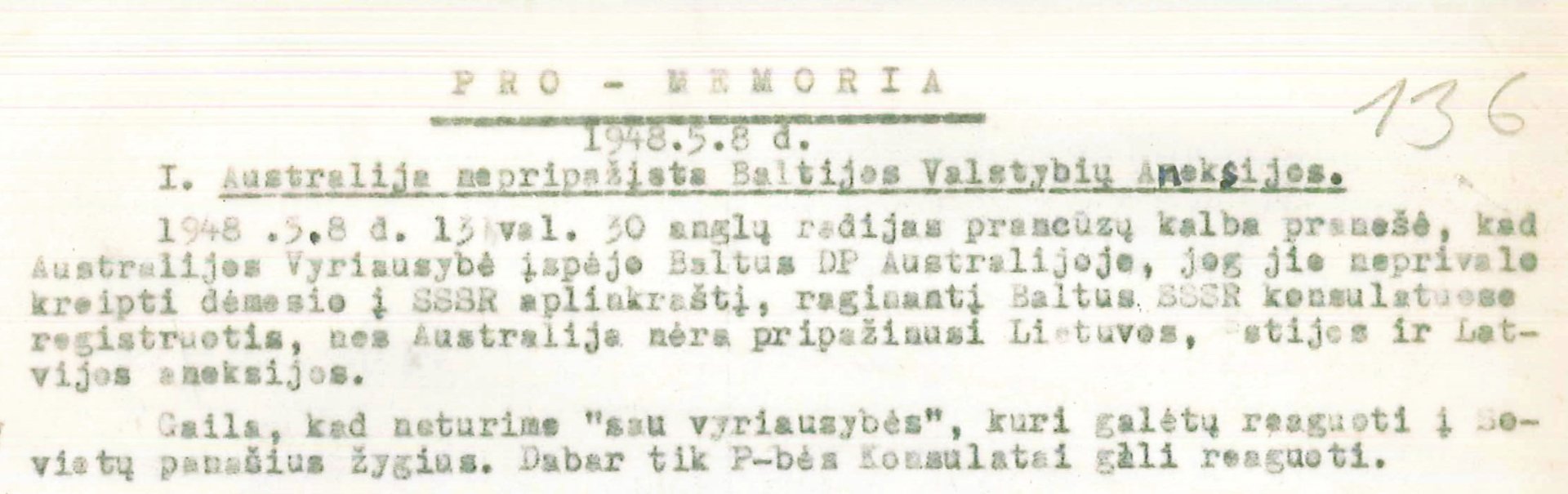
Memorandum by Stasys Antanas Backis, Lithuanian Representative in France, stating that Australia does not recognize the annexation of the Baltic States

Paris, May 8, 1948

Following the Soviet Union’s occupation of Lithuania, Australia – like the majority of Western countries – did not recognize the annexation of Lithuania and maintained relations with the Lithuanian diplomatic service. On May 9, 1948, the Australian government advised refugees arriving from the Baltic States to disregard invitations from the Soviet Embassy to register, emphasizing that Australia did not recognize the incorporation of Estonia, Latvia, and Lithuania into the Soviet Union.

Lithuanian Central State Archives, archive No. 648, summary No. 2, file No. 201, page 136

AUSTRALIAN LITHUANIANS. PART 4

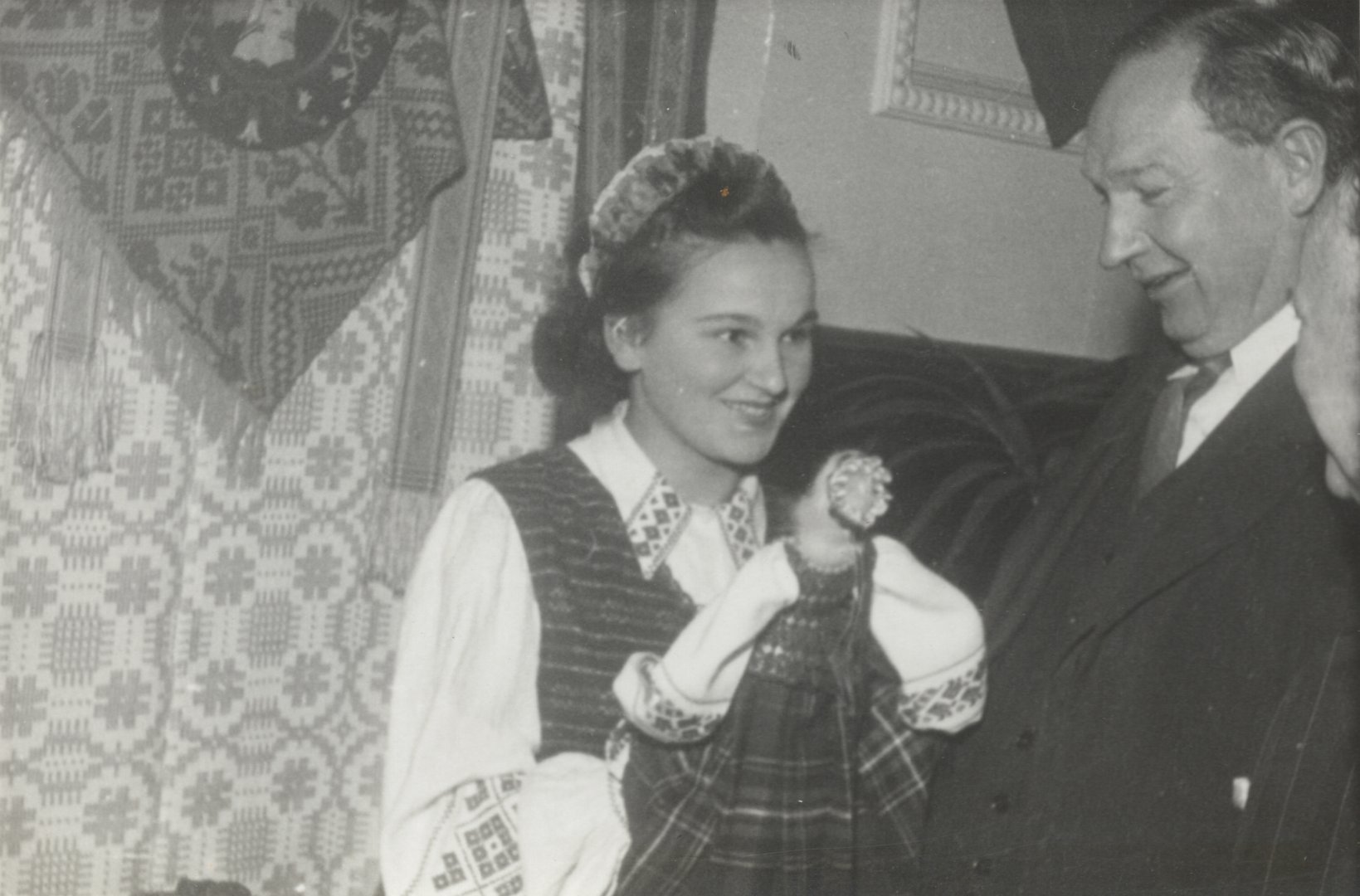
Premier of South Australia, Thomas Playford, visits the Lithuanian exhibition and speaks with Aldona Gudaityte

July 17, 1951

Australian Lithuanian Archive, photo album “Lithuanians in Australia”

AUSTRALIAN LITHUANIANS. PART 4

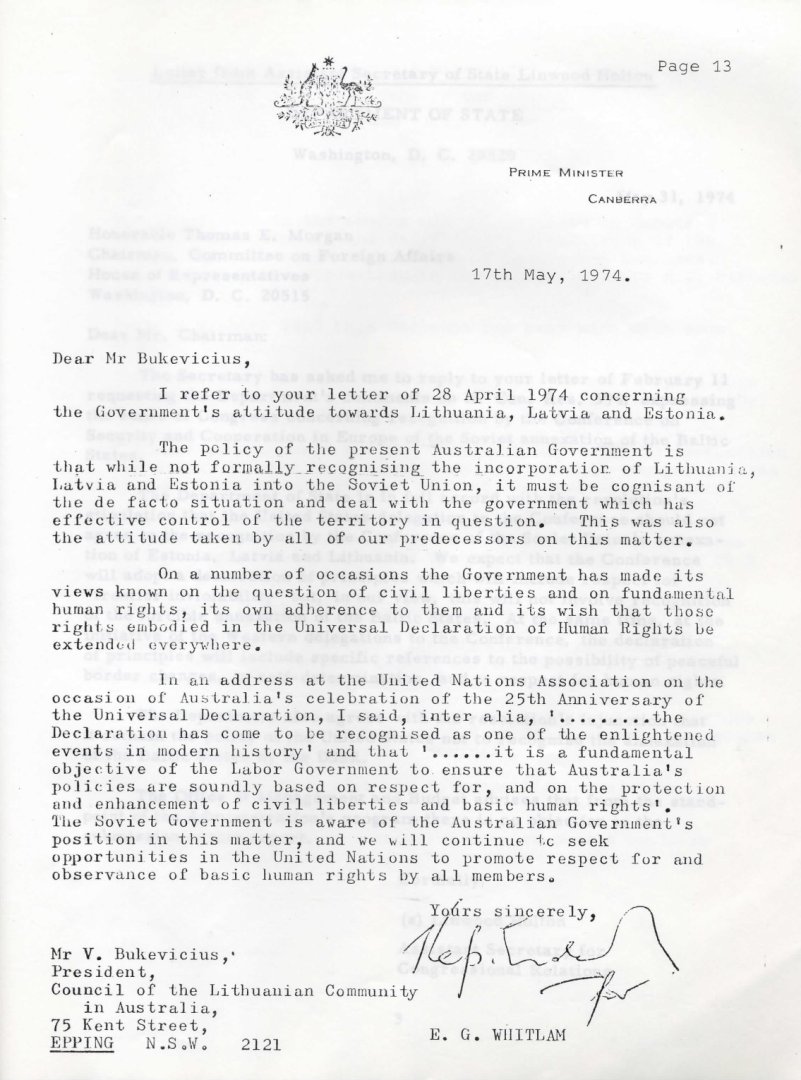
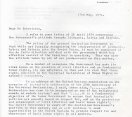
Letter from Australian Prime Minister Edward Gough Whitlam to Vytautas Bukevicius, Chairman of the Australian Lithuanian Community, in which he explains his position regarding the Baltic States

Canberra, May 17, 1974

Edward Gough Whitlam, Prime Minister of Australia and head of the Labor Party government, initially claimed that "the primary objective of the Labor Government is to ensure that Australia's foreign policy is based on respect for civil liberties and fundamental human rights, their protection and enhancement."

Later, however, he dismissed these principles and declared that Australia considered the incorporation of Lithuania, Latvia, and Estonia into the Soviet Union to be a legitimate act. He believed that Soviet control over the Baltic States had long been established and irreversible, and that recognizing this reality would be logical. This move was also part of an effort to improve relations with the Soviet Union in the context of the Cold War.

On August 3, 1974, all Australian radio and television stations officially announced that the Australian Government had recognized the incorporation of the Baltic States into the Soviet Union as legitimate.

Australian Lithuanian Archive

AUSTRALIAN LITHUANIANS. PART 4

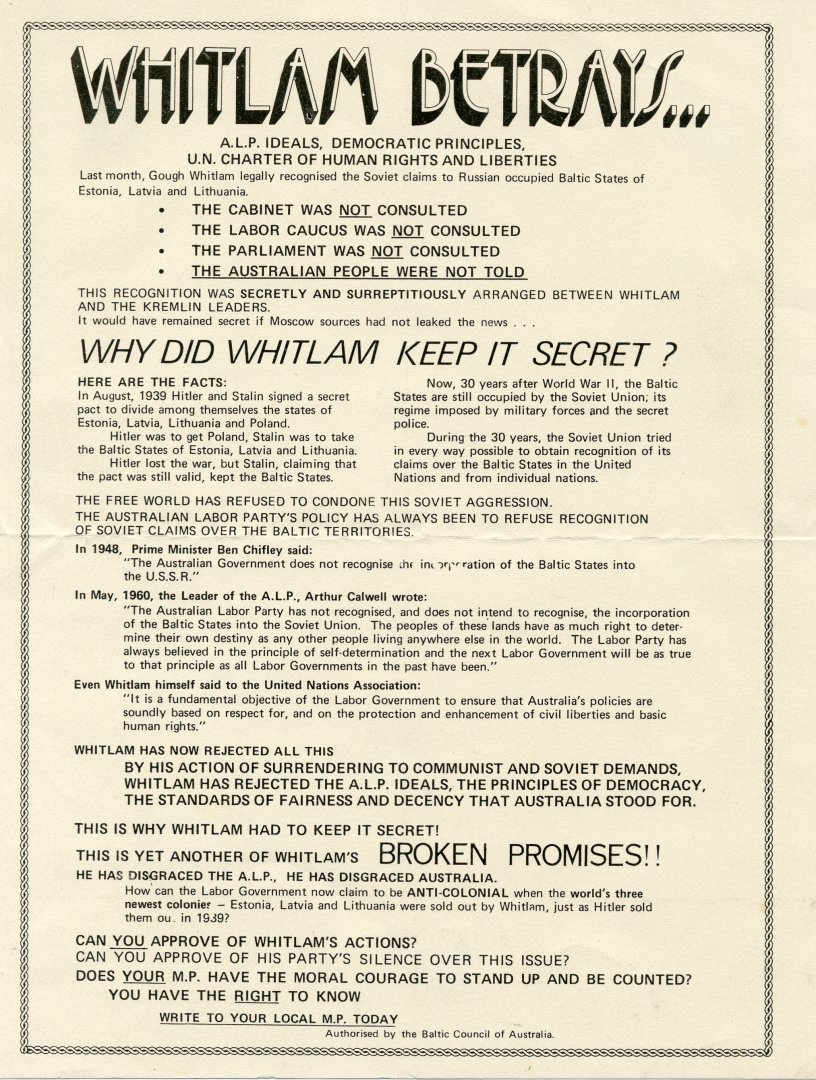
Protest Statement Prepared by the Australian Baltic Council

September 1974

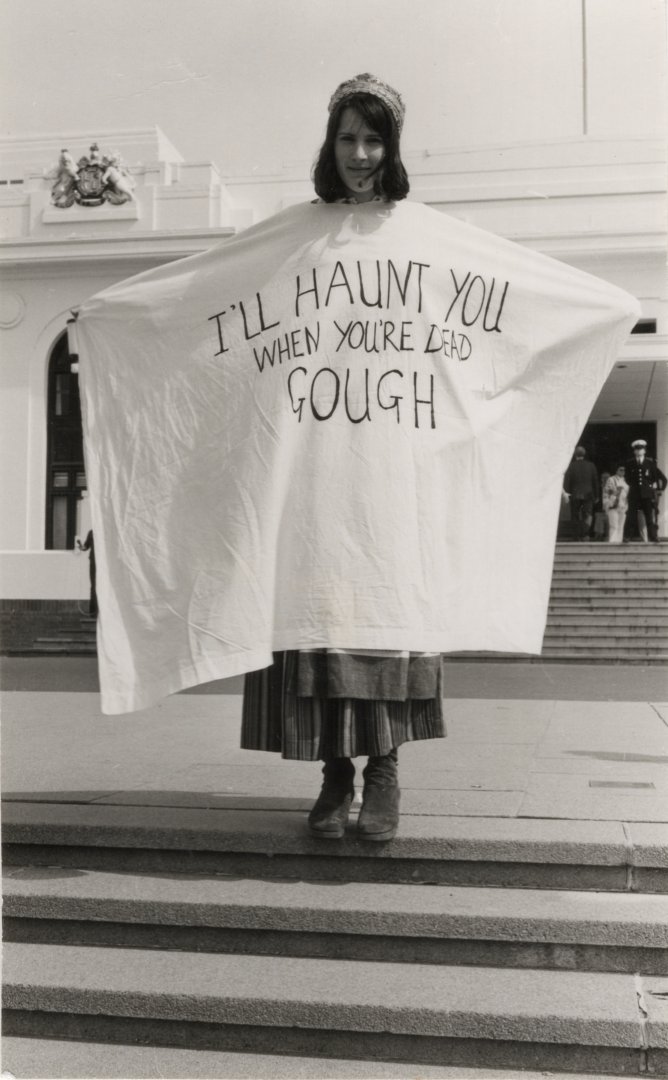
The recognition of the Soviet occupation sparked intense dissatisfaction among the Lithuanian, Latvian, and Estonian communities in Australia, prompting a strong and immediate response. Australian Lithuanians took to the streets in protest: they organized rallies in front of Parliament House, distributed leaflets, and purchased space in major newspapers to publish messages alongside advertisements that condemned crimes against humanity and justice. The leaders of Australian Lithuanian community chapters were especially active in mobilizing people.

Australian Lithuanians also reached out to members of the clergy and representatives of the Liberal Party, which was in opposition at the time and sympathetic to the Baltic diaspora.

One Australian Lithuanian wrote a poem, which was published in the “Vienybe” newspaper on December 27, 1974:

I’m glad I’m a Lithuanian,
I’m happy I am free
I wish I was a big dog,
And Whitlam was a tree.

Australian Lithuanian Archive

AUSTRALIAN LITHUANIANS. PART 4

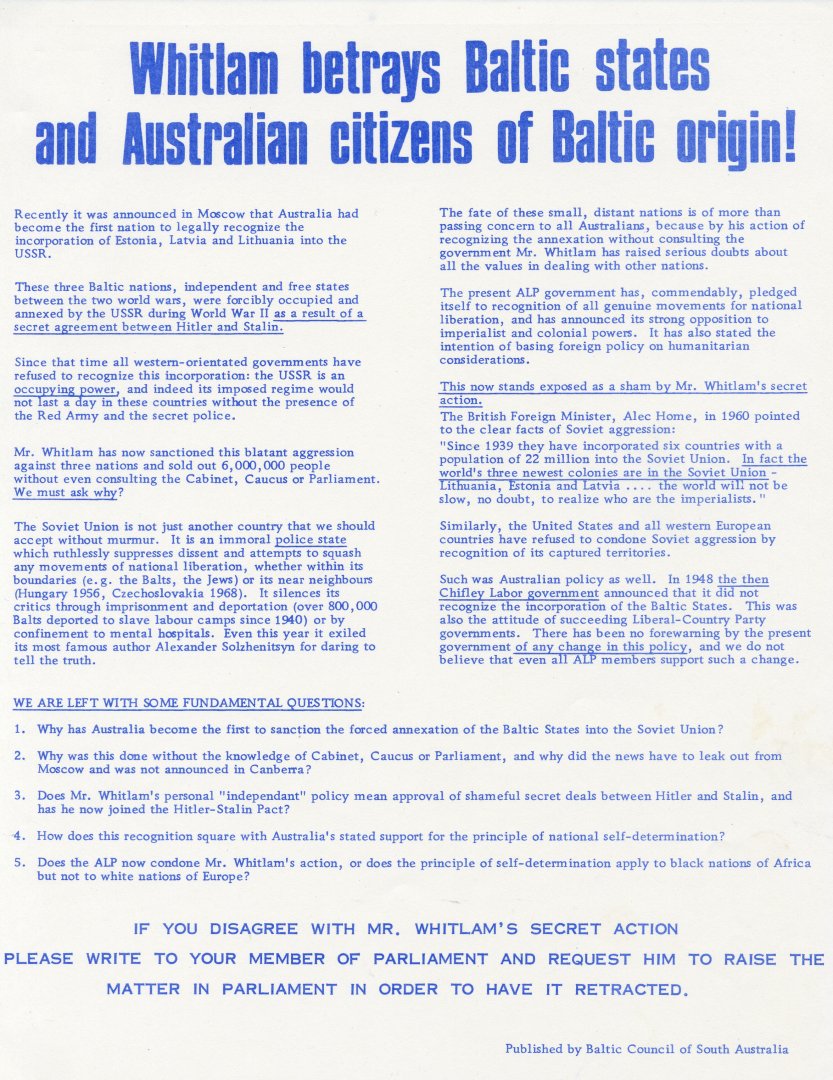
Protest Statement by the South Australian Baltic Council

September 1974

The statement notes that the recognition of the occupation of the Baltic States was carried out without the knowledge or approval of the Australian Parliament. It calls on citizens to write to their Members of Parliament and urge them to raise the issue in Parliament, with the aim of reversing the recognition of the Baltic States’ occupation.

Australian Lithuanian Archive

AUSTRALIAN LITHUANIANS. PART 4

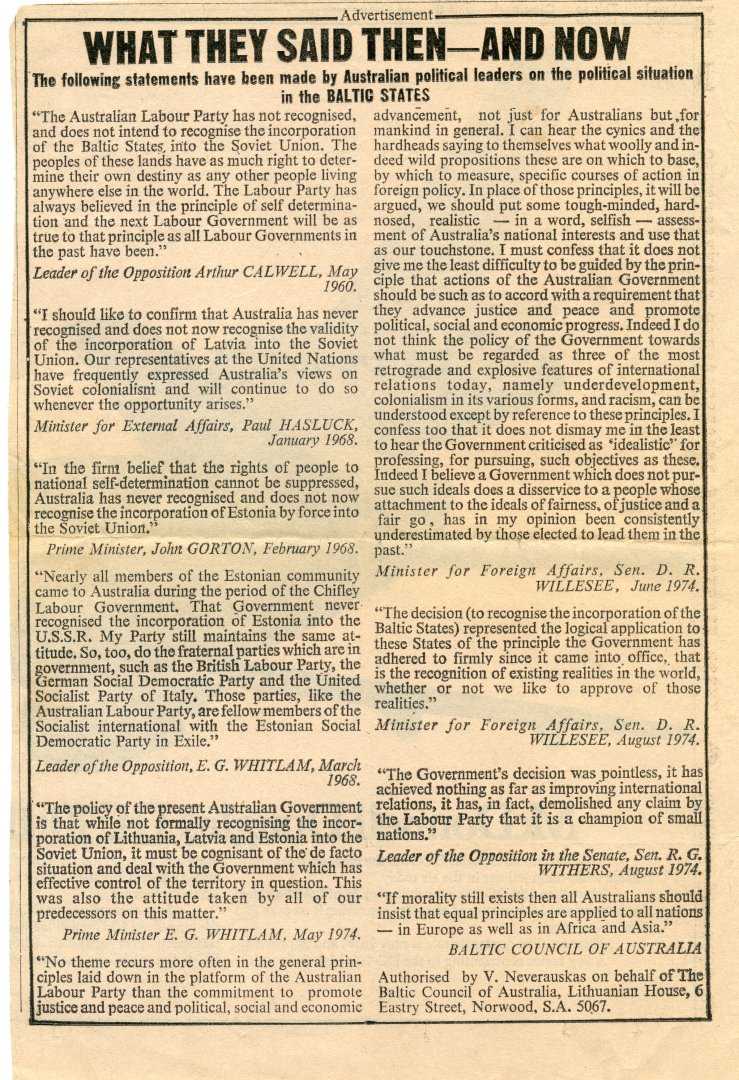
Newspaper Advertisement “What They Said Then – And What They Say Now”

1974

This advertisement features statements made by Australian political leaders regarding the Baltic States, compiled by Baltic Council member Vytautas Stasys Neverauskas.

Australian Lithuanian Archive

AUSTRALIAN LITHUANIANS. PART 4

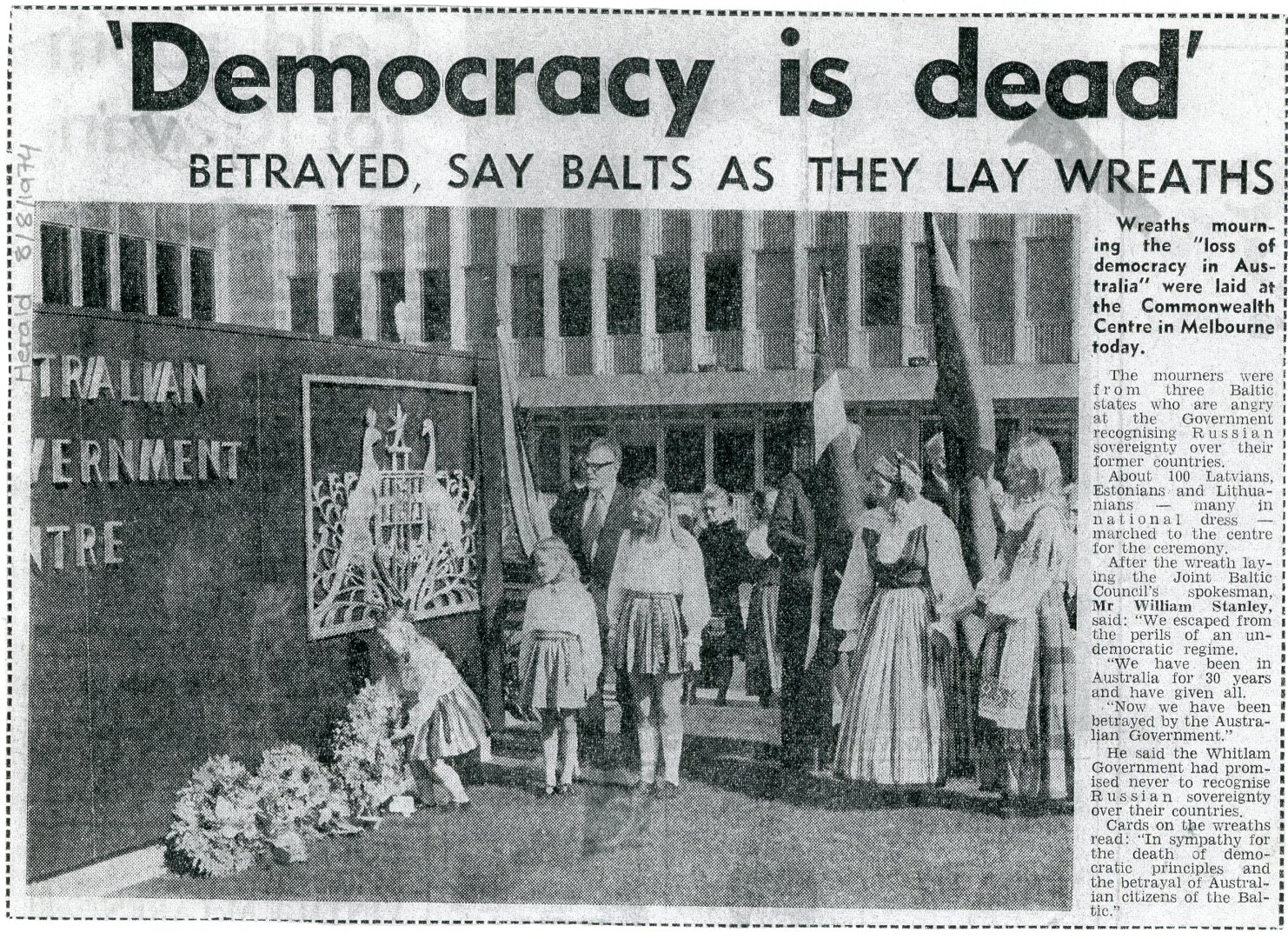
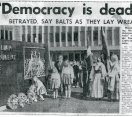
Article: “Democracy Is Dead, We Have Been Betrayed, Say the Balts as They Lay Wreaths”

Excerpt from the newspaper “The Herald”, August 8, 1974

Mourning wreaths marked “For the Death of Democracy in Australia” were laid at the Commonwealth Centre, reported “The Herald”, a daily newspaper with a circulation of half a million. Around 100 Latvians, Estonians, and Lithuanians – many dressed in national costumes – marched through central Melbourne.

Baltic Council representative W. Stanley said:

“We fled from the threat of undemocratic regimes. We have been in Australia for 30 years and have given everything to this country. Now the Australian government has betrayed us. The Whitlam government promised it would never recognize the incorporation of our countries into Russia.”

Australian Lithuanian Archive

AUSTRALIAN LITHUANIANS. PART 4

Protest in Canberra Against Australia’s Decision to de jure Recognize Lithuania as Part of the Soviet Union

August 1974

Australian Lithuanian Community Archives, PH01203

AUSTRALIAN LITHUANIANS. PART 4

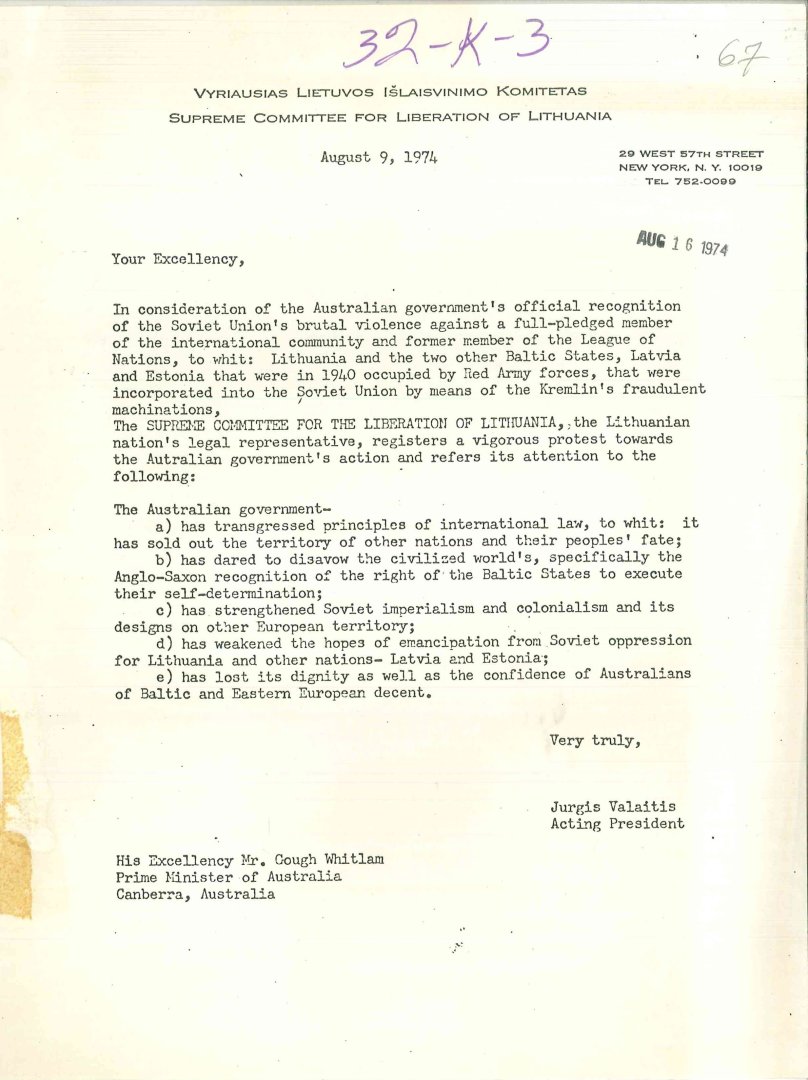
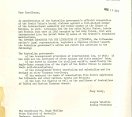
Letter from Jurgis Valaitis, Vice-Chairman of the Supreme Committee for the Liberation of Lithuania (Lithuanian: Vyriausiasis Lietuvos išlaisvinimo komitetas or VLIK), to Australian Prime Minister Edward Gough Whitlam regarding the recognition of the Baltic States’ occupation

New York, August 9, 1974

On August 5, 1974, the board of the Supreme Committee for the Liberation of Lithuania (VLIK) urgently convened an extraordinary meeting and resolved to send a protest statement to the Australian government, to inform free Lithuanians worldwide of this news, to call on all Lithuanians to send protests to the Australian government, and together with Latvians and Estonians to organize joint demonstrations worldwide on August 17.

Lithuanian Central State Archives, archive No. 658, summary No. 1, file No. 47, page 67

AUSTRALIAN LITHUANIANS. PART 4

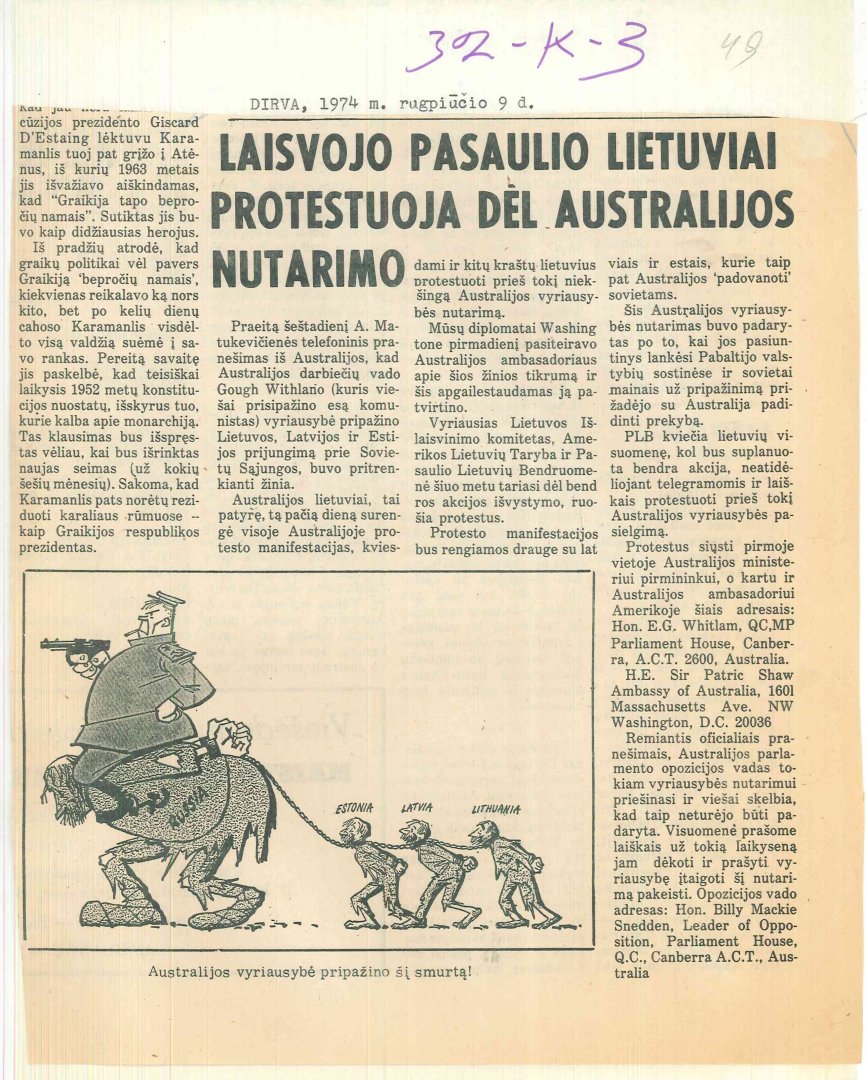
Article: “Lithuanians of the Free World Protest Australia’s Decision”

Excerpt from “Dirva” newspaper, August 9, 1974

Lithuanian Central State Archives, archive No. 658, summary No. 1, file No. 47, page 49

AUSTRALIAN LITHUANIANS. PART 4

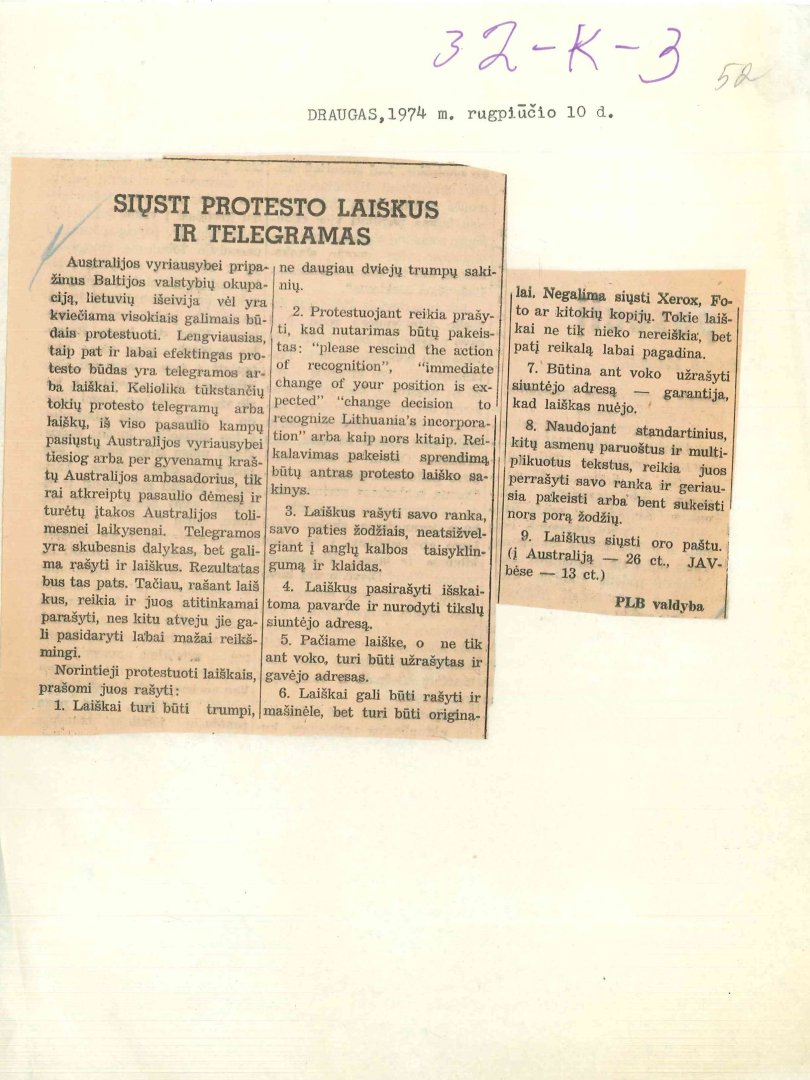
Article: “Send Protest Letters and Telegrams”

Excerpt from “Draugas” newspaper, August 10, 1974

Lithuanian Central State Archives, archive No. 658, summary No. 1, file No. 47, page 52

AUSTRALIAN LITHUANIANS. PART 4

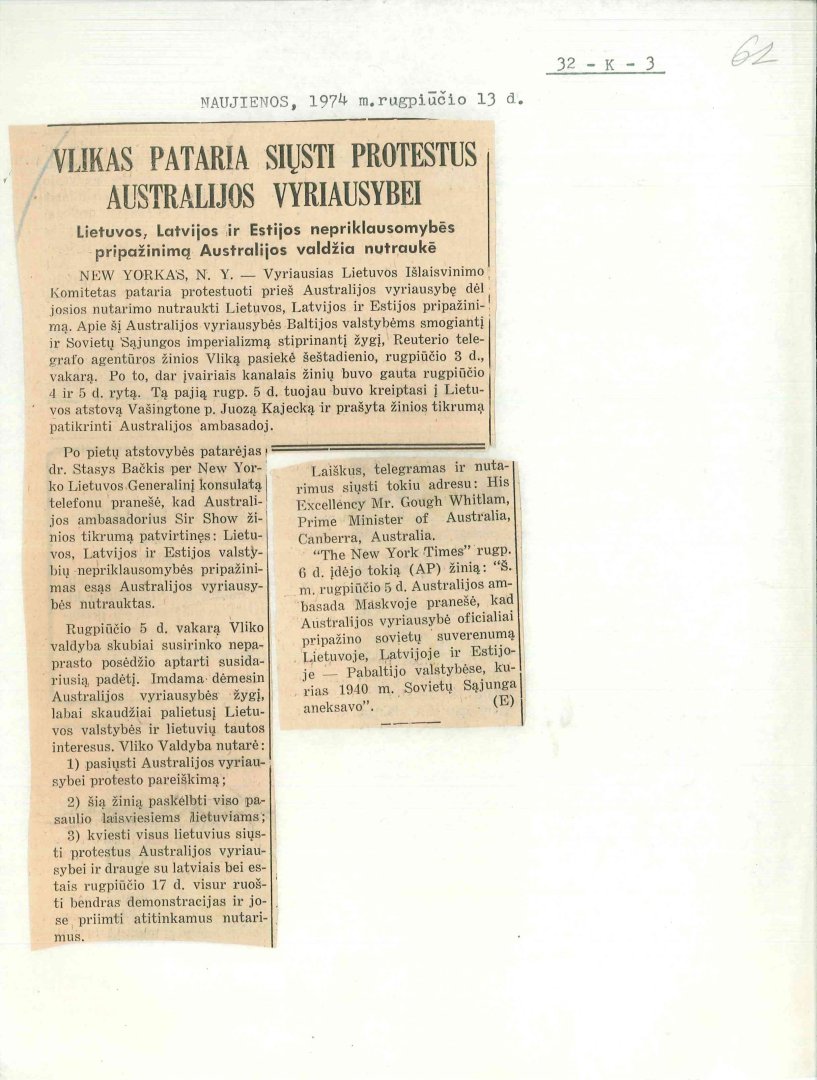
Article: “VLIK Advises Sending Protests to the Australian Government”

Excerpt from “Naujienos” newspaper, August 13, 1974

Lithuanian Central State Archives, archive No. 658, summary No. 1, file No. 47, page 62

AUSTRALIAN LITHUANIANS. PART 4

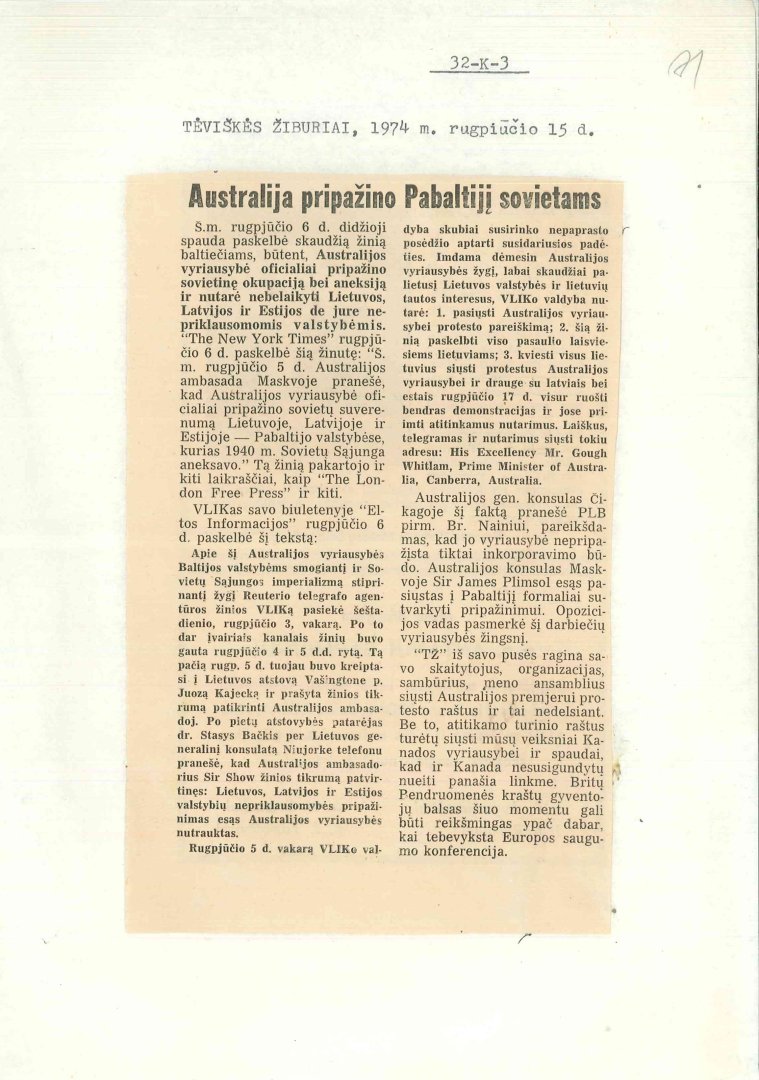
Article: “Australia Recognized the Baltics as Belonging to the Soviets”

Excerpt from “Teviskes ziburiai” newspaper, August 15, 1974

Lithuanian Central State Archives, archive No. 658, summary No. 1, file No. 47, page 71

AUSTRALIAN LITHUANIANS. PART 4

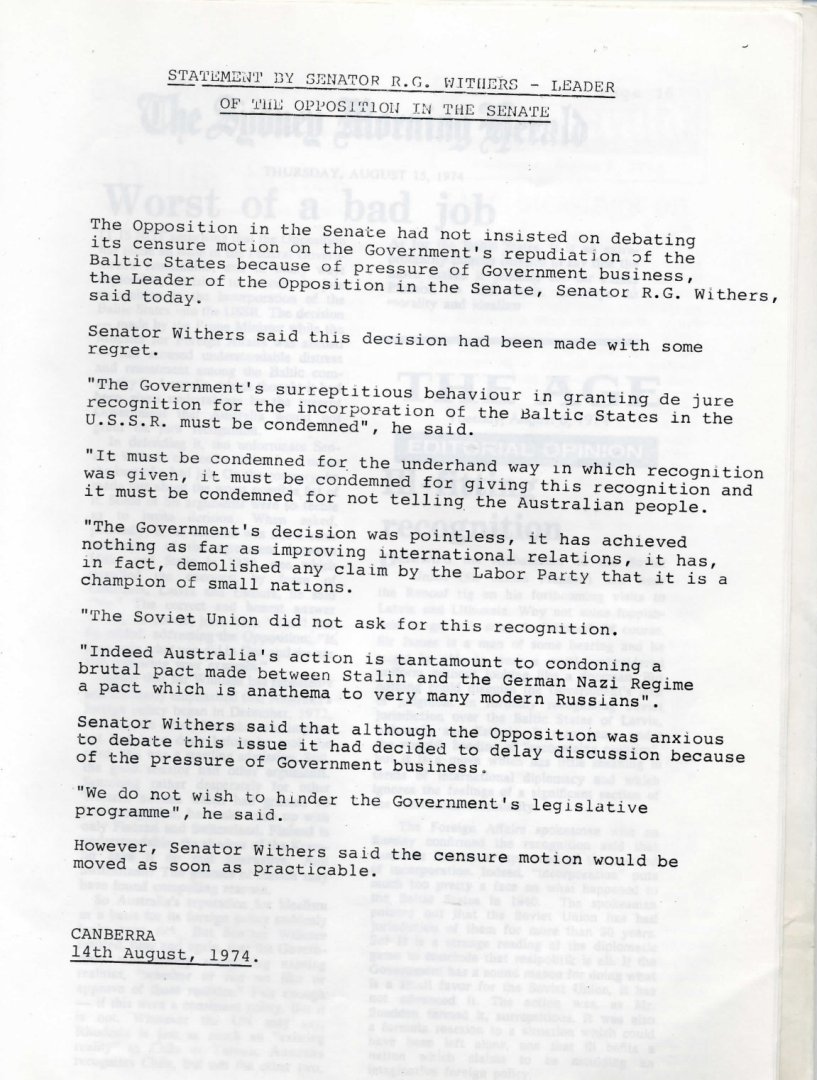
Statement by Australian Senate Opposition Member, Senator R. G. Withers, Regarding the Recognition of the Occupation of the Baltic States

Canberra, August 16, 1974

As the term of Australian Prime Minister Edward Gough Whitlam was drawing to a close, he, like most politicians before elections, actively traveled across the country delivering campaign speeches. His election campaign also extended to schools. During a visit to a school in Tasmania, Whitlam agreed to answer students’ questions. One student asked why the Prime Minister had recognized the Baltic States as belonging to the communists. The question angered Whitlam, and he reportedly threatened to have the student expelled from school.

The student was defended by teacher Tom McGlynn, who had studied Eastern European history. The incident was widely reported in both the Australian and Tasmanian press. Eventually, Prime Minister Whitlam publicly apologized to the student.

The growing political unrest and public complaints reached the Governor-General of Australia, John Kerr. As a result, Prime Minister Whitlam was dismissed from office. The newly installed Liberal government subsequently reversed the recognition of the Soviet occupation of the Baltic States.

Following these events, a quarterly political bulletin titled „Baltic News“ began publication in Tasmania. Its goal was to inform readers in Australia, Tasmania, and beyond about the situation in Lithuania, Latvia, and Estonia. The bulletin was led by educator and promoter of Lithuanian heritage and studies, Professor Algimantas Patricijus Taskunas.

Australian Lithuanian Archive
AUSTRALIAN LITHUANIANS. PART 4

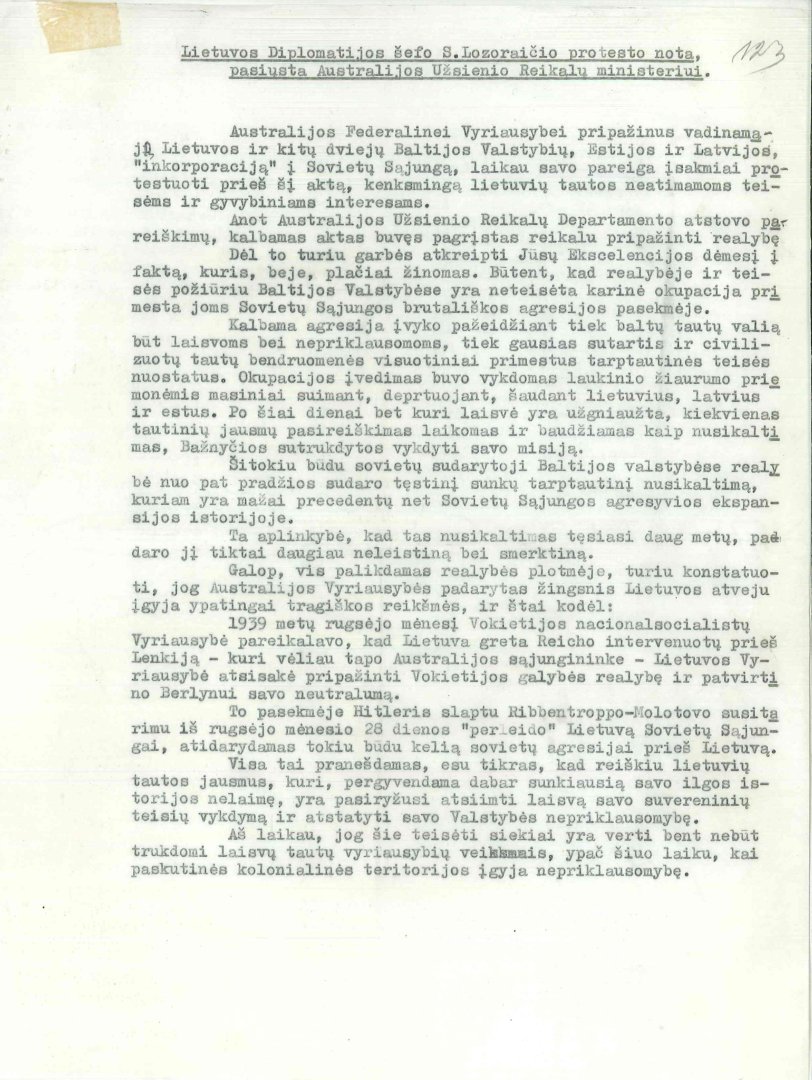
Protest Note from Lithuanian Diplomatic Chief Stasys Lozoraitis to the Australian Minister for Foreign Affairs

September 1974

Lithuanian Central State Archives, archive No. 658, summary No. 1, file No. 47, page 123
AUSTRALIAN LITHUANIANS. PART 4

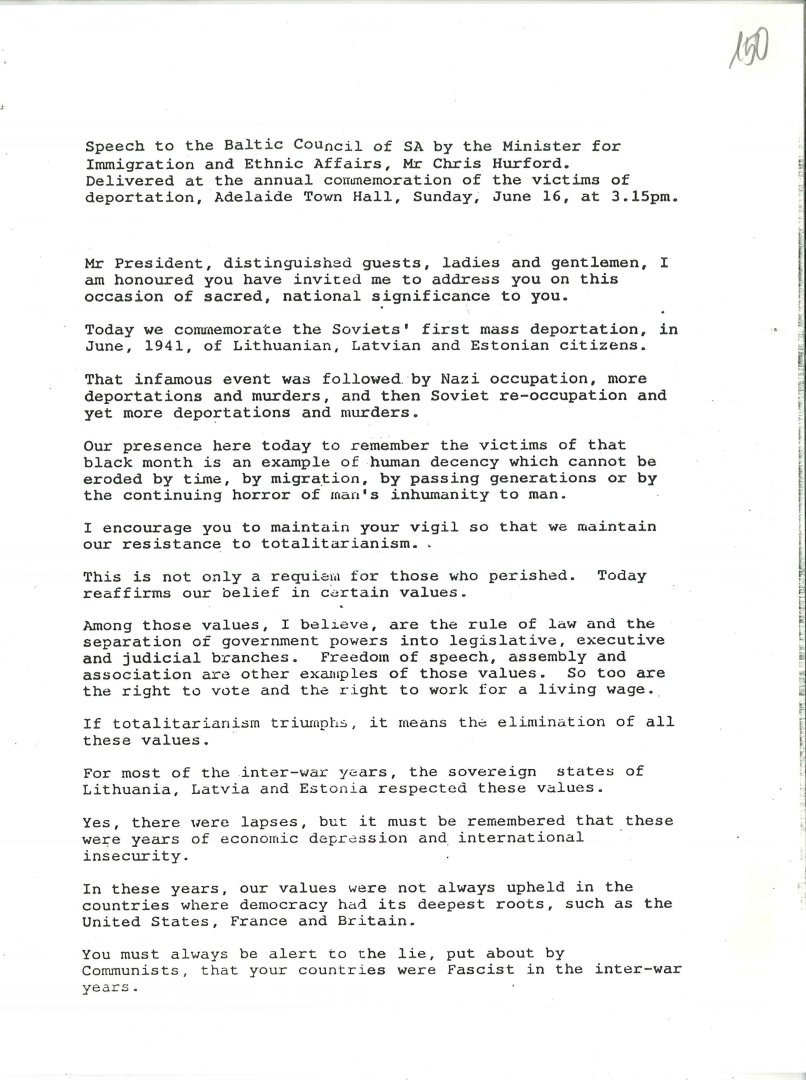
Speech by Australian Minister for Immigration and Ethnic Affairs, Chris Hurford, Delivered at the Annual Commemoration of Baltic Deportation Victims at Adelaide Town Hall

Speech by Australian Minister for Immigration and Ethnic Affairs, Chris Hurford, Delivered at the Annual Commemoration of Baltic Deportation Victims at Adelaide Town Hall

Lithuanian Central State Archives, archive No. 656, summary No. 2, file No. 36, page 150-152

Lt En