*virtualexhibitions_ranking_title*

*apsaugos_kodas*
*alt_phpcaptcha_generated_image*
Loading
*virtualexhibitions_rank_submit_message*

{{msg}}

AUSTRALIAN LITHUANIANS. PART 4

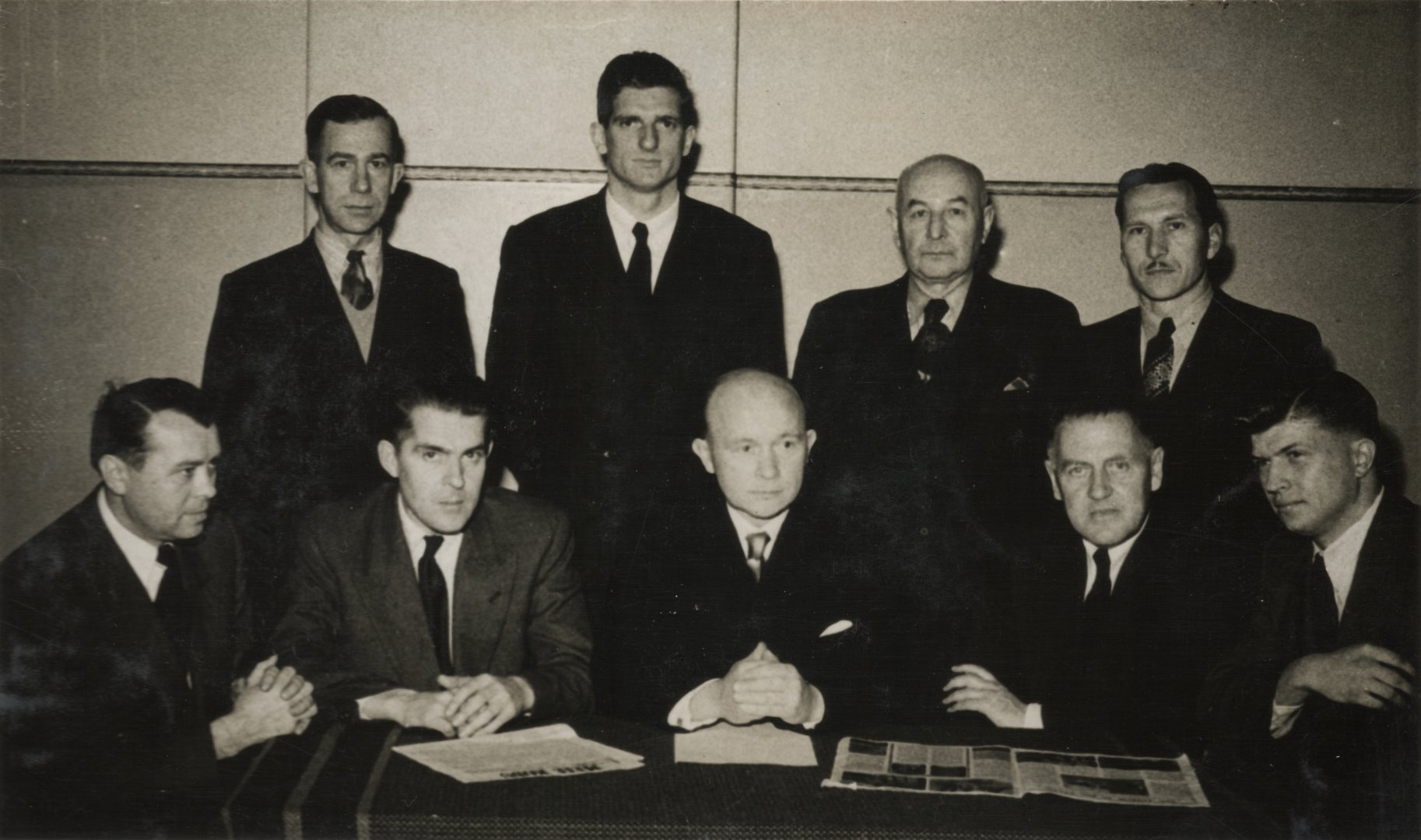
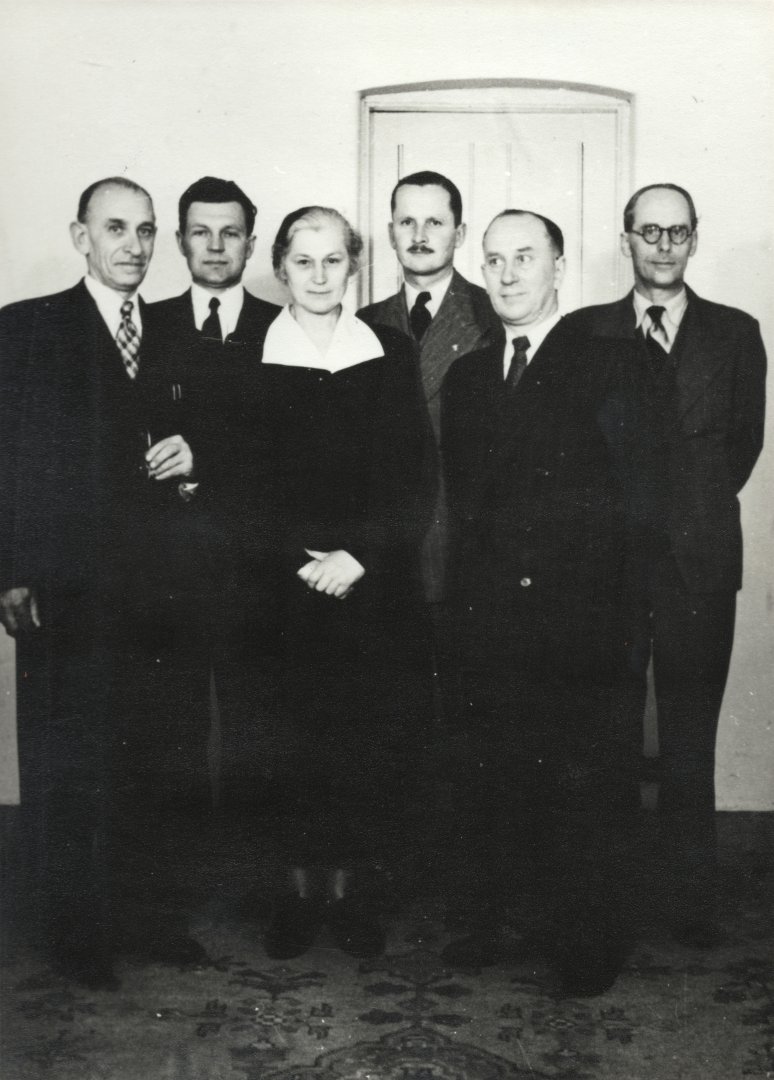
Founders of the First Baltic Council in Adelaide

From the left: 2nd – Juozas Lapsys, 3rd – Elena Reisoniene.

[1952–1953]

The Baltic Council in Adelaide was established in 1952 on the initiative of Lithuanians. The Council’s first chairman was Juozas Lapsys, who at the time was also chairman of the Adelaide chapter of the Australian Lithuanian Community (ALC). Throughout its years of activity, the Council carried out significant political work.

Starting in 1955, it organized impactful commemorations of the deportations, inviting representatives of Australian government institutions, senators, members of parliament, and journalists. These rallies emphasized the illegal occupation of Lithuania and the other Baltic States, as well as the genocide committed there.

The Baltic Council coordinated its actions in the Australian press and in official appeals to the Australian government. The Council was composed of two or three representatives from each of the three Baltic nations. The position of Council chairman rotated among the national groups.

Australian Lithuanian Archive, photo album “Lithuanians in Australia”

AUSTRALIAN LITHUANIANS. PART 4

Baltic Council in Sydney

Committees with similar goals operated in larger Lithuanian communities across Australia. In Adelaide, Melbourne, and Sydney, these were all known as Baltic Councils. The Baltic Women’s Associations were also active there, and both organizations shared the same statutes.

Australian Lithuanian Archive, photo album “Lithuanians in Australia”

AUSTRALIAN LITHUANIANS. PART 4

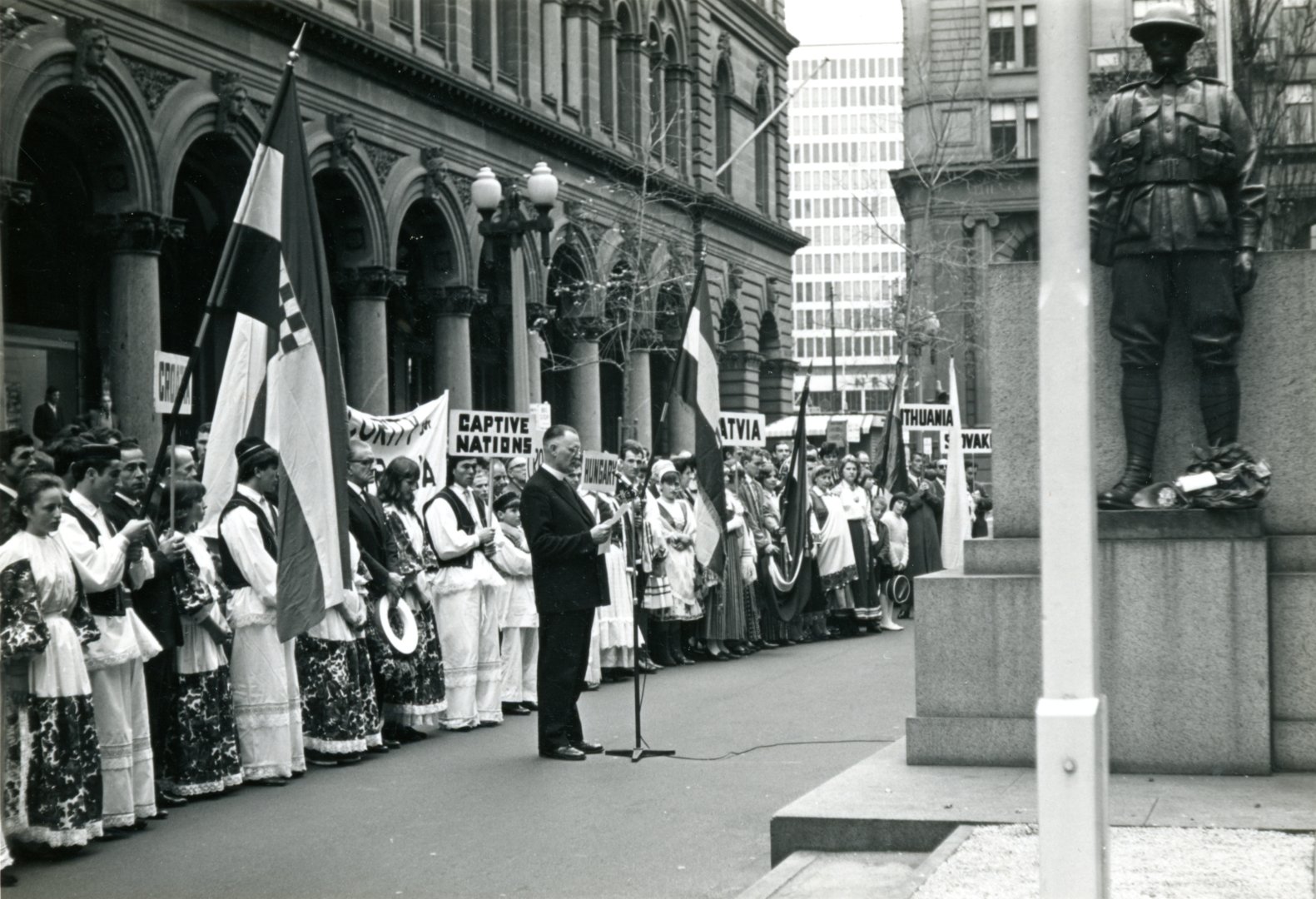
Captive Nations Week in Sydney

Father S. Gaidelis delivering the invocation.

Photo by V. M. Vilkaitis.

Captive Nations Week is an international event dedicated to commemorating nations under occupation. It was proclaimed by U.S. President Dwight Eisenhower. According to the U.S. Congress resolution adopted in July 1959, Captive Nations Week is to be observed until all occupied nations worldwide become free and independent. The first Captive Nations Week was celebrated in New York in July 1959.

The Captive Nations Committee in Australia was established in 1966 to organize the first and subsequent annual Captive Nations Week events. The Committee was one of the most important political organizations during the Cold War. It united representatives of Eastern and Central European national diasporas in Australia, including Lithuanians. The organization’s goals were similar to those of the Baltic Council.

The Committee engaged in extensive political activity, organizing demonstrations and marches. Particularly large protests were held against the Soviet Army Choir’s performance in Adelaide, against the 1974 recognition of the Baltic States’ occupation by the Australian Labor government, and in support of the release of political prisoners, among others.

Lithuanian representatives who worked in the Committee included: I. Riauba, V. Petkunas, V. Neverauskas, V. Stalba, T. Zuraskauskas, M. Pocius, J. Staciunas, J. Mikuzis, C. Zamoiskis, and E. Pocius.

Australian Lithuanian Archive, PH0907

AUSTRALIAN LITHUANIANS. PART 4

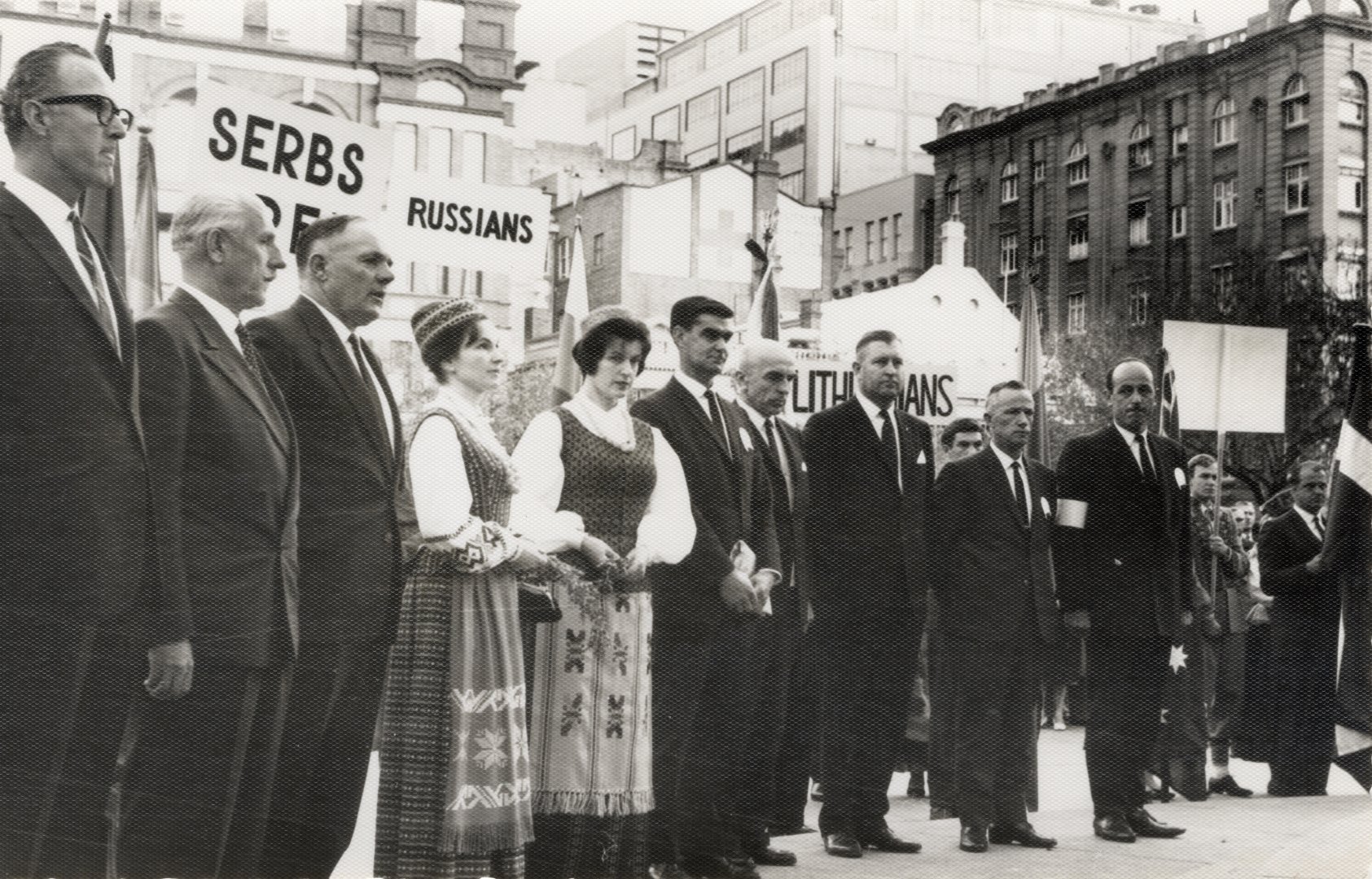
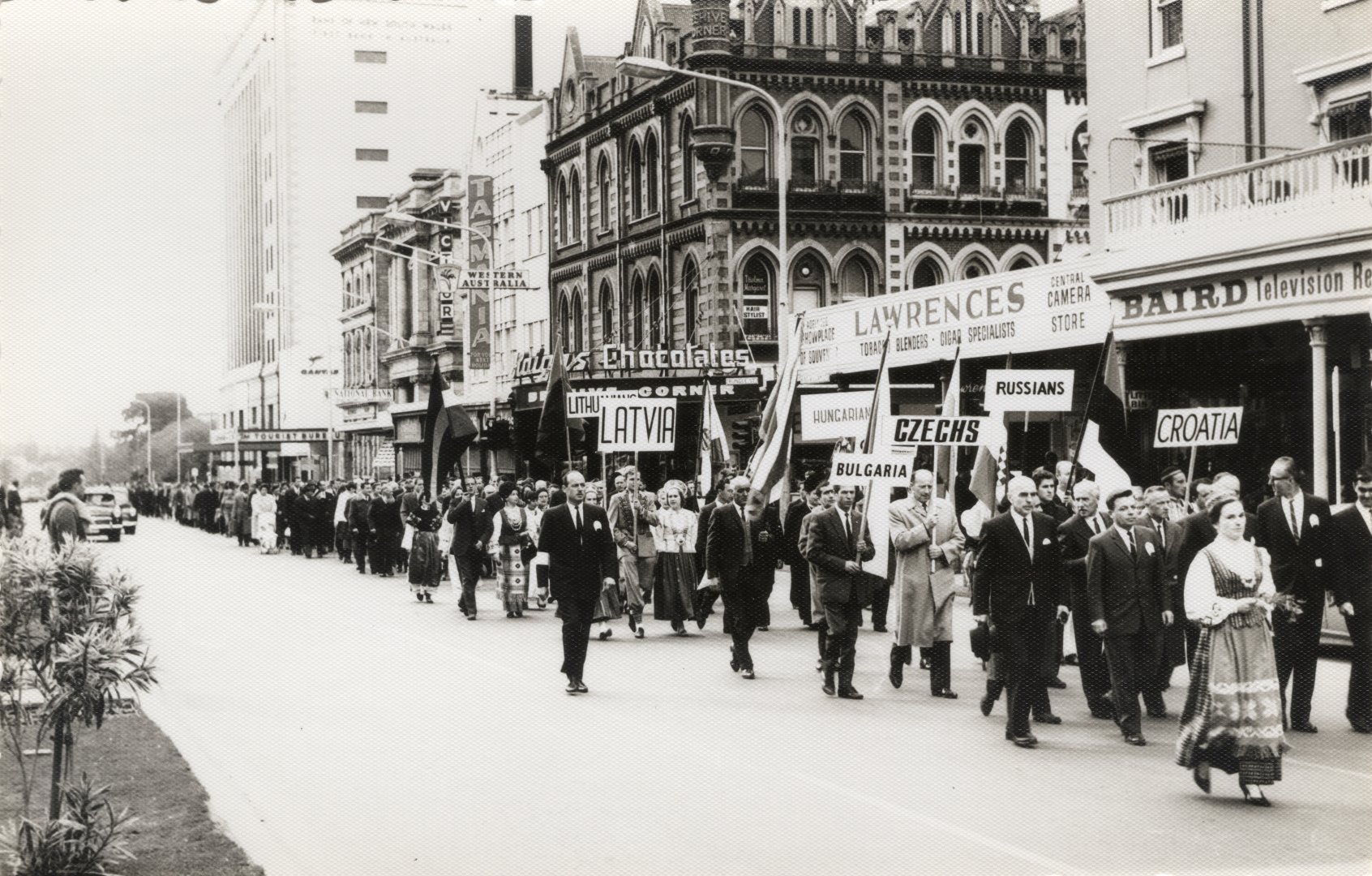
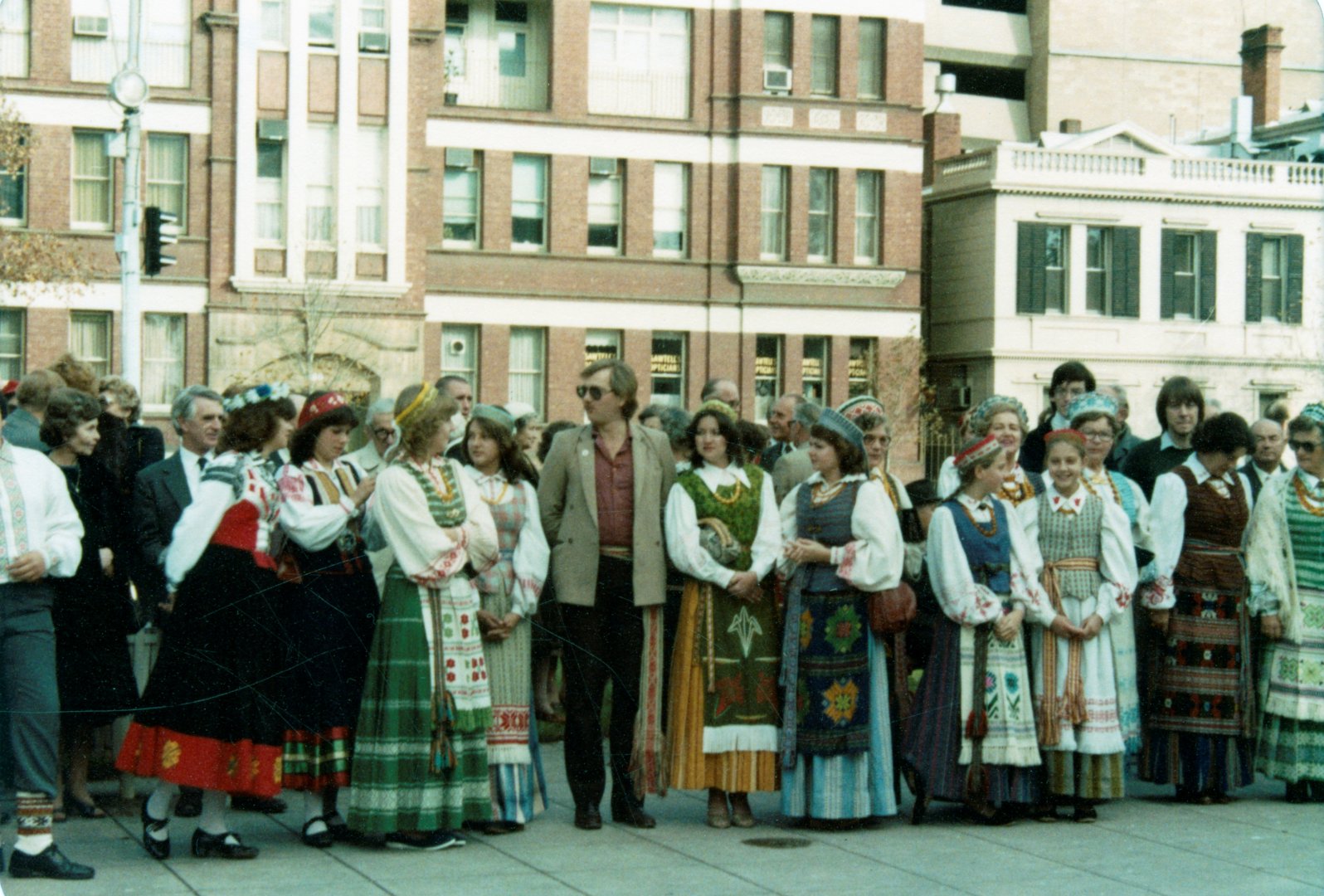
Participants of Captive Nations Week in the city center of Adelaide

Women dressed in traditional costumes: Aldona Patupiene, Janina Vaboliene.

1960s

Photo by Alfonsas Budrys.

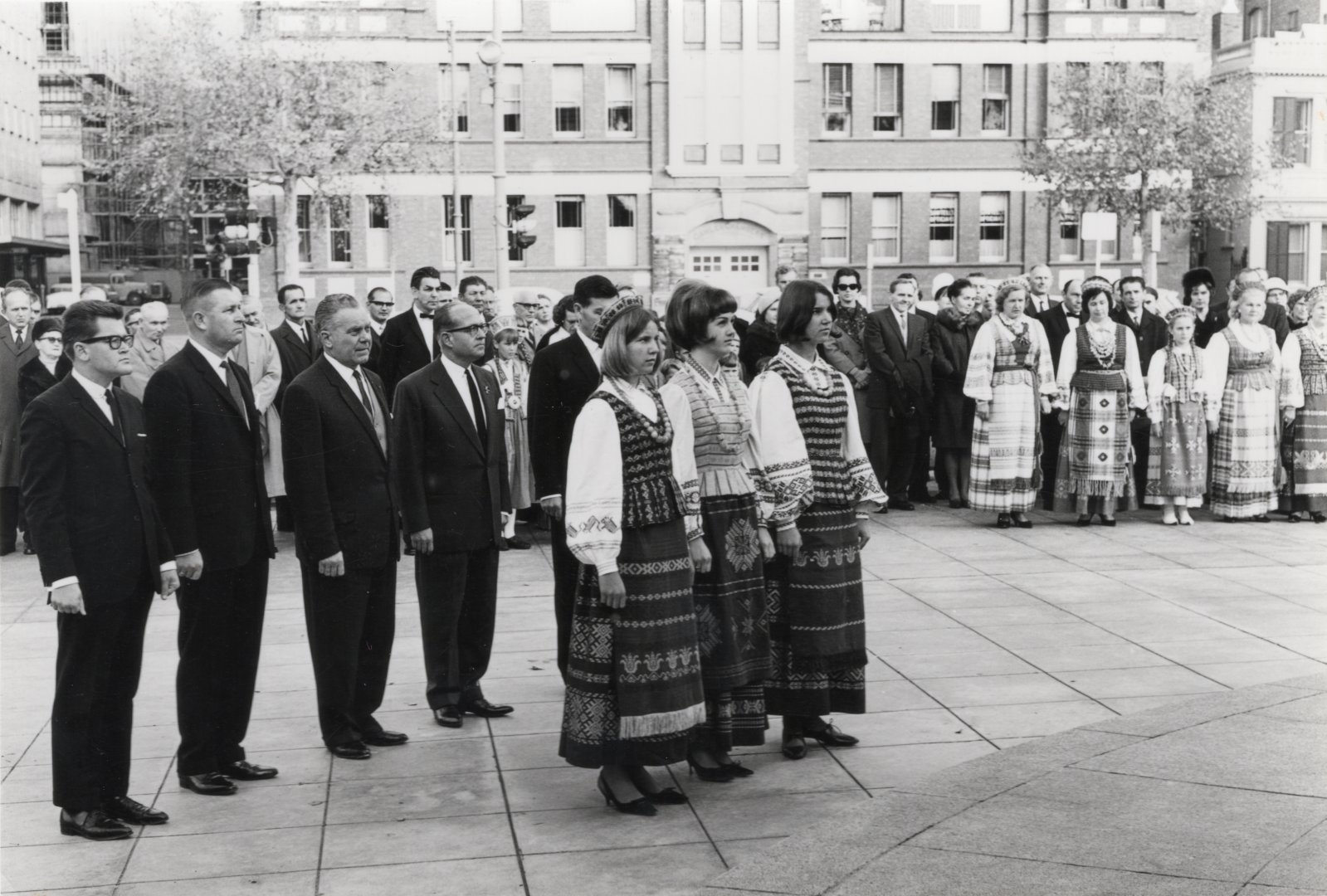
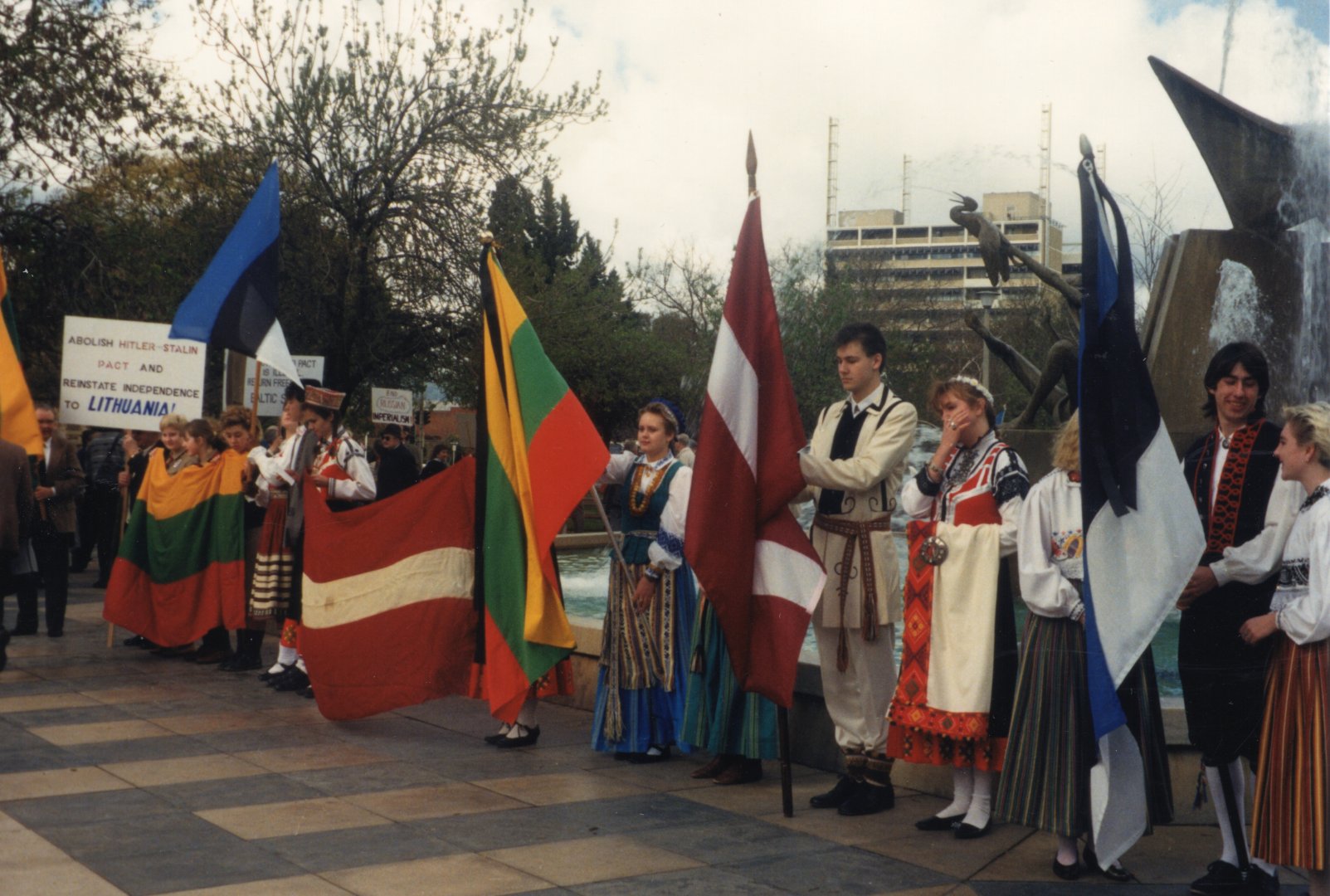
During Captive Nations Week, various Australian cities held Holy Masses, demonstrations, and protests calling for the issue of captive nations to be raised at the United Nations. The events condemned totalitarianism, restrictions on religion and human rights, and demanded freedom for the captive nations. Participants marched carrying national flags, wearing traditional costumes, and holding protest placards.

Australian Lithuanian Archive, PH0450

AUSTRALIAN LITHUANIANS. PART 4

Participants of Captive Nations Week in the city center of Adelaide

Women dressed in traditional costumes: Aldona Patupiene, Janina Vaboliene.

1960s

Photo by Alfonsas Budrys.

Australian Lithuanian Archive, PH0455

AUSTRALIAN LITHUANIANS. PART 4

Participants of Captive Nations Week in the city center of Adelaide

Demonstration of Captive Nations representatives.

Adelaide, 1970s

Photo by Alfonsas Budrys.

Australian Lithuanian Archive, PH0454

AUSTRALIAN LITHUANIANS. PART 4

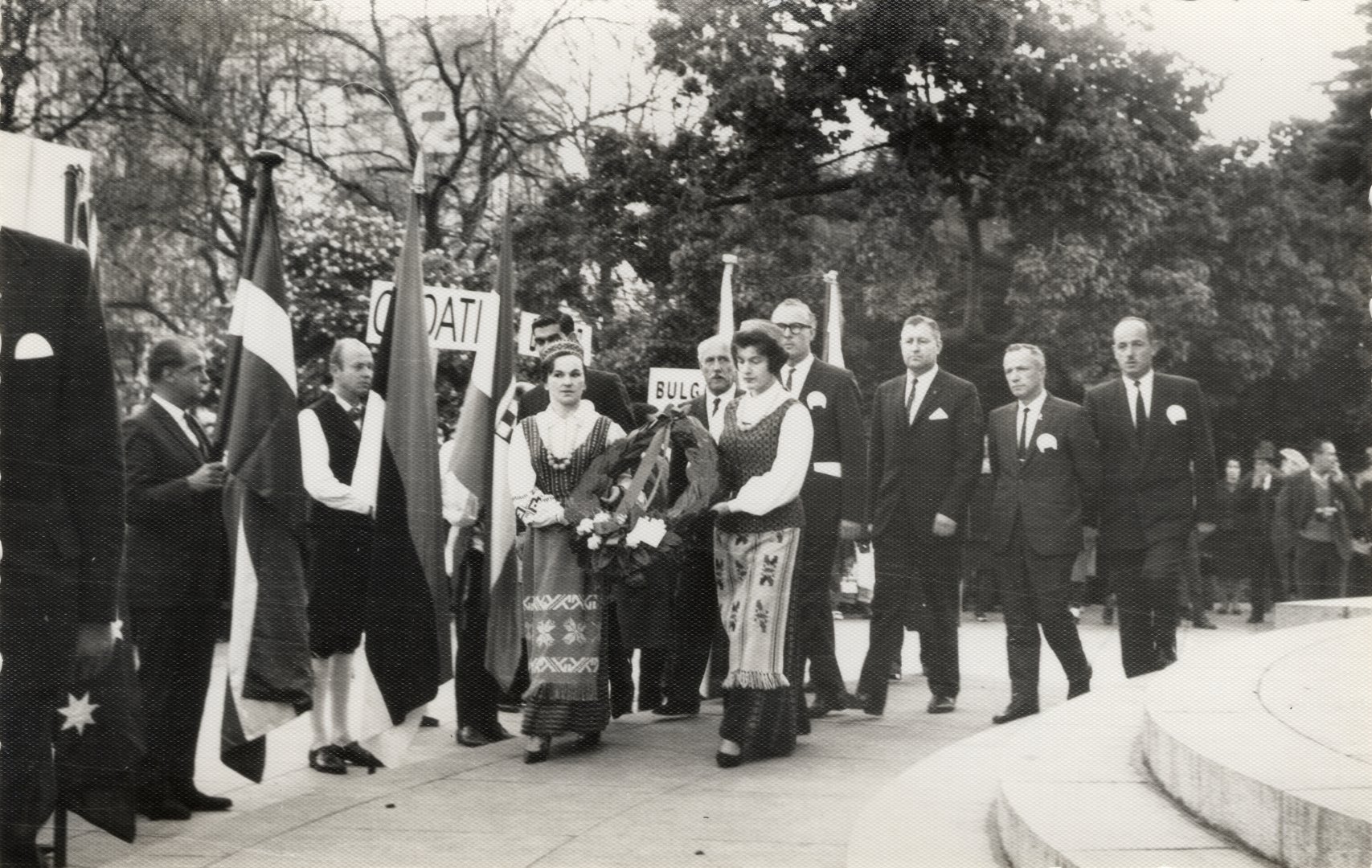
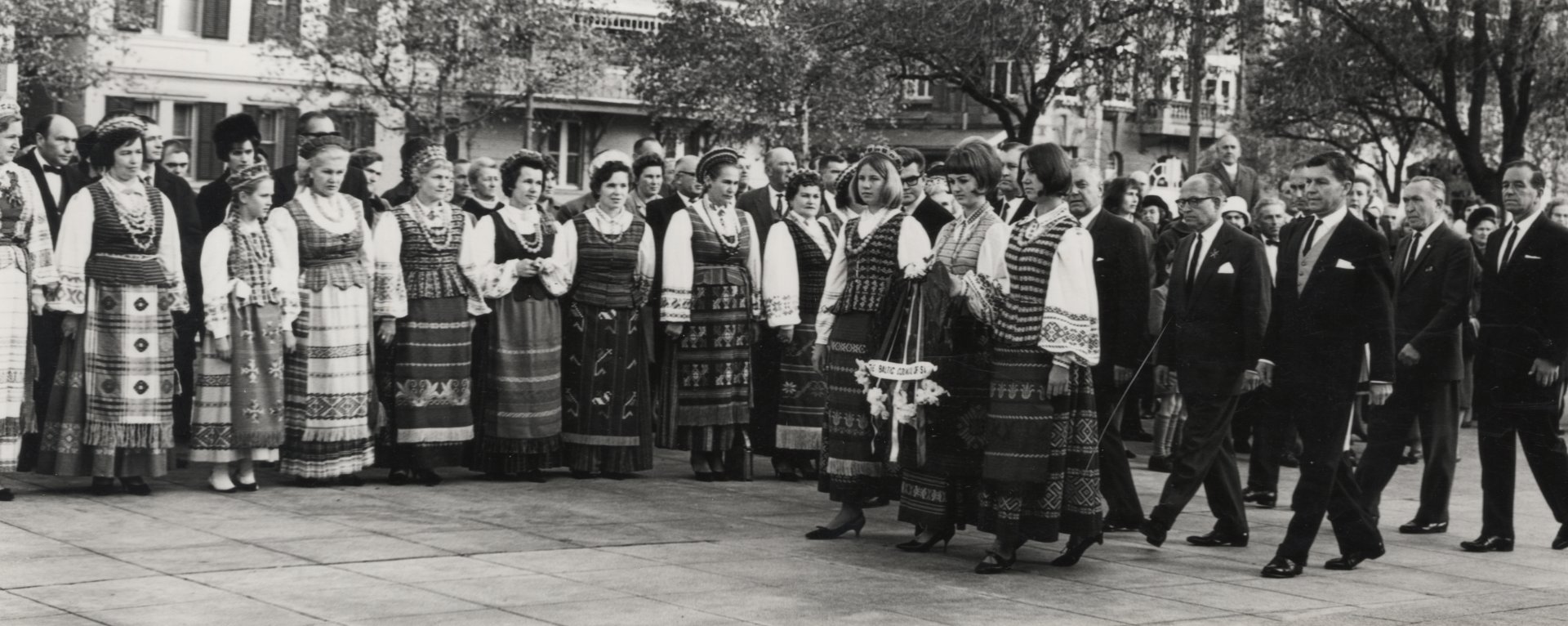
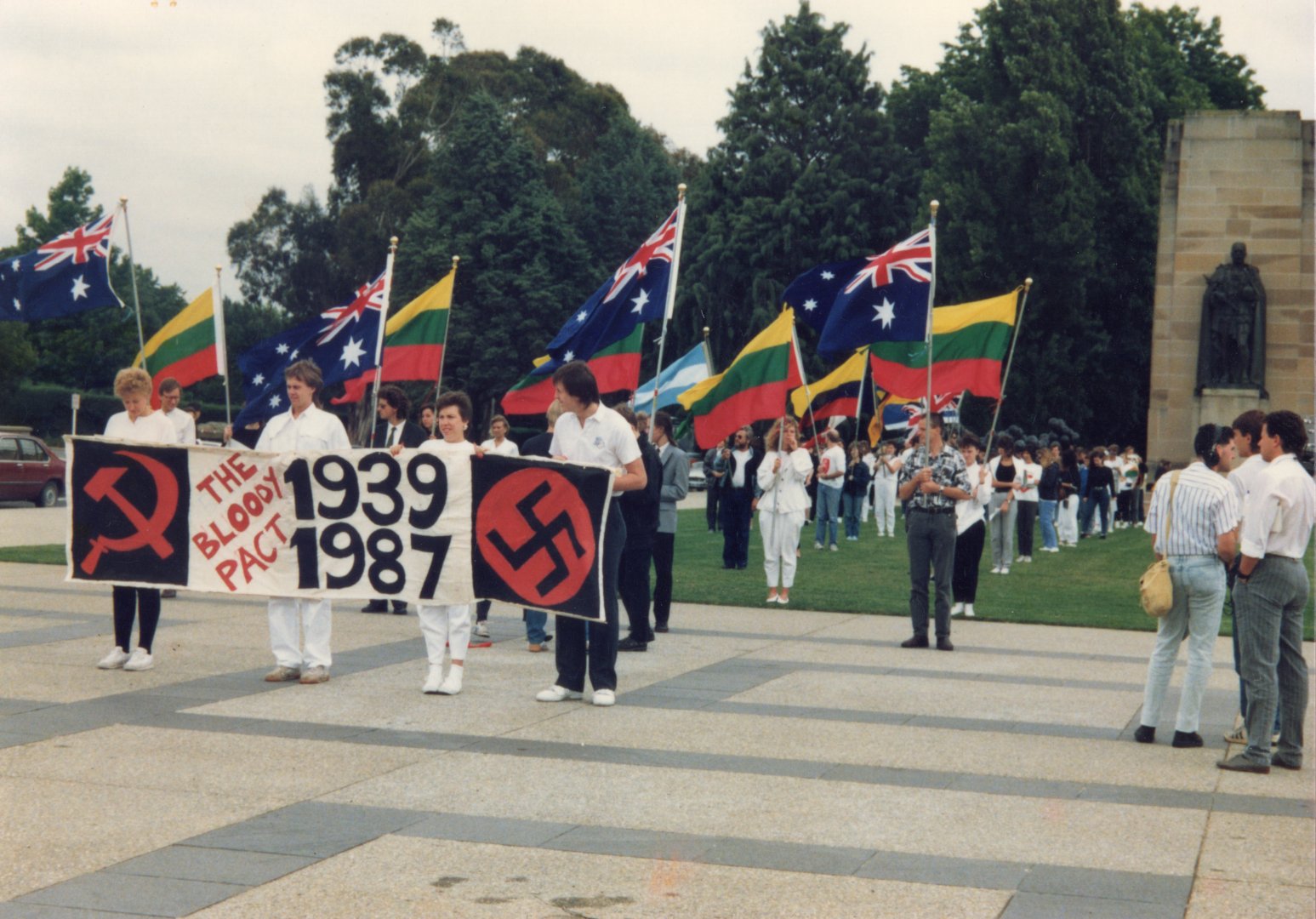
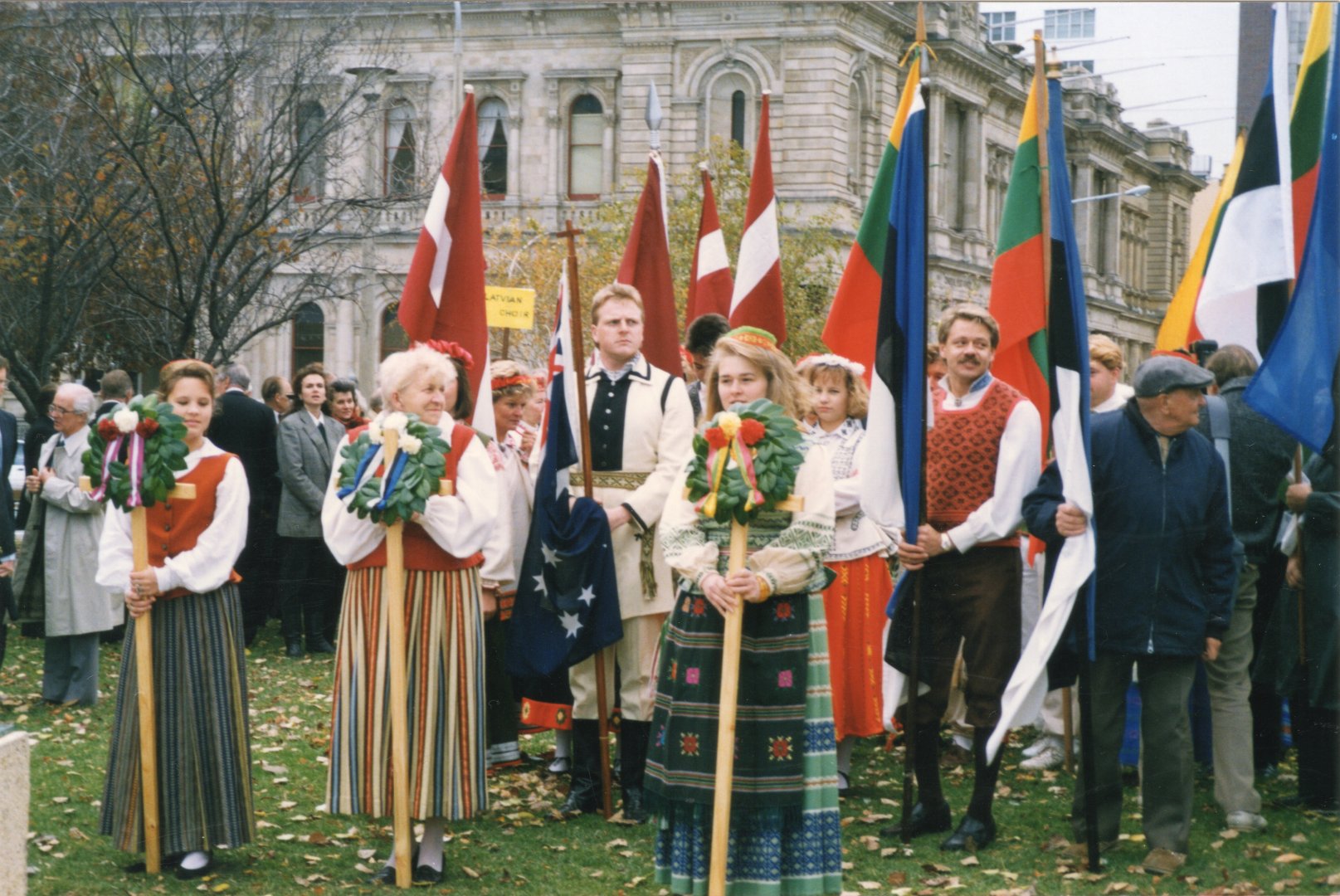
Commemoration of the Deportations of the Baltic States’ Inhabitants near the National War Memorial in Adelaide

Members of the Adelaide Lithuanian community: wreath bearers: ?, Jurate Martinkute, Valdone Mikeliunaite. Behind them march representatives of “Ramove”.

Adelaide, 1980s

Photo by Alfonsas Budrys.

Australian Lithuanian Archive, PH0438

AUSTRALIAN LITHUANIANS. PART 4

Commemoration of the Deportations of the Baltic States’ Inhabitants near the National War Memorial in Adelaide

Members of the Adelaide Lithuanian community: ?, Jurate Martinkute, Valdone Mikeliunaite. Behind them – representatives of “Ramove”.

Adelaide, 1980s

Photo by Alfonsas Budrys.

Australian Lithuanian Archive, PH0441

AUSTRALIAN LITHUANIANS. PART 4

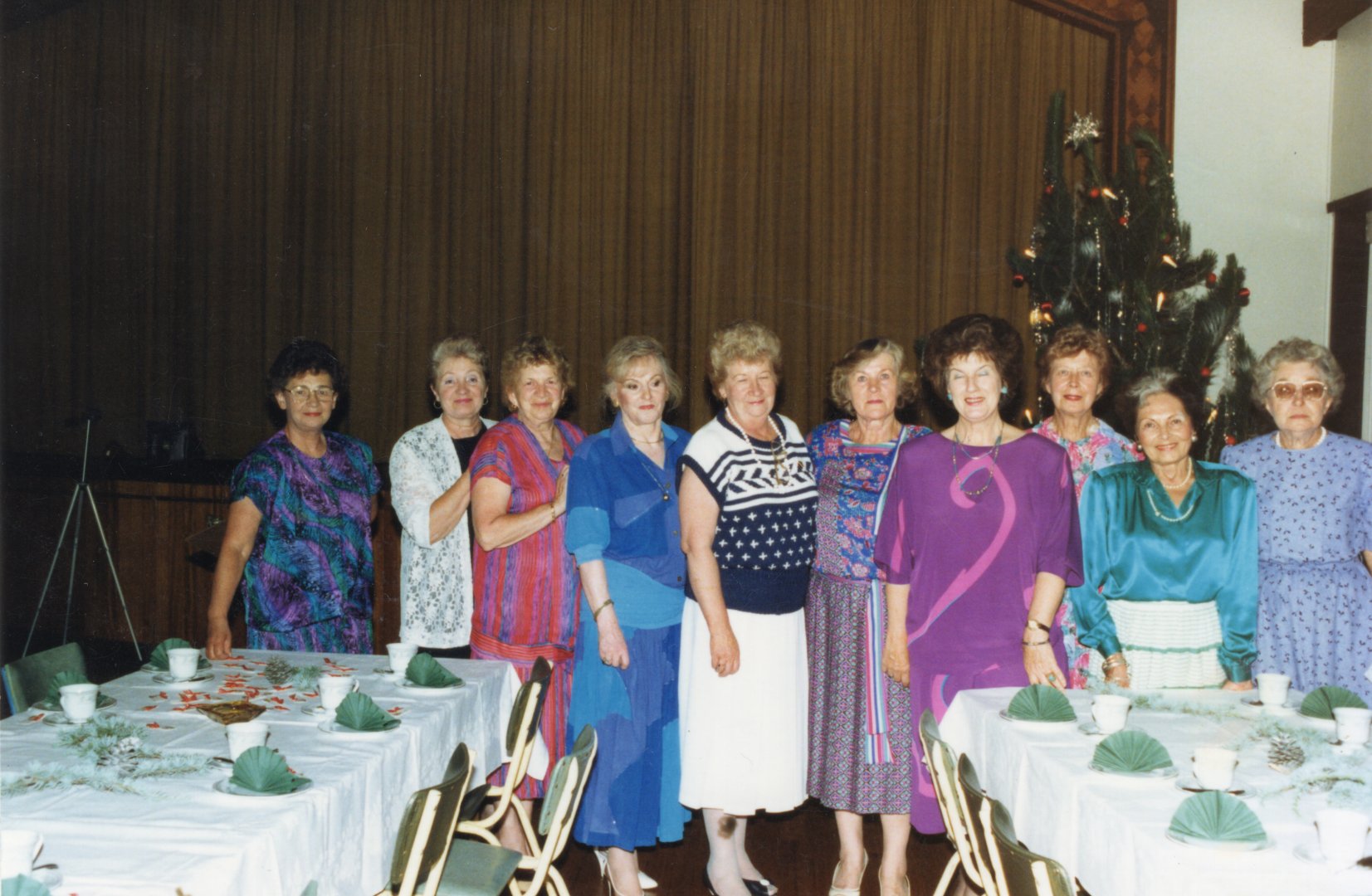
Baltic Women’s Association in Adelaide during the Christmas Holidays

Standing (from left to right): 4th – Aldona Patupiene, 6th – Radzeviciene, 7th – Janina Vaboliene, 9th – Sofija Paceviciene.

The Baltic Women’s Association was established in 1969. The initiator was Elena Dainiene along with other Lithuanian women. The association closely cooperated with the Baltic Council and supported it in representational matters. They were actively involved in political activities, supported political prisoners, wrote protest letters, organized lectures for Australians, and supported anti-communist press. They collaborated with Australian women’s organizations and organized exhibitions. The association was also very active in charity work, helping to raise funds for children’s hospitals. Their efforts significantly contributed to promoting Baltic culture and the pursuit of freedom.

The goals of the Baltic Women’s Association were similar to those of the Baltic Council, but it focused more on social functions: organizing luncheons and celebrations, and raising substantial funds to support the Baltic Council’s activities.

Baltic women were members of Australian women’s organizations, which were active in political and social fields. Sometimes they were invited to speak at these organizations’ meetings to share information about the situation in their homelands.

In 1972, under the leadership of Brone Mockuniene, the Baltic Women’s Association published an English-language brochure titled „Stop and Think!“, which described the genocide and terror in the Baltic countries.

Presidents of the Baltic Women’s Association included E. Dainiene, B. Mockuniene, O. Stimburiene, Dr. S. Paceviciene, I. Pociene, and J. Vaboliene.

Australian Lithuanian Archive, PH0832
AUSTRALIAN LITHUANIANS. PART 4

Captive Nations Week Commemoration in Adelaide

A protest demonstration by the Australian Lithuanian, Latvian, and Estonian communities against the Soviet occupation, held in the city center of Adelaide. In the middle of the demonstrators stands Bronius Sabeckis, a representative of the Australian Lithuanian Community.

May 1982
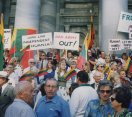
Lithuanian Central State Archives, P-44420

AUSTRALIAN LITHUANIANS. PART 4

Captive Nations Commemoration in Adelaide

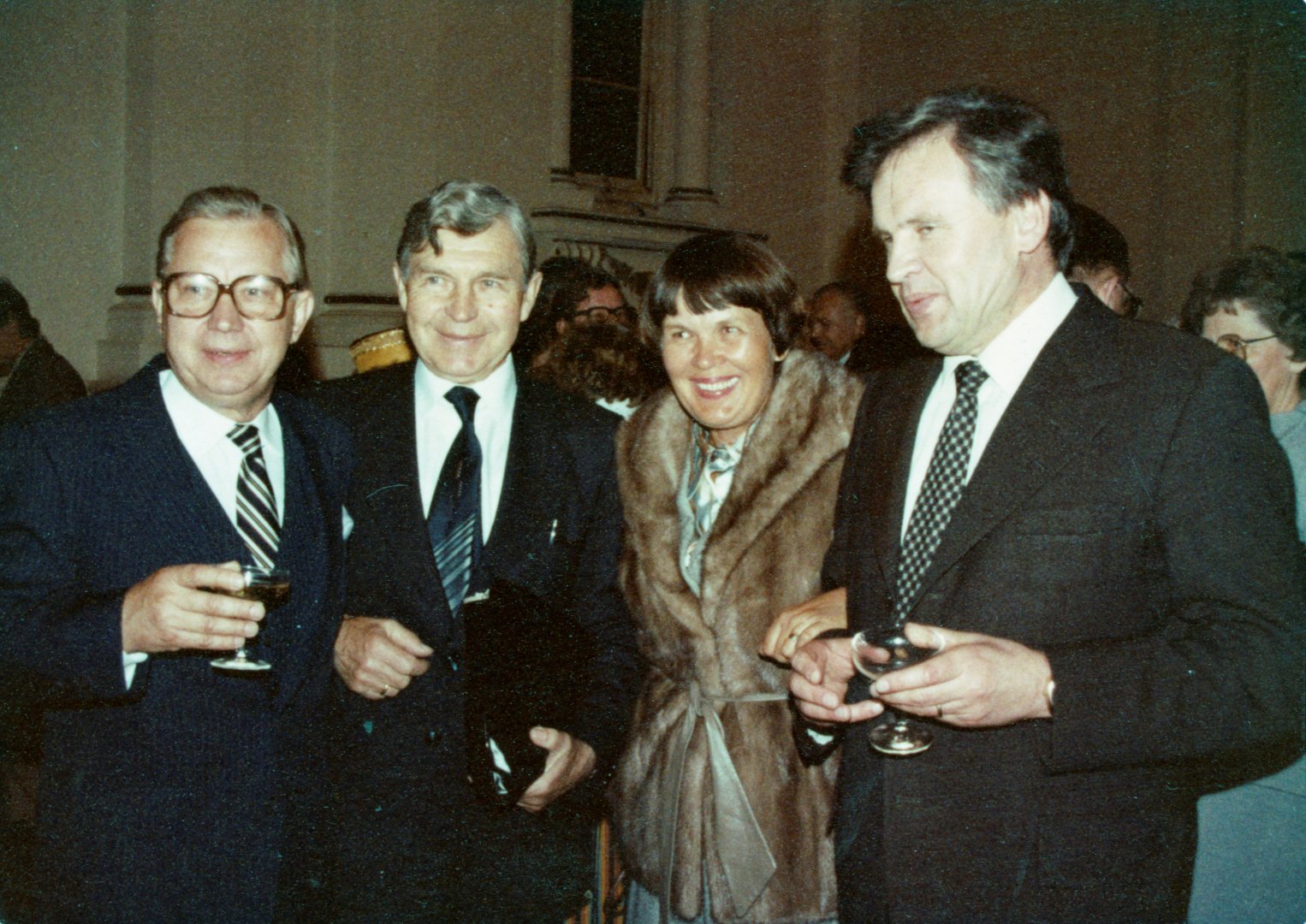
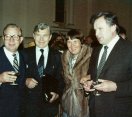
Visit of Dr. Kazys Bobelis, Chairman of the Supreme Committee for the Liberation of Lithuania (VLIK) Board, to Adelaide, Australia.

From left to right: 1st – Dr. Kazys Bobelis, 2nd – Juozas Lapsys, representative of the Australian Lithuanian Community, 3rd – Dalia Devenyte-Bobeliene.

May 1982

Lithuanian Central State Archives, P-44427

AUSTRALIAN LITHUANIANS. PART 4

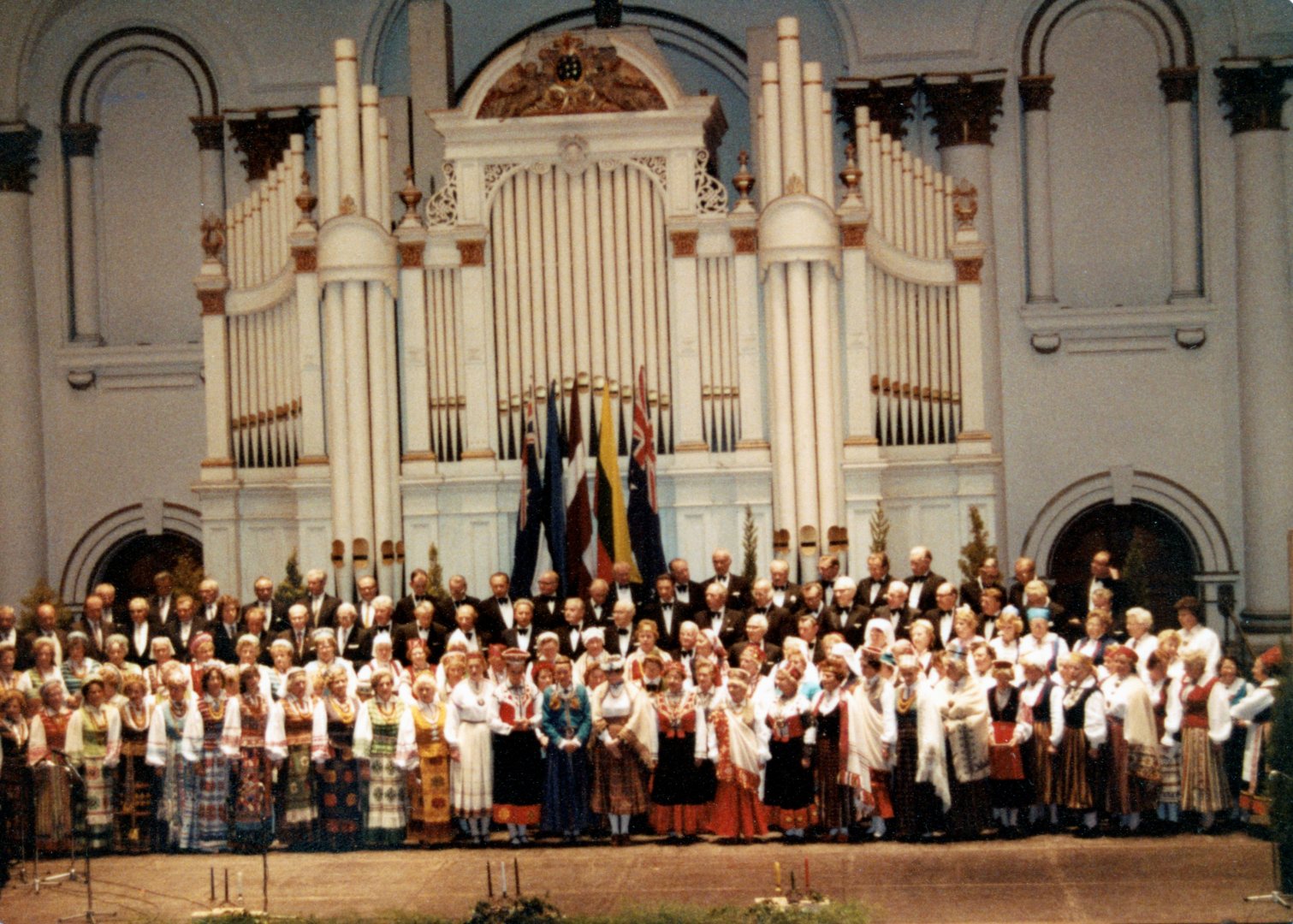
Captive Nations Commemoration in Adelaide

Joint concert of Lithuanian, Latvian, and Estonian community choirs at Adelaide Town Hall, Australia.

May 1982

Lithuanian Central State Archives, P-44431

AUSTRALIAN LITHUANIANS. PART 4

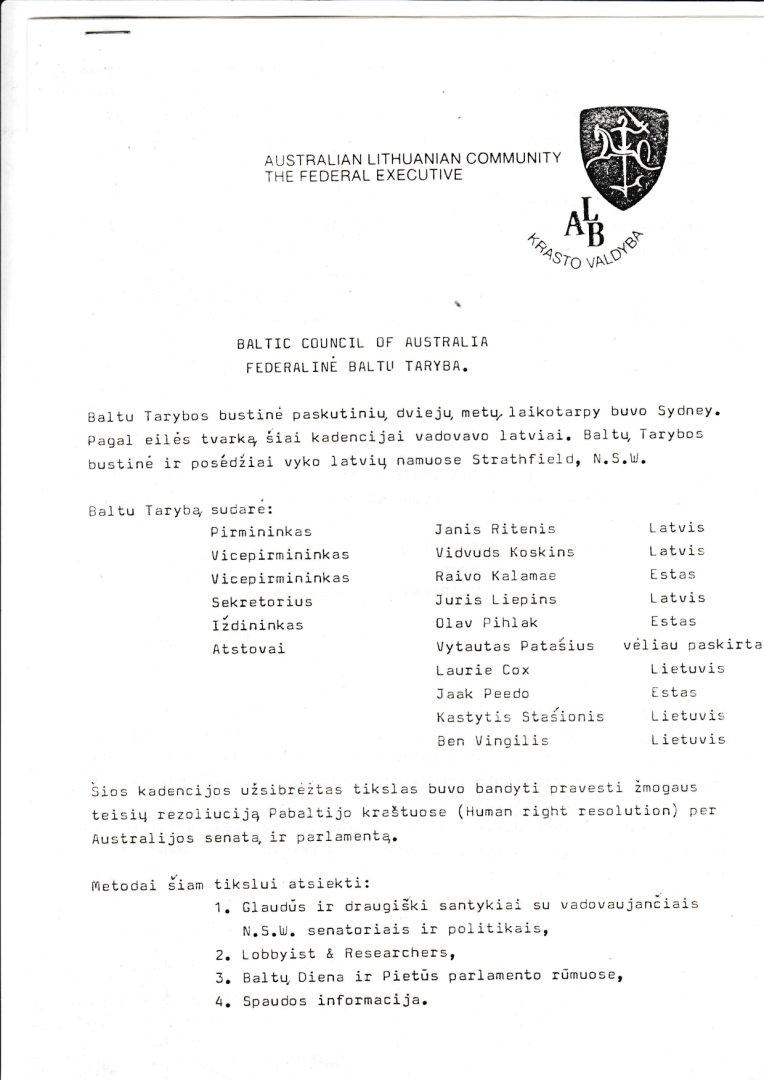
Baltic Council Report

November 28, 1984

Australian Lithuanian Archive

AUSTRALIAN LITHUANIANS. PART 4

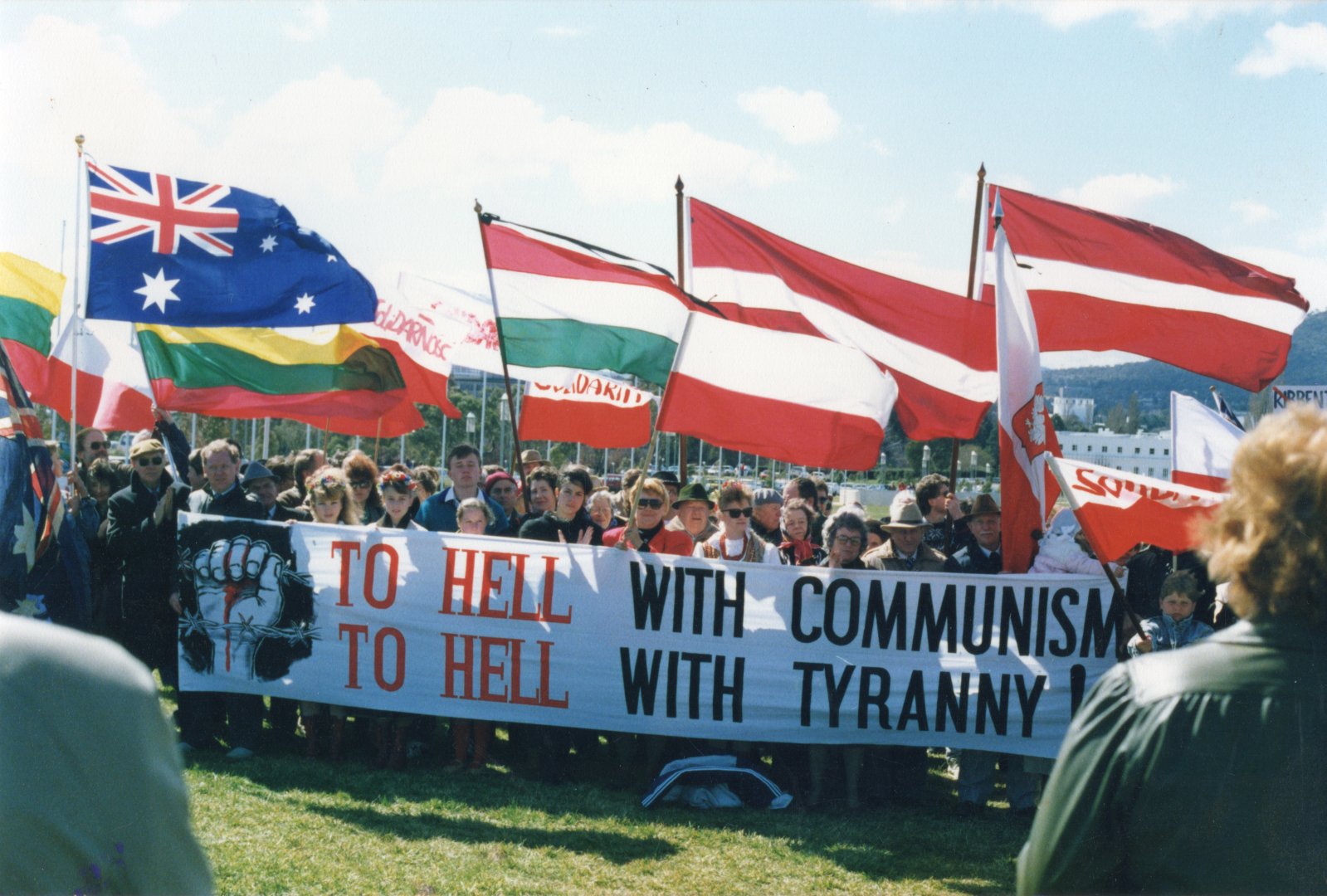
Canberra Lithuanian Community at a Rally for the Independence of Occupied Countries

Late 20th century, second half of the 1980s

Australian Lithuanian Archive, PH01155

AUSTRALIAN LITHUANIANS. PART 4

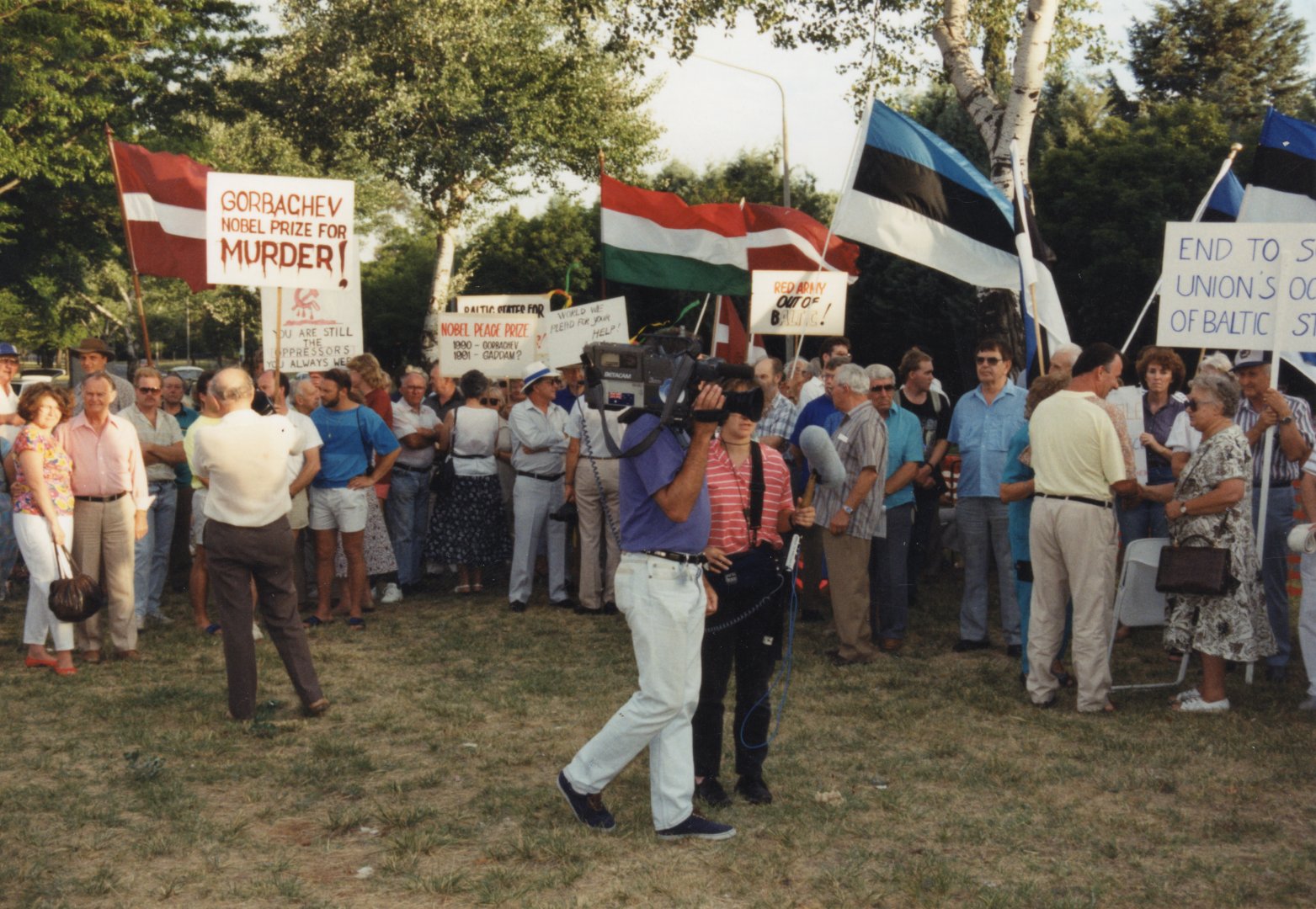
Canberra Lithuanian Community at a Rally for the Independence of Occupied Countries

Late 20th century, second half of the 1980s

Australian Lithuanian Archive, PH01157

AUSTRALIAN LITHUANIANS. PART 4

Canberra Lithuanian Community at a Rally for Lithuania’s Independence

Late 20th century, second half of the 1980s

Australian Lithuanian Archive, PH01162

AUSTRALIAN LITHUANIANS. PART 4

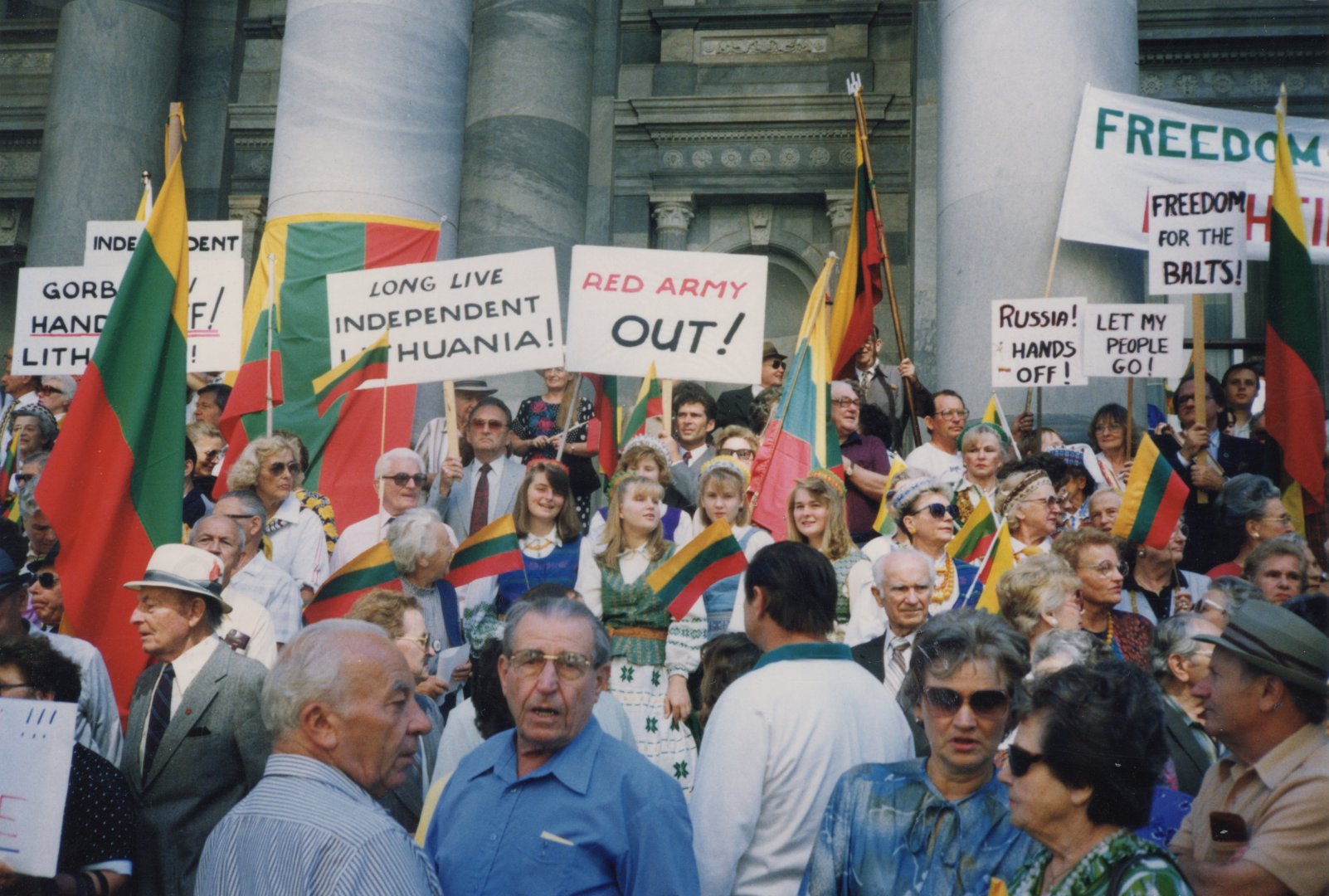
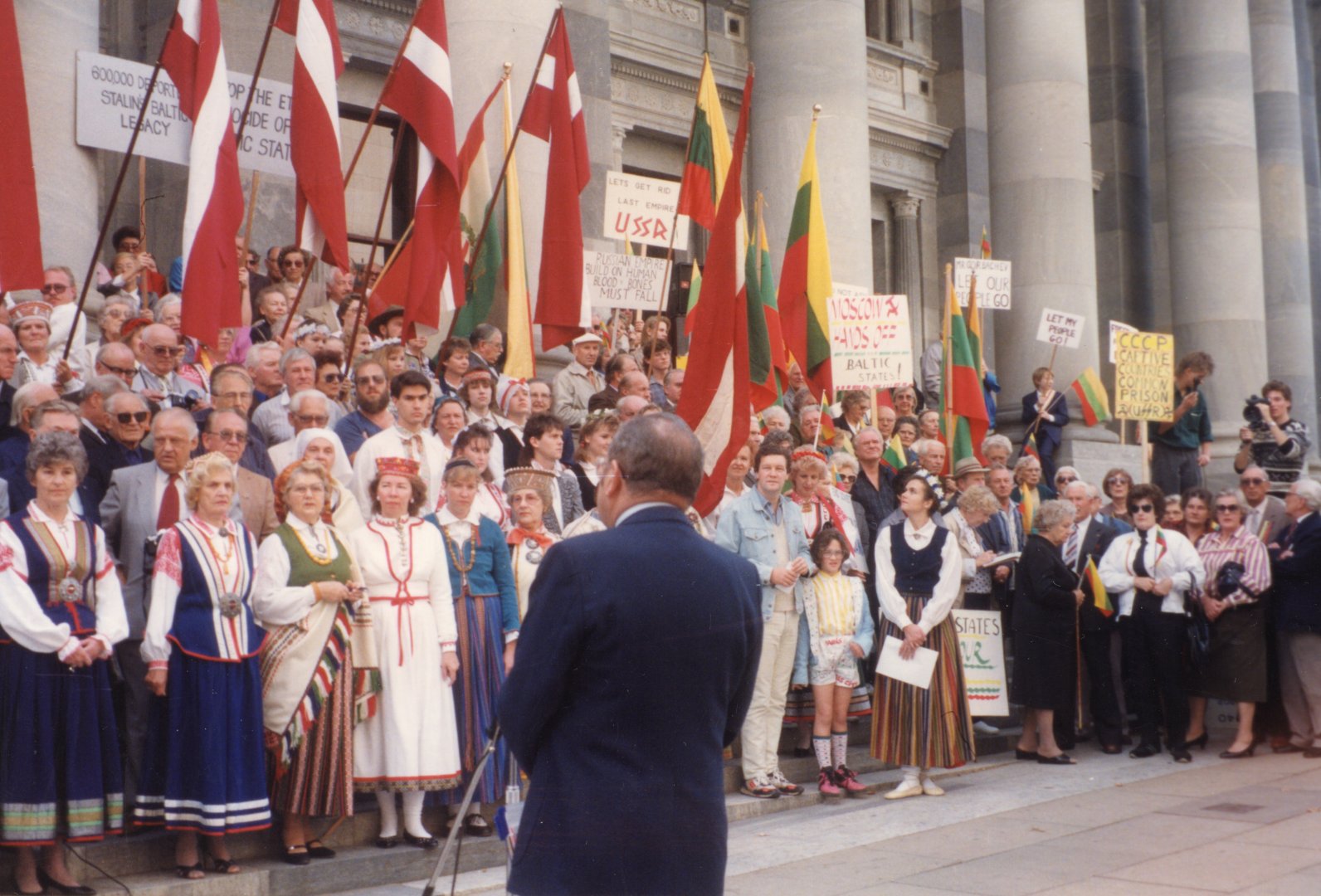
Demonstration for the Freedom of the Baltic States near the Adelaide Parliament House

1989

Australian Lithuanian Archive, PH0077

AUSTRALIAN LITHUANIANS. PART 4

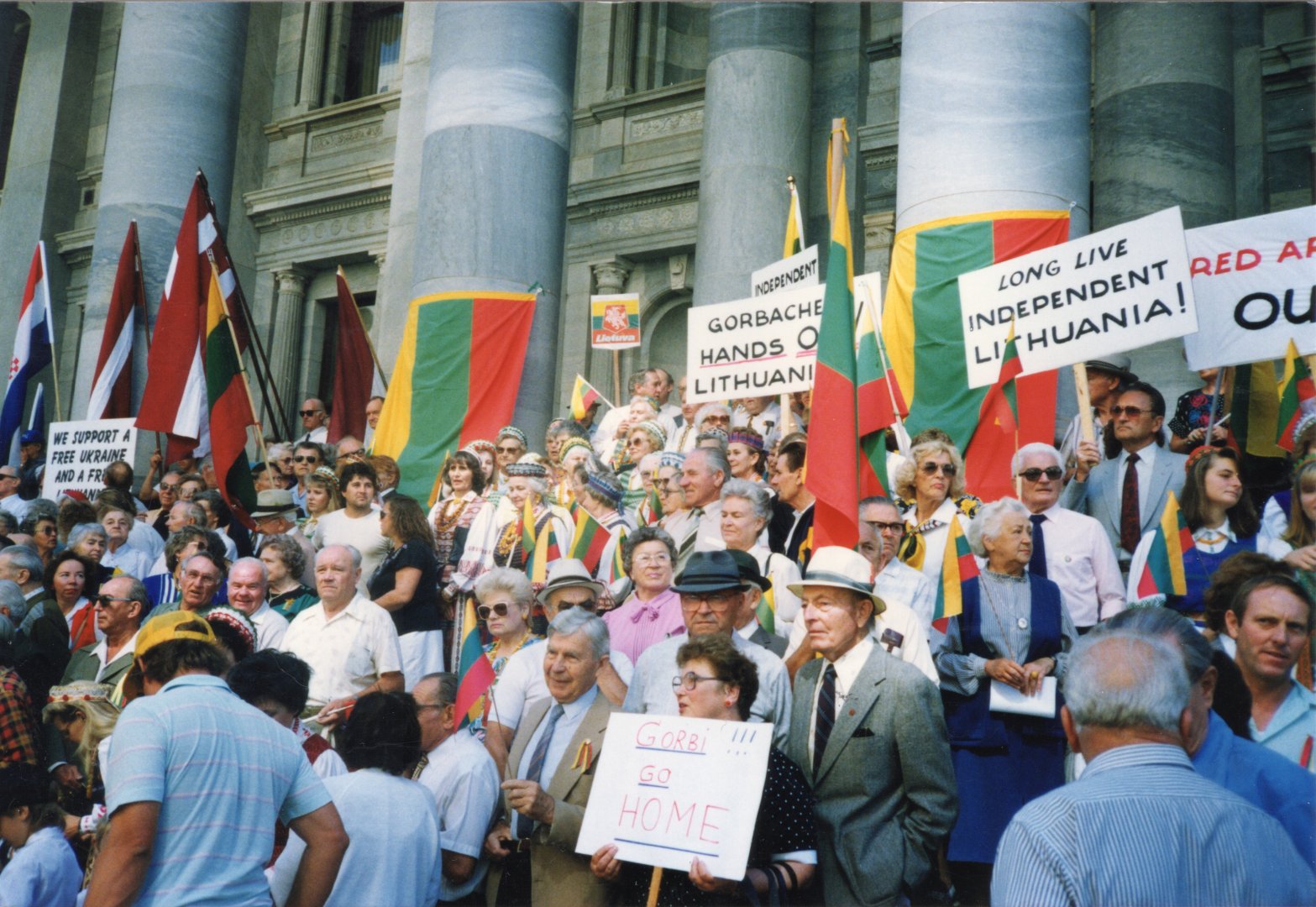
Demonstration for the Freedom of the Baltic States near the Adelaide Parliament House

1989

Australian Lithuanian Archive, PH0078

AUSTRALIAN LITHUANIANS. PART 4

Demonstration for the Freedom of the Baltic States near the Adelaide Parliament House

1989

Australian Lithuanian Archive, PH0079

AUSTRALIAN LITHUANIANS. PART 4

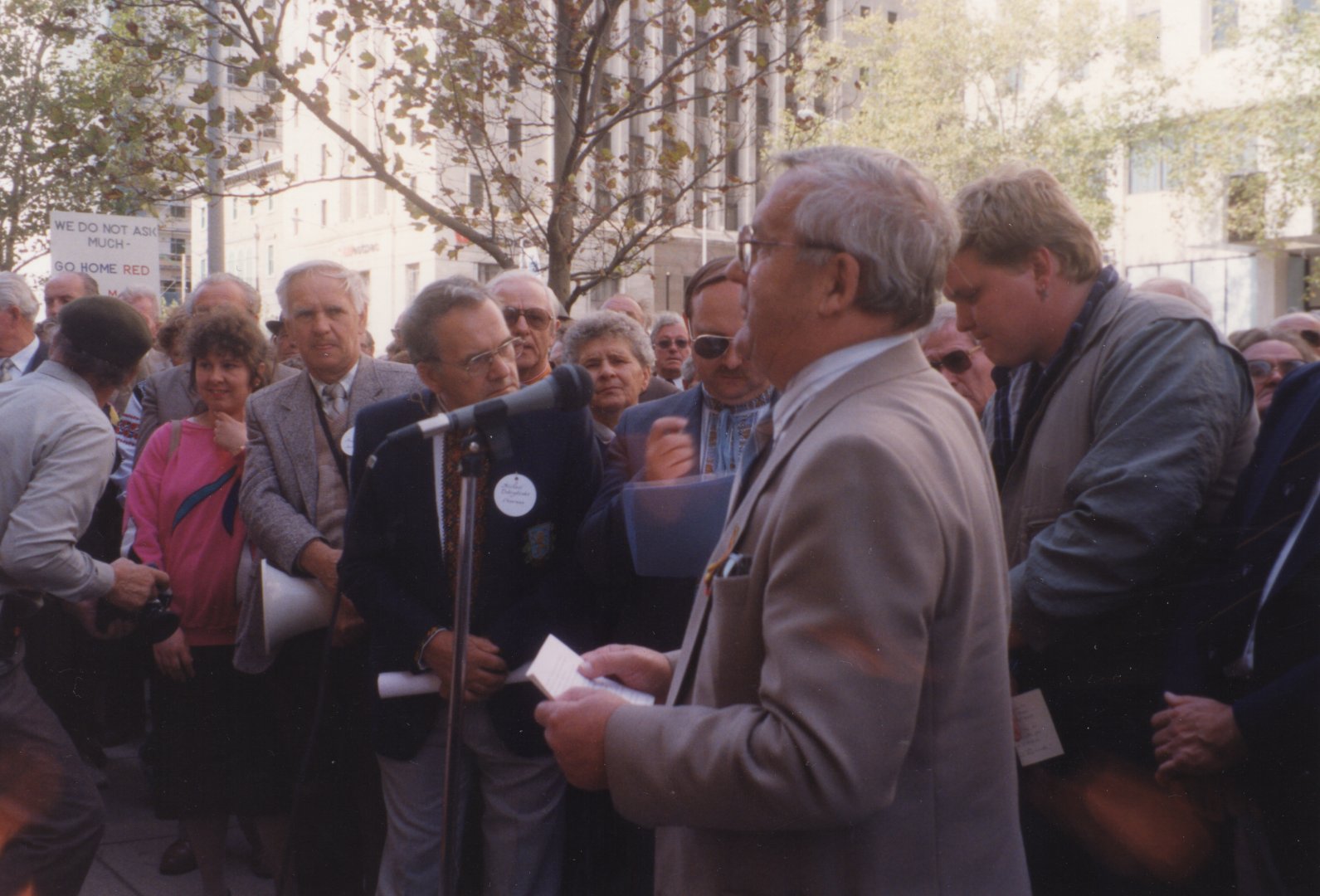
Protest against the Soviet Union’s policies near the Adelaide Parliament House

Speech by Jonas Staciunas.

1989

Australian Lithuanian Archive, PH0646

AUSTRALIAN LITHUANIANS. PART 4

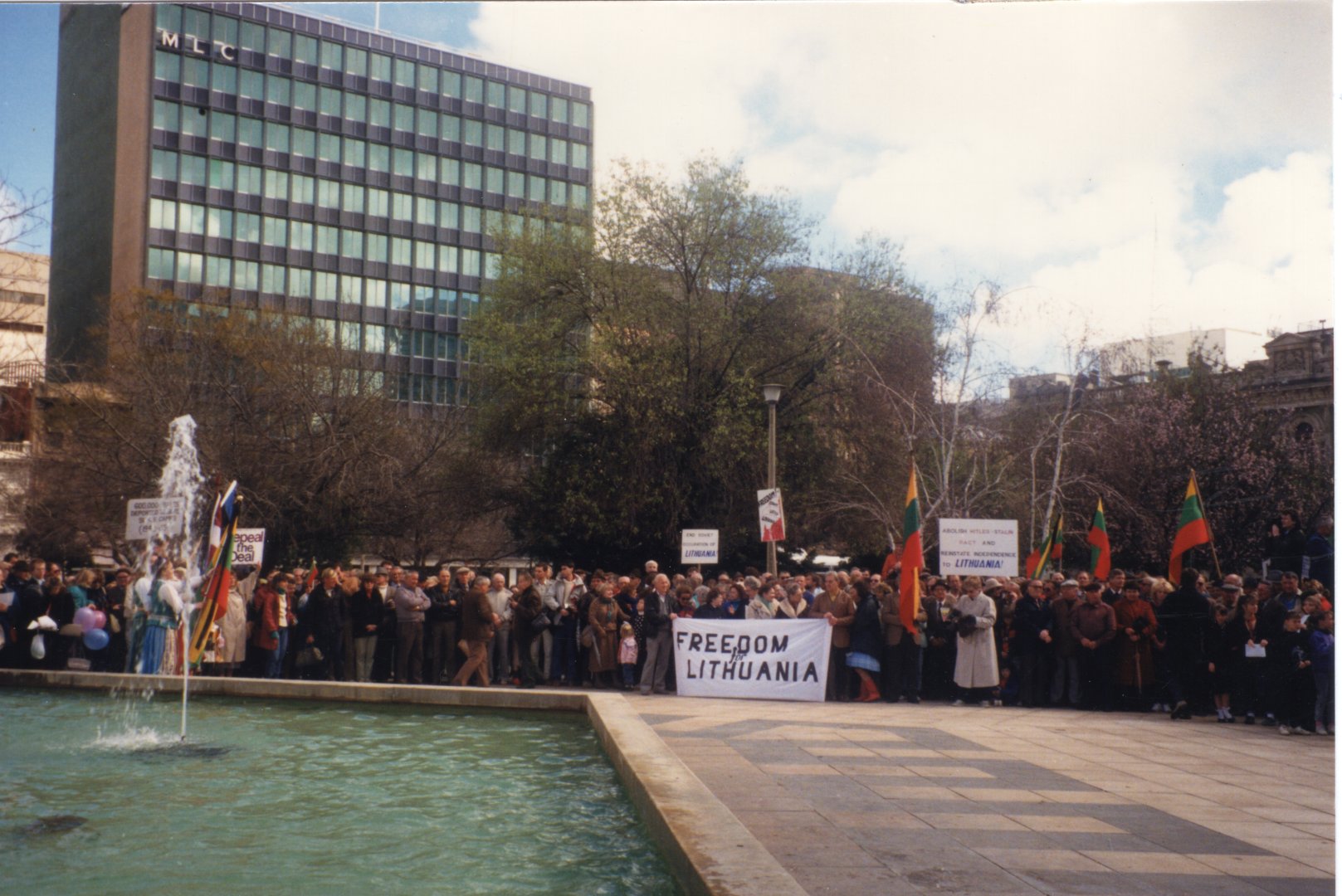
Adelaide Lithuanian Rally at Victoria Square, Commemorating the 50th Anniversary of the Molotov-Ribbentrop Pact

August 26, 1989

Australian Lithuanian Archive, PH0888

AUSTRALIAN LITHUANIANS. PART 4

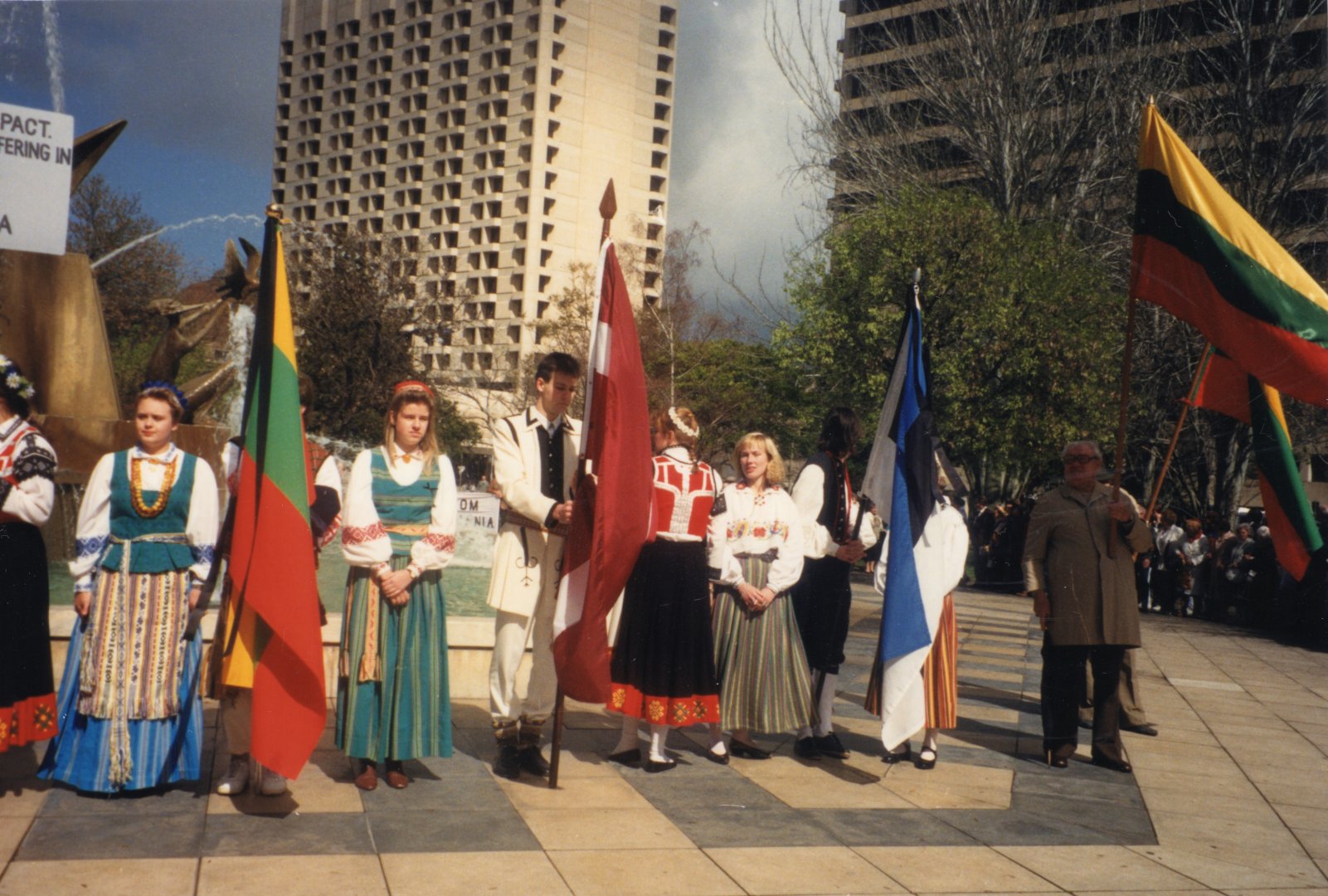
Adelaide Lithuanian Rally at Victoria Square, Commemorating the 50th Anniversary of the Molotov-Ribbentrop Pact

Lithuanian women next to the flag – Dana Kalibataite, Kristina Giaudelyte.

August 26, 1989

Australian Lithuanian Archive, PH0889

AUSTRALIAN LITHUANIANS. PART 4

Adelaide Lithuanian Rally at Victoria Square, Commemorating the 50th Anniversary of the Molotov-Ribbentrop Pact

August 26, 1989

Australian Lithuanian Archive, PH0891

AUSTRALIAN LITHUANIANS. PART 4

Adelaide Lithuanian Rally at Victoria Square, Commemorating the 50th Anniversary of the Molotov-Ribbentrop Pact

August 26, 1989

Photo by Alfonsas Budrys.

Australian Lithuanian Archive, PH0955

AUSTRALIAN LITHUANIANS. PART 4

Adelaide Lithuanian Rally at Victoria Square, Commemorating the 50th Anniversary of the Molotov-Ribbentrop Pact

August 26, 1989

Photo by Alfonsas Budrys.

Australian Lithuanian Archive, PH0956

AUSTRALIAN LITHUANIANS. PART 4

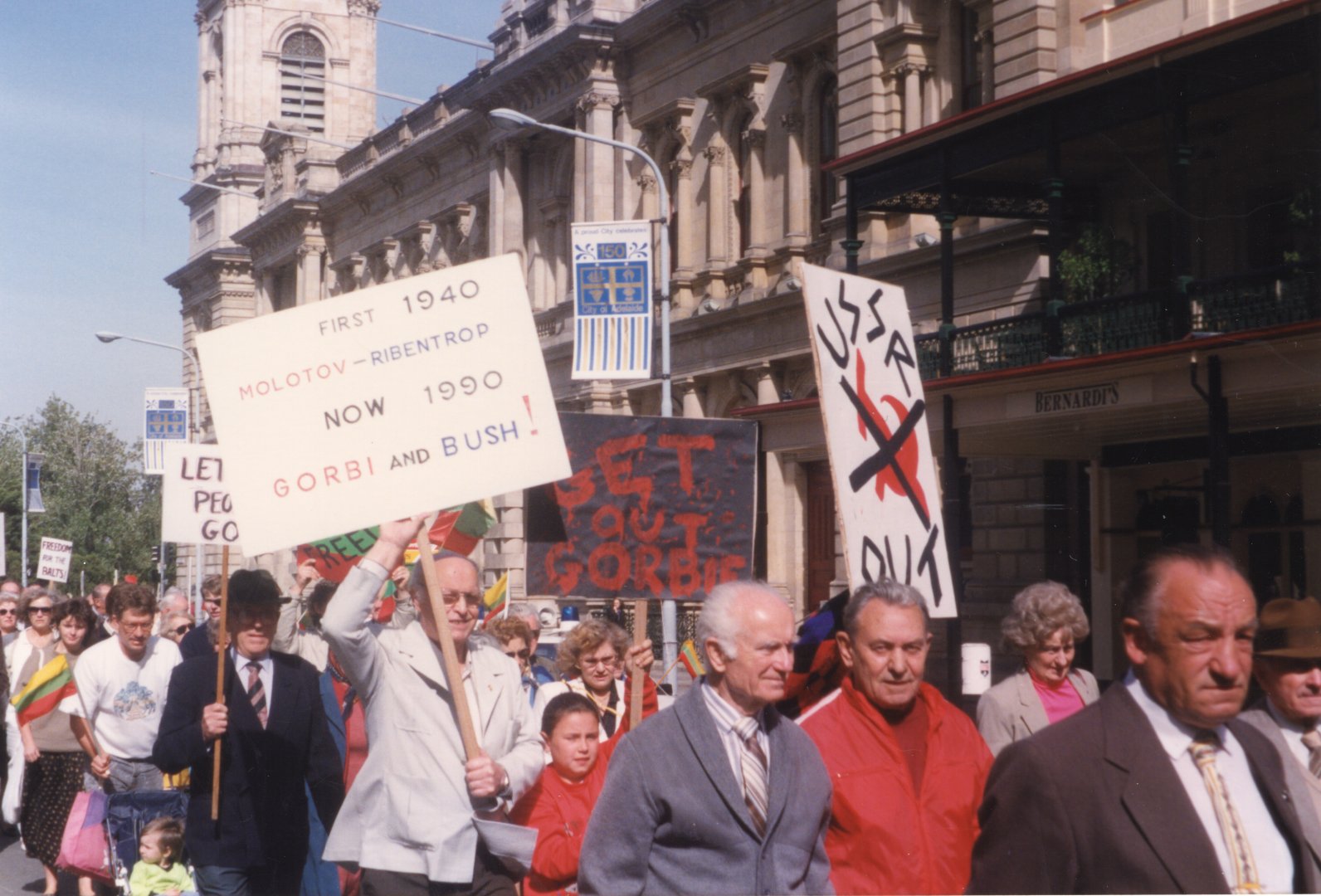
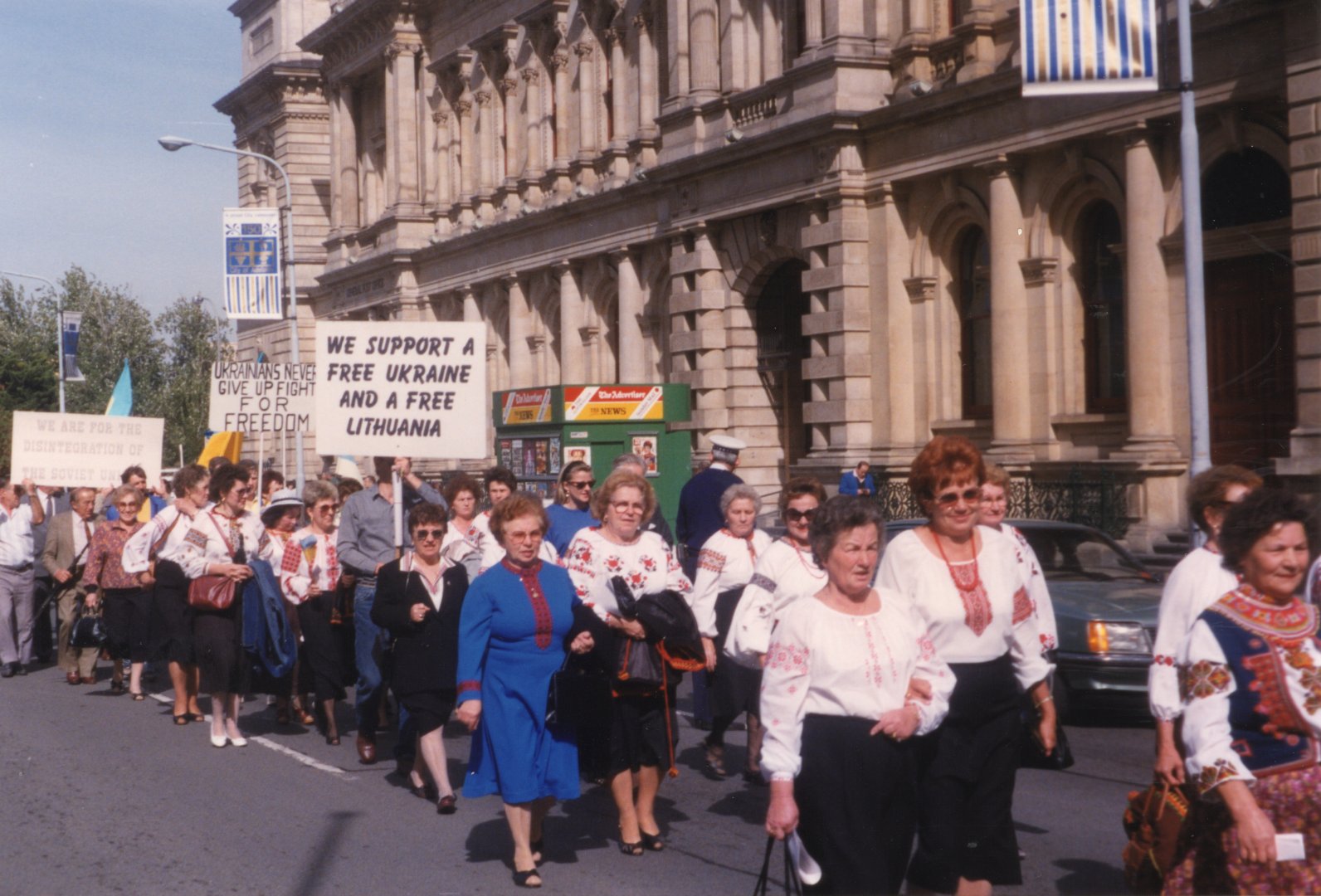
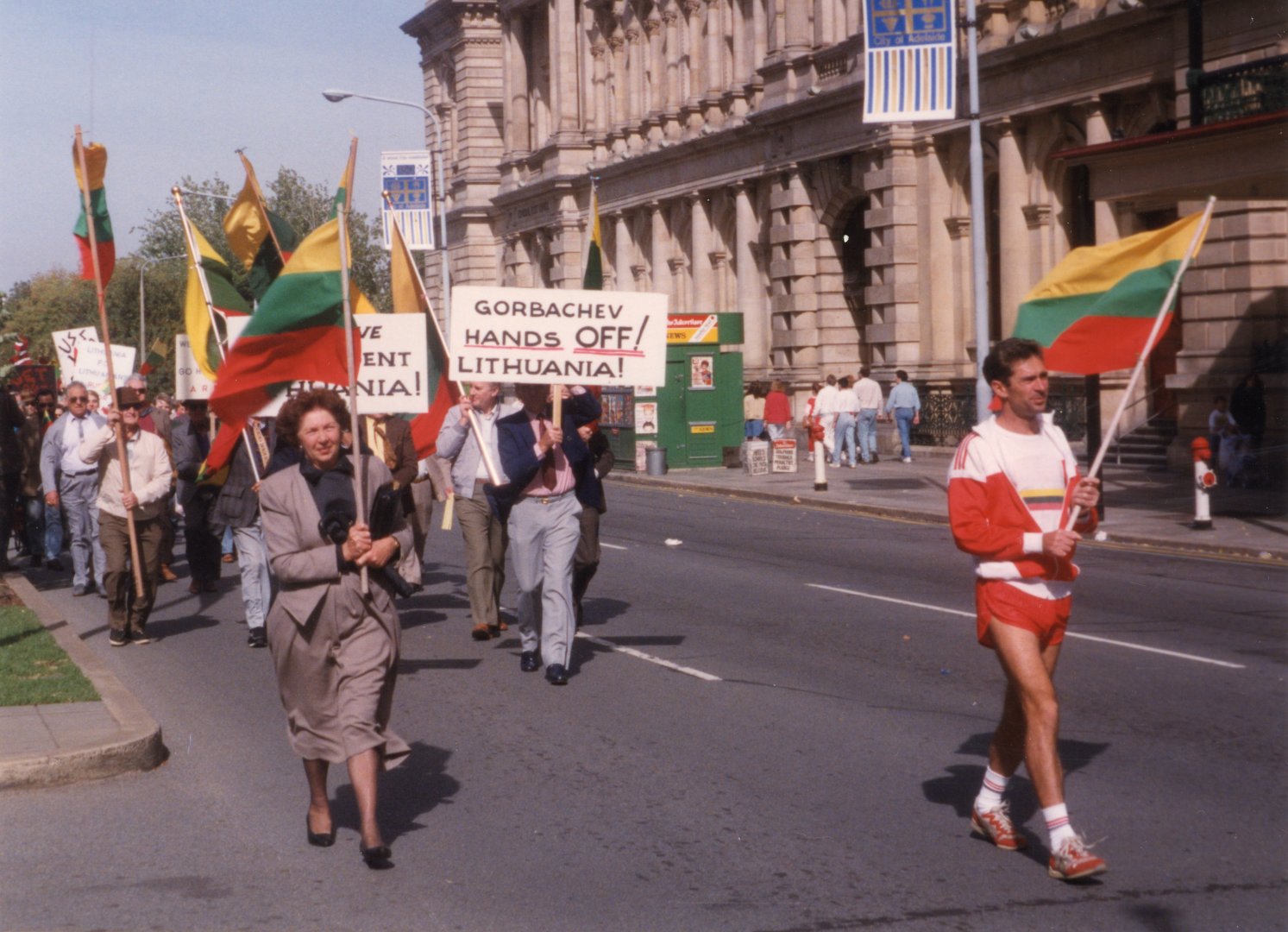
March for Baltic States’ Independence on King William Street, Adelaide, heading towards the Parliament House

March 31, 1990

Australian Lithuanian Archive, PH0939

AUSTRALIAN LITHUANIANS. PART 4

March for Baltic States’ Independence on King William Street, Adelaide, heading towards the Parliament House

March 31, 1990

Australian Lithuanian Archive, PH0941

AUSTRALIAN LITHUANIANS. PART 4

March for Baltic States’ Independence on King William Street, Adelaide, heading towards the Parliament House

March 31, 1990

Australian Lithuanian Archive, PH0942

AUSTRALIAN LITHUANIANS. PART 4

March for Baltic States’ Independence on King William Street, Adelaide, heading towards the Parliament House

Second from the right – Algis Zamoiskis.

March 31, 1990

Australian Lithuanian Archive, PH0943

AUSTRALIAN LITHUANIANS. PART 4

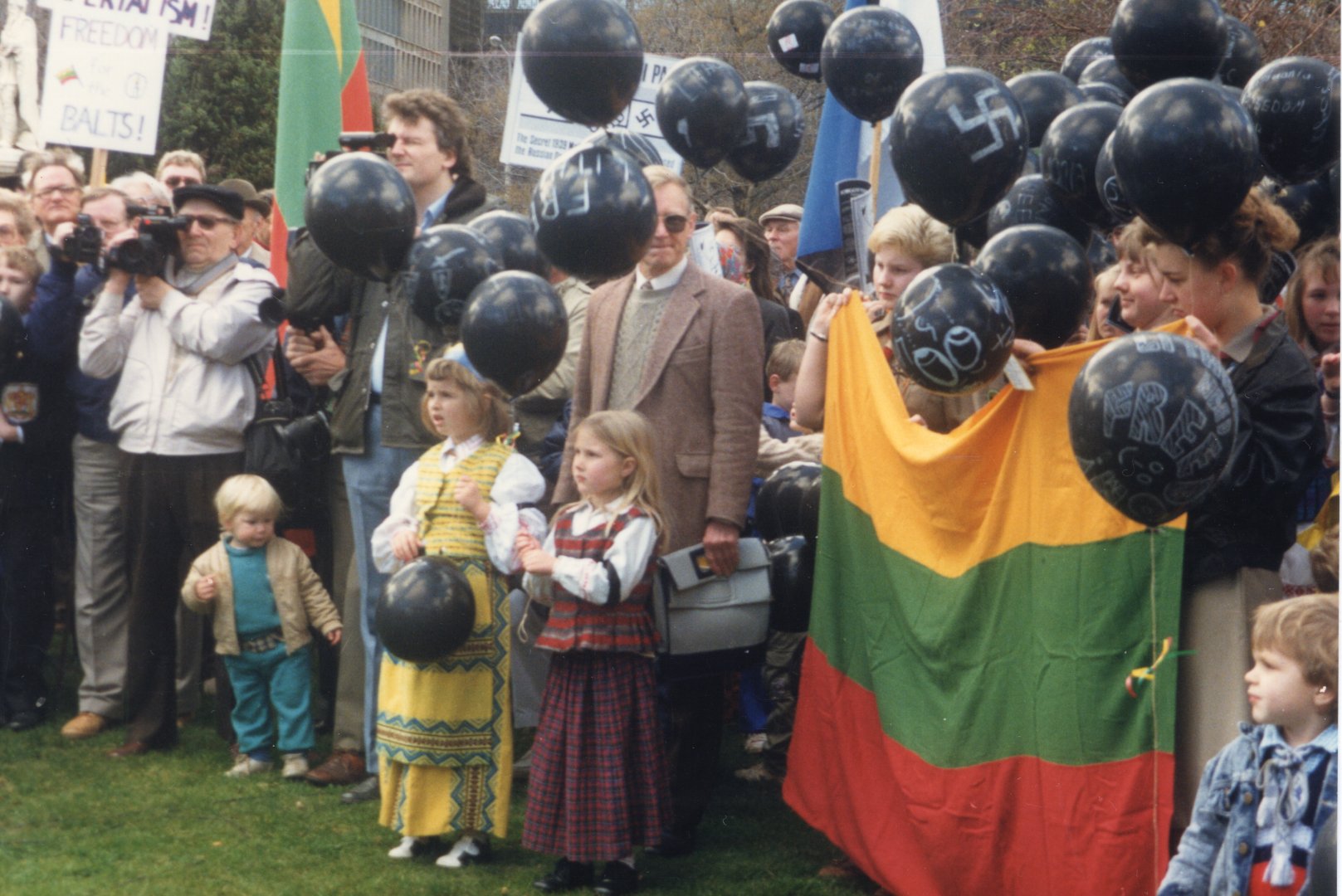
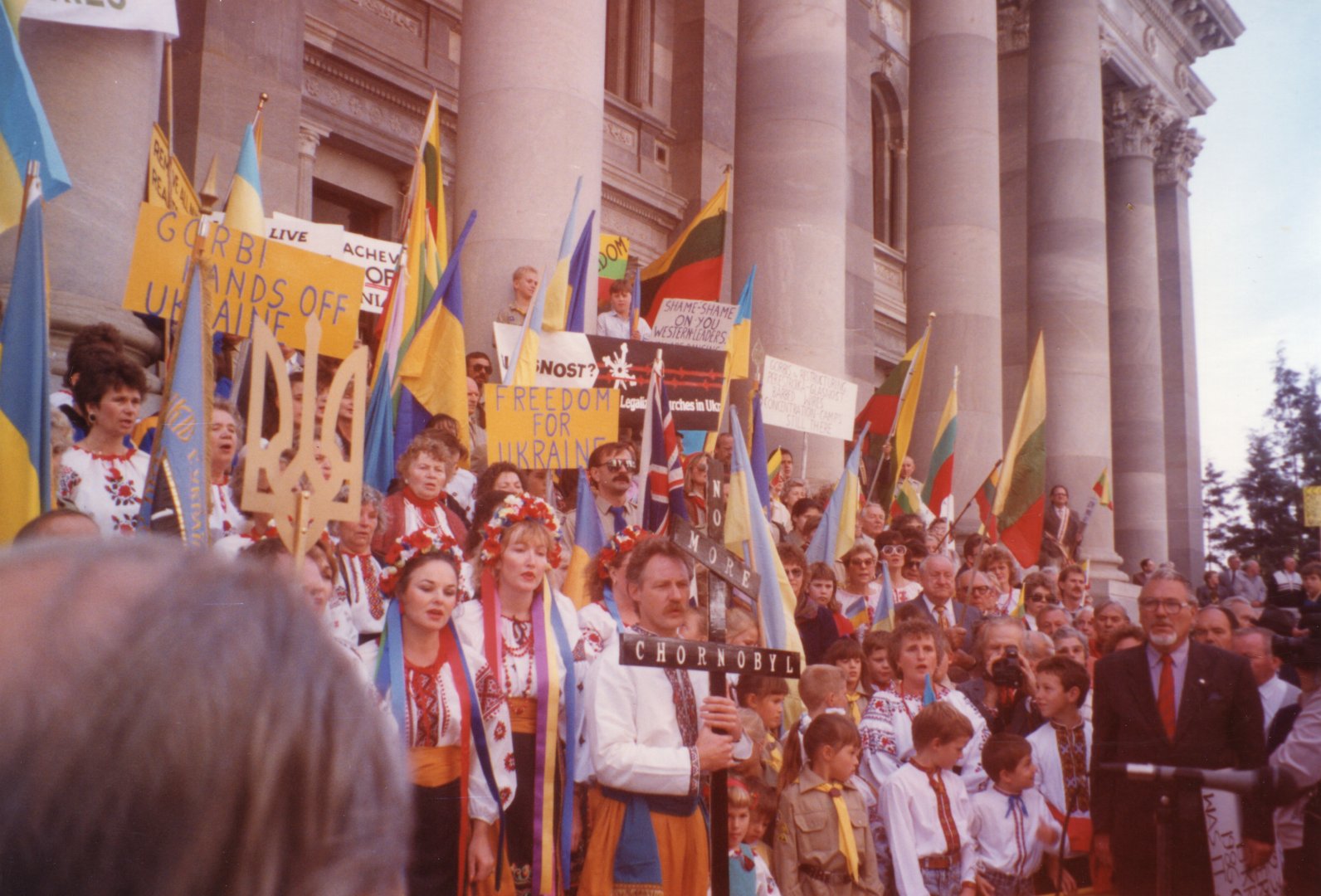
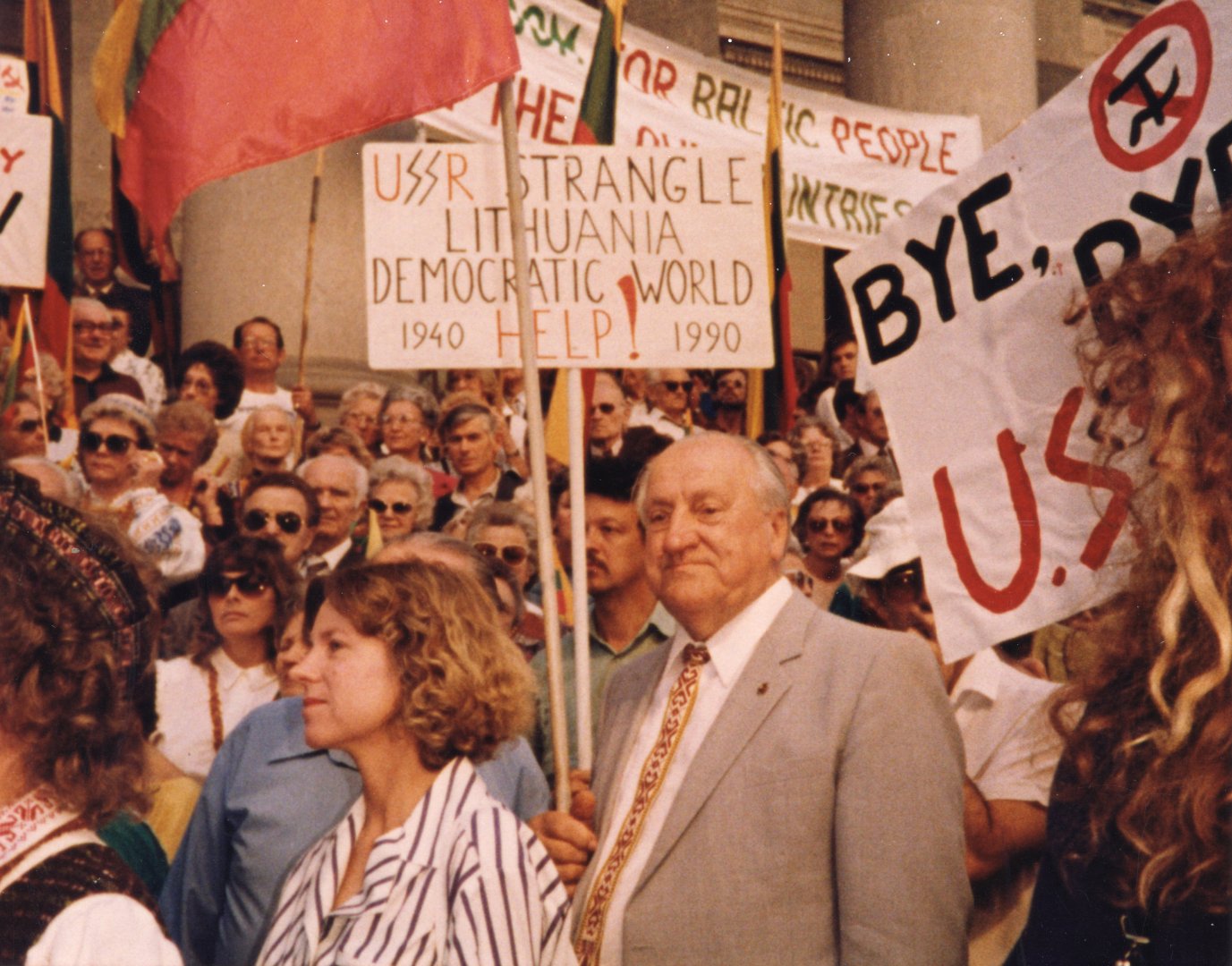
Rally for the Independence of the Baltic States in Adelaide, near the Parliament House

March 31, 1990

Photo by Alfonsas Budrys.

Australian Lithuanian Archive, PH0938

AUSTRALIAN LITHUANIANS. PART 4

Rally for the Independence of the Baltic States in Adelaide, near the Parliament House

March 31, 1990

Photo by Alfonsas Budrys.

Australian Lithuanian Archive, PH0940

AUSTRALIAN LITHUANIANS. PART 4

Rally for the Independence of the Baltic States in Adelaide, near the Parliament House

In the front – Albinas Pocius and Maryte Verbyla.

March 31, 1990

Australian Lithuanian Archive, PH0945

AUSTRALIAN LITHUANIANS. PART 4

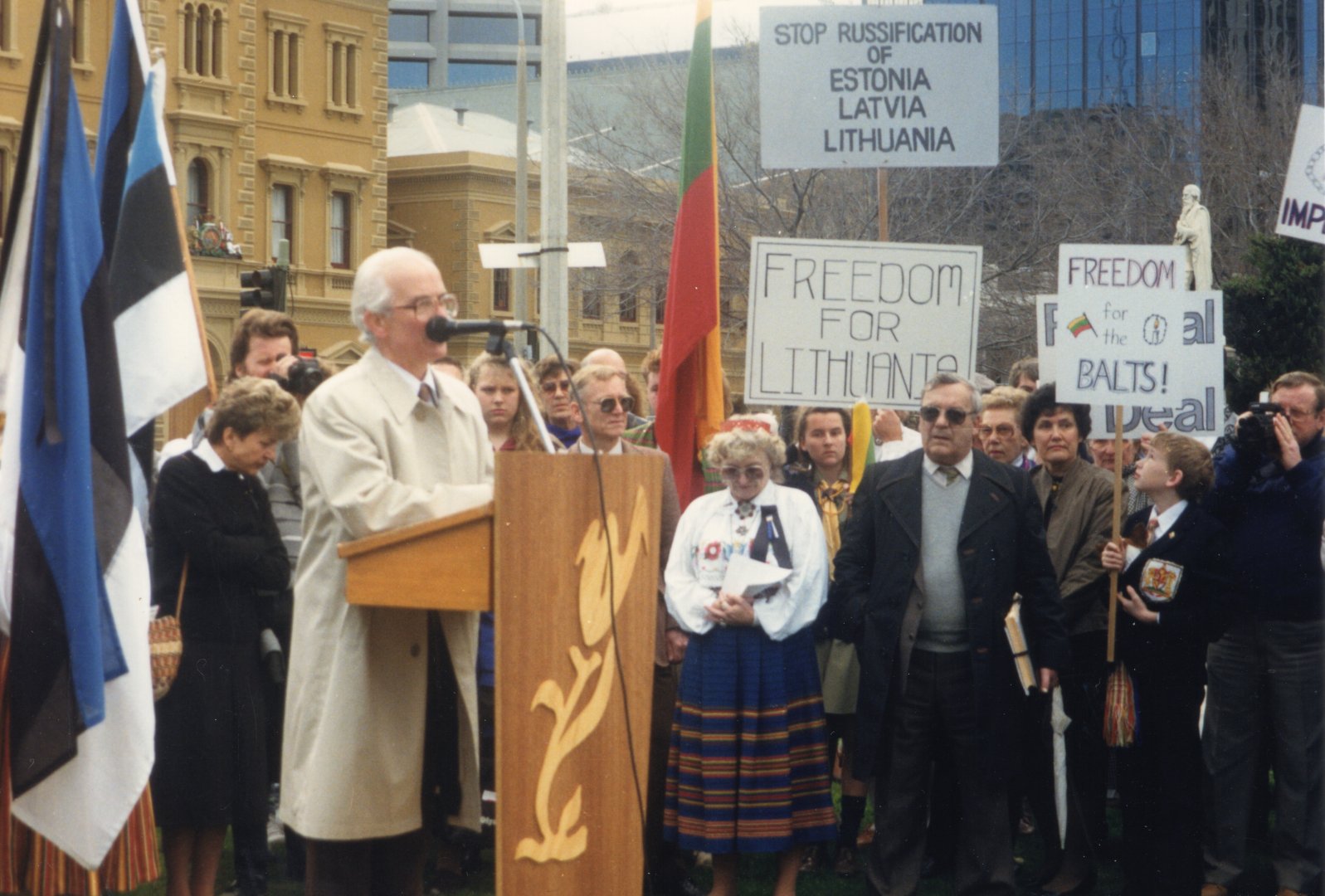
Protest rally for the independence of the Baltic states in Adelaide near the Parliament House

Speaker – Member of Parliament Bob Crafter.

March 31, 1990

Photo by Alfonsas Budrys.

Australian Lithuanian Archive, PH0947

Lt En